
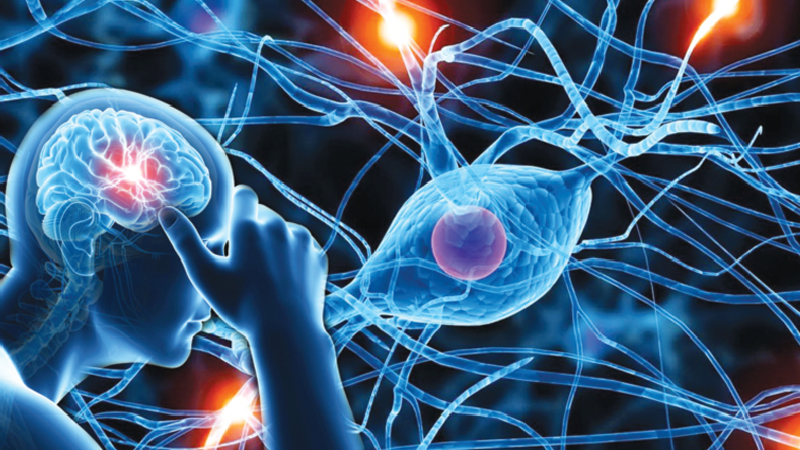
Blue cell membranes, purple nuclei (the location of DNA) and hot reddish-orange spots symbolize atypical structure/function of a neuron. From Montana Department of Public Health and Human Services
https://dphhs.mt.gov/schoolhealth/chronichealth/neurologicaldisorders
What is a neurological disorder?
A neurological disorder is a broad term that refers to any condition that affects the nervous system. This can include the brain, spine, and nerves throughout the body. There are many different types of neurological disorders, and they can vary in severity and symptoms.
Neurological disorders represent a very wide spectrum that includes diseases such as:
- Alzheimer’s disease: a brain disorder that affects memory, thinking, and behavior that gets worse over time.
- Parkinson’s disease: a disorder that affects nerves that affects movement and often includes tremors.
- Tourette syndrome: a neurological disorder that may cause sudden unwanted and uncontrolled rapid and repeated movements or vocal sounds called tics.
Most people think of larger issues that are more noticeable to others, which is called a visible disability. However, there are some which you can’t see and may not think of as a neurological disorder despite affecting a large portion of the population, such as migraines. It is also important to note that not all disorders are neurological disorders. A disorder refers to any condition that disrupts normal bodily functions, whereas a neurological disorder specifically affects the nervous system. There is currently a conversation going on about changing the symbol of disability to become more inclusive of people with “invisible diseases” or diseases you cannot see just by looking at someone. The lines between general and neurological disorders can blur as some conditions can affect both the nervous system and other parts of the body. For example, diabetes is a metabolic disorder that can cause nerve damage, leading to a range of neurological symptoms. Similarly, some autoimmune disorders can affect both the nervous system and other organs, leading to a variety of symptoms.
Genetic neurodisorders often manifest in early childhood
Neurological disorders that affect children or can happen during development are called neurodevelopmental disorders. Neurodevelopmental disorders, like many disorders, can affect a lot of different aspects such as language and speech, motor skills, behavior, memory, learning, or other neurological functions. Some symptoms of these disorders are known to change as a child grows up, while others are more fixed in the way they present themselves. Another large part of neurodevelopmental disorders is the social stigma that comes with many disorders and the effect that can have on a child’s emotional and social development, which can then exacerbate some disorders leading to a cycle worsening both their physical and mental well-being.
//Down syndrome is one of the most common congenital diseases with a strong neurological component.
A genetic disorder caused by the presence of an extra copy of chromosome 21. Chromosomes carry all of the instructions that your body needs to grow and function like a set of instructions for your body, telling it how to build and maintain all of the different parts that make you who you are. Instead of two copies of chromosome 21, one from each parent, people with Down syndrome have three.
INSERT pictures
In terms of neurology, it can affect the development and functioning of the nervous system, which includes the brain and spinal cord. People with Down syndrome often have abnormalities in brain structure and function, such as reduced brain volume and altered connectivity between different brain regions.
This can cause certain characteristics that are associated with Down syndrome like slanted eyes, a smaller nose and mouth, different learning needs, delayed language development, and a higher risk of developing Alzheimer’s disease later in life. It is important to note that these characteristics are never one size fits all, and every person with Down syndrome can have different presentations of the disorder.
As science continues to advance we have started to have more ways to screen pregnant mothers earlier to check on the health of the fetus. Around the world there have been conversations about what to do now that we have ways to check for disorders earlier. In Iceland they have genetic screenings available to all mothers and one of the things that they test for is Down Syndrome. This led to some accusations and media sensationalizing this saying that Iceland has virtually no people with Down syndrome because any fetus that tests positive is aborted. This is not only not true, 15-20% of mothers do not take the genetic screening and those that do are not forced to abort their children should they have Down syndrome. At the end of the day, genetic screenings are another tool for parents to be as informed and prepared as possible for their future. Some conditions require extra assistance and resources that the parents may not be in a place to provide or they may know in advance to prepare for the extra resources.
Degenerative disorders tend to manifest later in life.
Neurological disorders that cause damage to the brain over time are called Neurodegenerative disorders. They can vary in severity, the affected regions of the brain, and can have a wide range of symptoms, normally seen as cognitive decline, changes in behaviors, and limited and/or uncontrollable movements. Symptoms for these conditions worsen with age, even though some are able to be diagnosed earlier on in life. While the processes of age affecting neurological functions are not yet completely understood, there is reason to believe that there is more time for damage to be done to the cells and for it to accumulate more in the brain to further the impairments. Some common neurodegenerative conditions include Parkinson’s, Huntington’s, and Alzheimer’s, each with its own unique subset of types of cell death in the brain.
//Alzheimer’s disease
Alzheimer’s is a neurological disorder that destroys memory and other mental functions, such as thought and language. In 2023, approximately 6.7 million Americans aged 65 and over have Alzheimer’s. It is a disorder that worsens over time, as the brain loses healthy neurons and starts to deteriorate. Most people start to notice their symptoms in the earlier stages of Alzheimer’s, as they begin to lose their items as well as their memory of everyday things, start to wander and get lost, and ask to repeat sentences, which is when the beginning of diagnosis for the disease happens. After this first stage, areas of the brain responsible for speech and language worsen, and many other cognitive areas continue to damage. Eventually, severe Alzheimer’s which is characterized by significant loss of brain matter occurs, and this is the stage in which patients are not able to function on their own. Unfortunately, changes in the brain typically occur around 10-15 years before noticeable symptoms start to appear, meaning in most cases, the disorder has already set in for too long.
For more information about Alzheimer’s disease: https://www.nia.nih.gov/health/what-alzheimers-disease and https://www.dovepress.com/preventing-the-abuse-of-residents-with-dementia-or-alzheimers-disease–peer-reviewed-fulltext-article-CIA
Environmental connections to neurological diseases
The role of the environment in the development of neurological disorders can be complex and multifaceted. Some factors, such as exposure to toxic chemicals or radiation, can cause direct damage to the nervous system, leading to a range of symptoms and conditions. Other factors, such as infectious viruses or head trauma, can trigger an immune response that can lead to inflammation and damage to the nervous system.
//Rabies: One of the most well-known neurological diseases caused by environmental damage is rabies. Rabies is typically spread through the bite of an infected animal, such as a dog, bat, or raccoon. Once the virus enters the body, it travels to the brain and begins to multiply, causing inflammation and damage to the nervous system. The initial symptoms of rabies may include fever, headache, and weakness. As the disease progresses, it can cause more severe symptoms such as anxiety, agitation, hallucinations, and paralysis. If left untreated, rabies can be fatal. However, prompt medical attention can prevent the virus from spreading and potentially cure the disease if treatment is started early enough.
//Pollution and climate change: The role of the environment in the development of neurological disorders can be complex and multifaceted. Some factors, such as exposure to toxic chemicals or radiation, can cause direct damage to the nervous system, leading to a range of symptoms and conditions. Other factors, such as infectious diseases or head trauma, can trigger an immune response that can lead to inflammation and damage to the nervous system. In particular, researchers are starting to notice connections between climate change and pollution—particularly air pollution. A study conducted by Harvard, Columbia, and Emory’s Schools of Public Health first discovered the “link between fine particulate pollution and neurodegenerative diseases in the U.S.” The pollution in the air can enter the body through inhalation and its toxicity can also cause inflammation to the brain. Although the precise mechanisms of this environmental link is not fully understood, it has been found that individuals living in areas with higher levels of air pollution have a higher risk of developing neurological disorders.