
Blog News

Visualizing Waveforms

About the project

This exploratory learning project was inspired by a posting by a YouTube video by Desktop Makes who were examining how to create the physical visual representation of audio waveforms. 

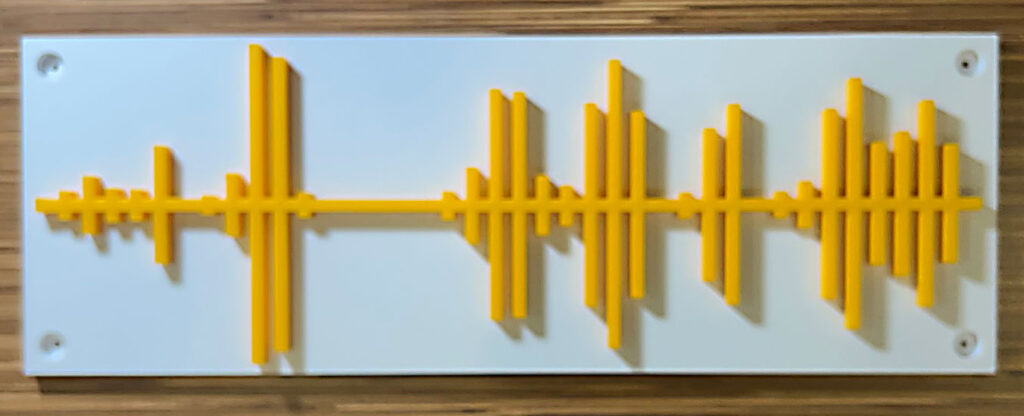
Instructional Technology Service staff and their student workers (aka mLabbies) chose a few inspirational quotes, and found an audio recording of each quote. Afterwards, 3d models of the waveform were created from the quotes, then printed out.

The quotes

Learning outcomes

mLabbies used a variety of different software programs to create and modify 3d models, which would deepen their knowledge and experience computer aided design (CAD) and modeling practices for 3d printing.

The mlabbies also expanded their expertise with using the 3d printers in the Digital Fabs space here at Reed College.

The (exploratory) process

The project explored how to visually represent a waveform using some of the technologies available in the Digital Fab space here at= Reed College, which included a laser printer and 3d printers. The Desktop Makes video provided one approach to represent an audio waveform as the students explored how to create and physically display the models. 
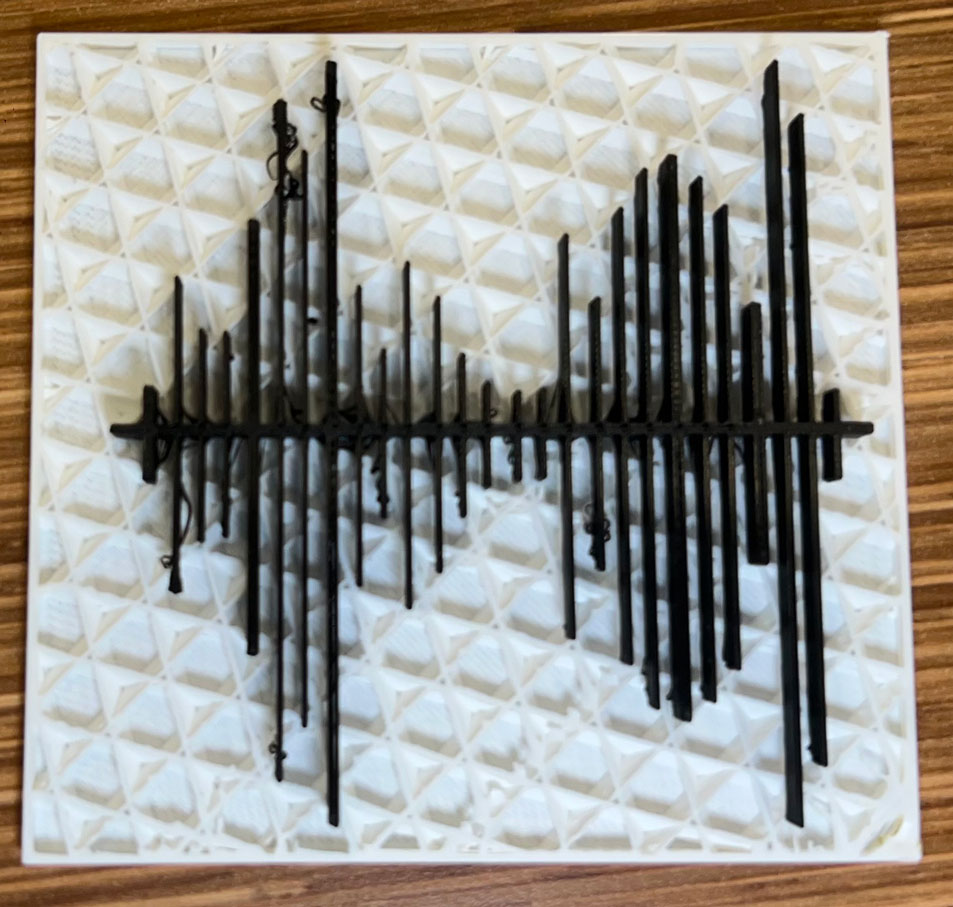
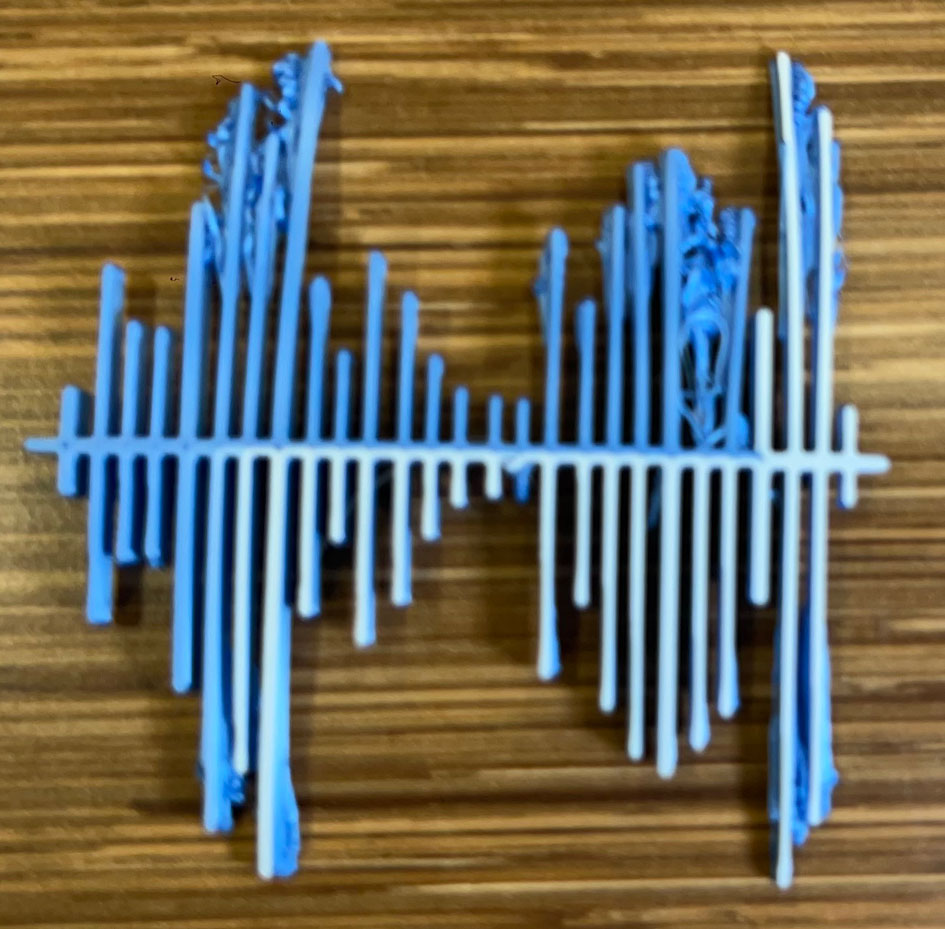
example of bad 3d print

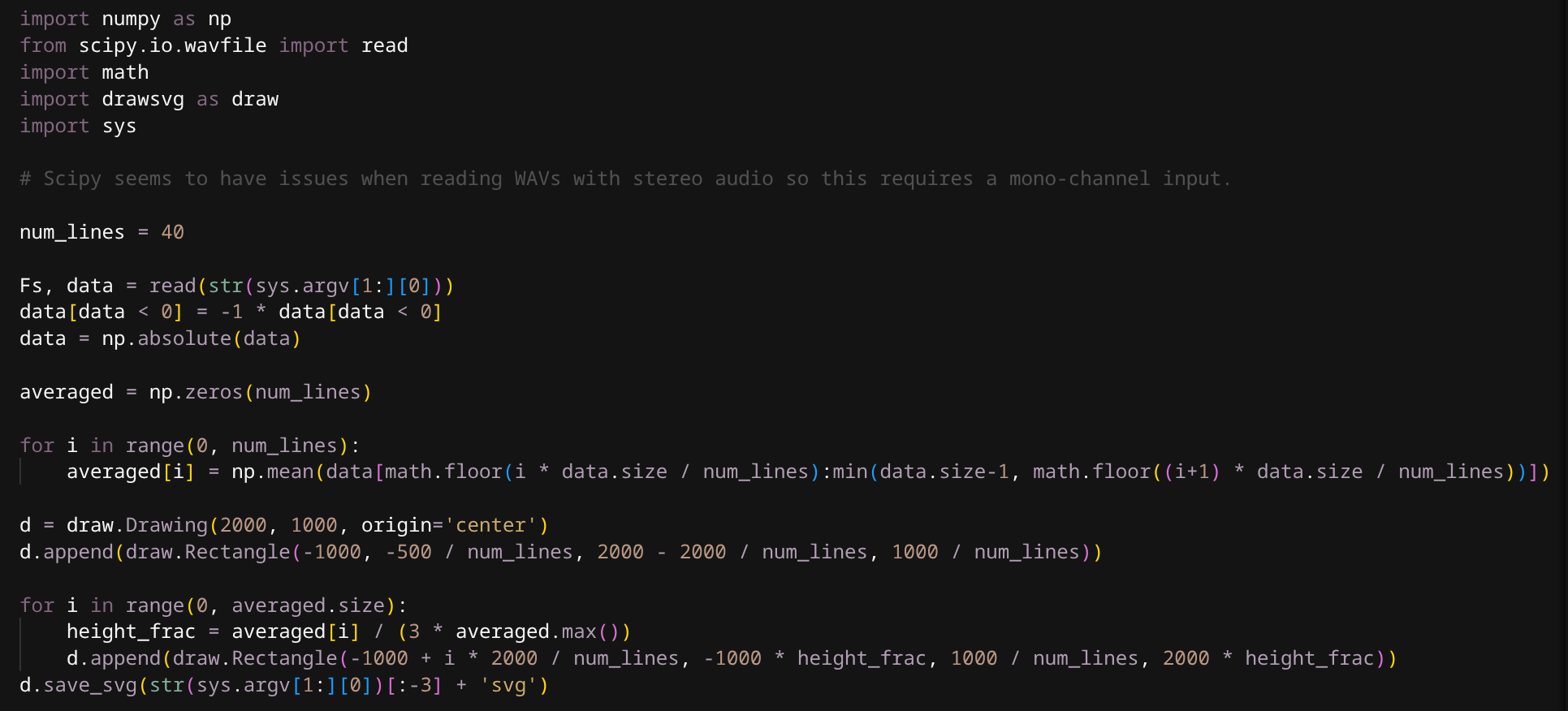
During the process, one of the students used the SciPy and DrawSVG Python libraries to generate waveform images from audio in the desired style.
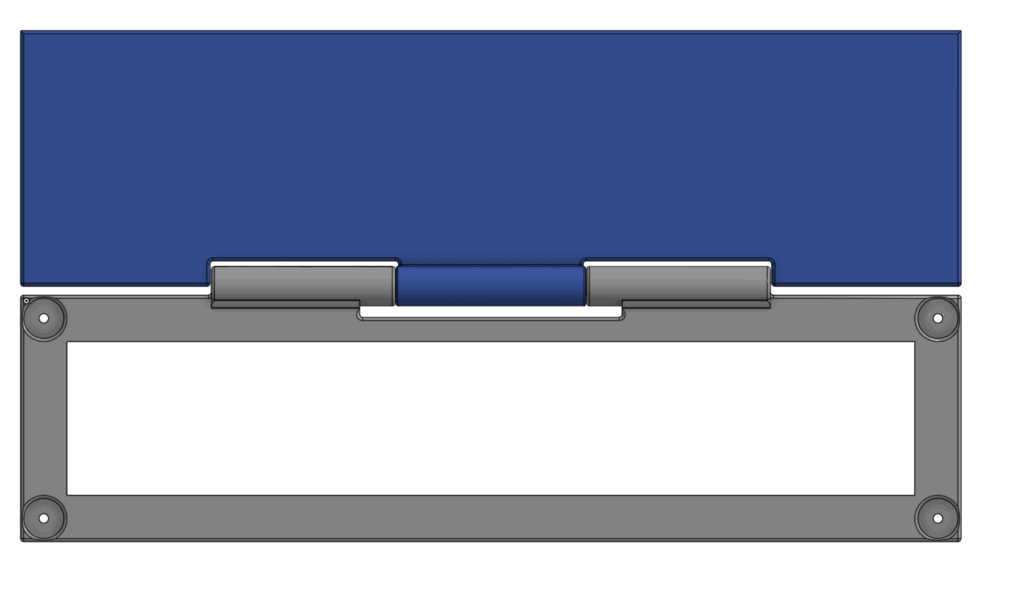
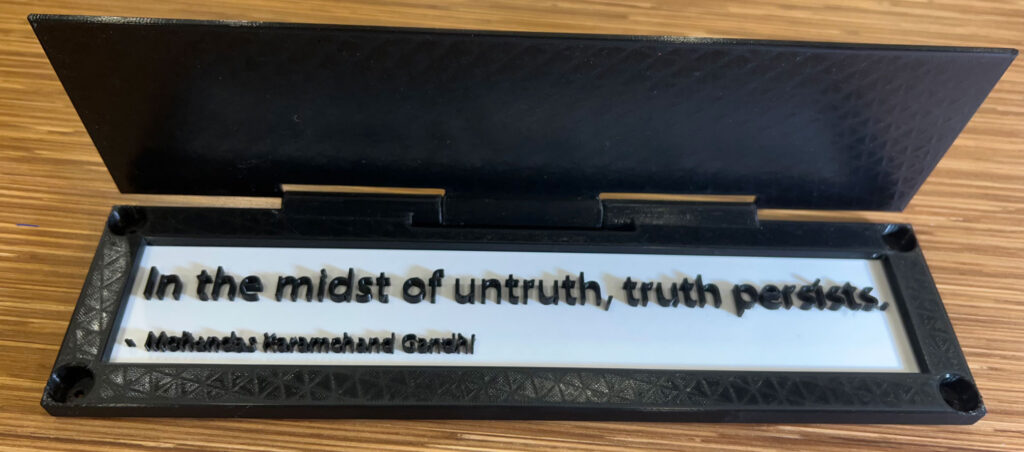
Another student created a print-in-place hinged 3d model that held the quotes.
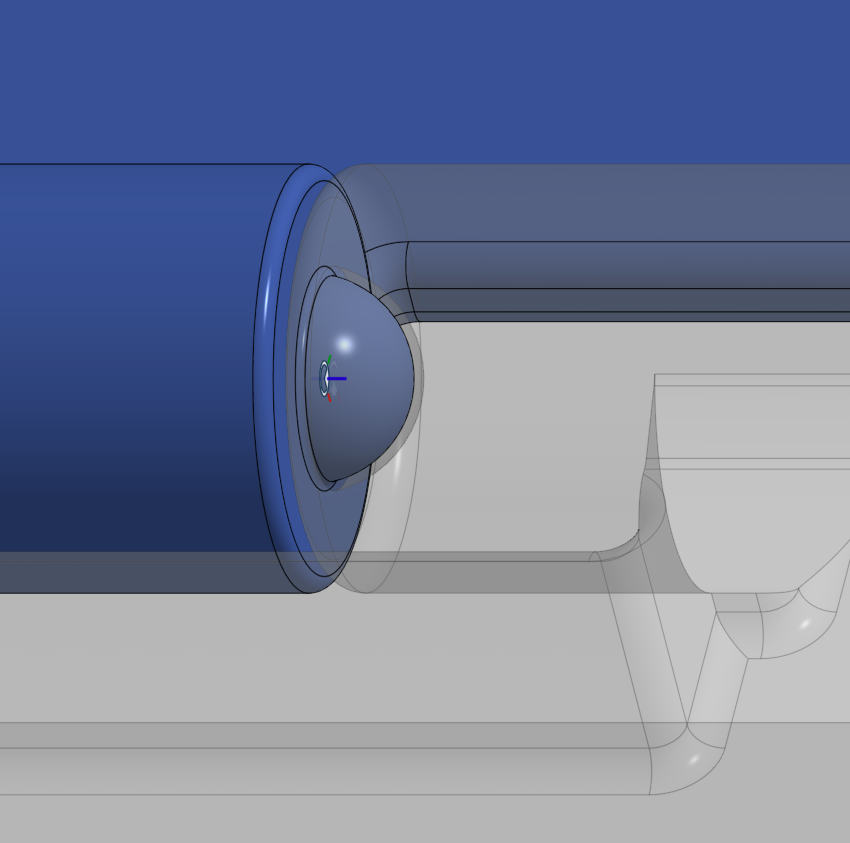
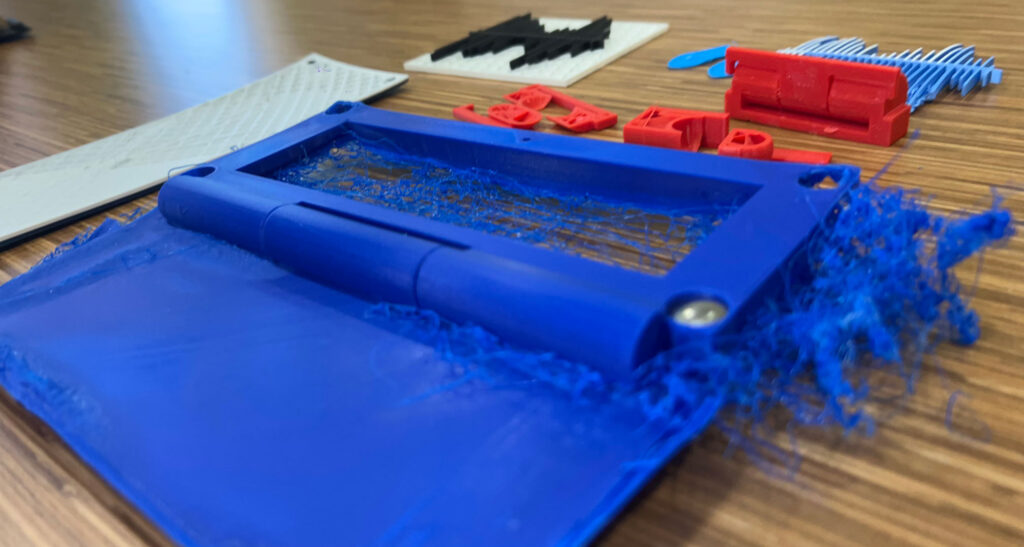
3d print of model with hinge

While working with an Ultimaker S5 and Bambu printer, the students were able to explore how to create 3d models that could be printed in different colors. 
Along the way, as many who have explored 3d printing, a few technical issues came up.
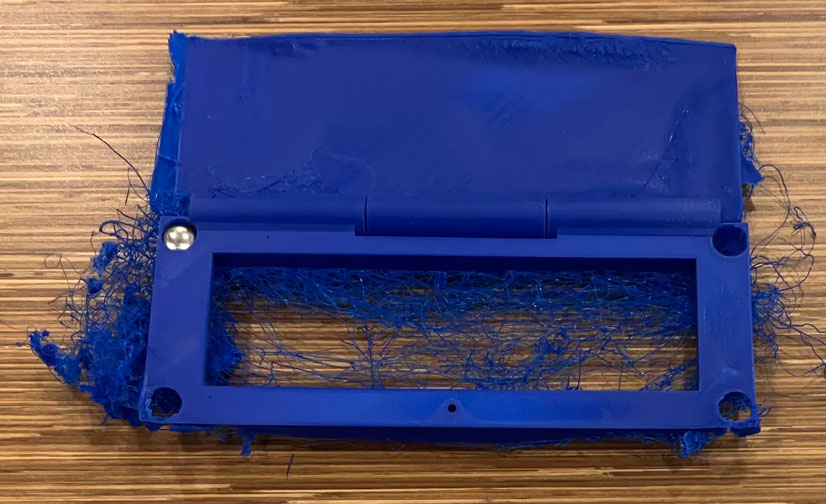
failed print image 4

Filament didn’t stick to the printing bed. Different 3d material was used that required different print settings. Printing a moving hinge required test prints and modifications to the 3d model.
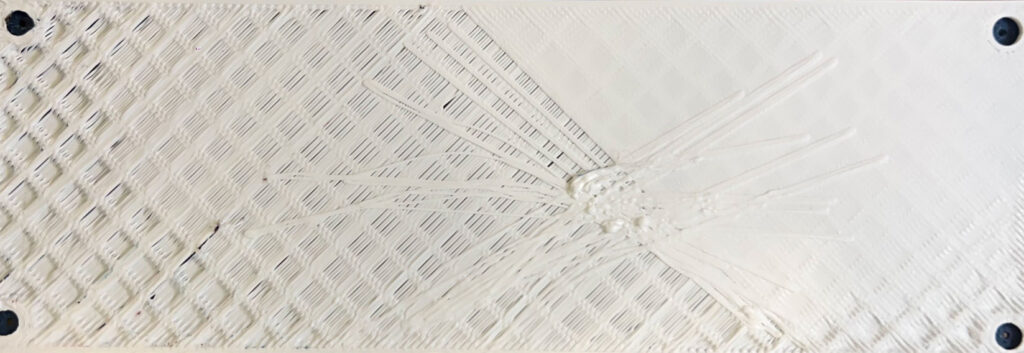
failed print image 1

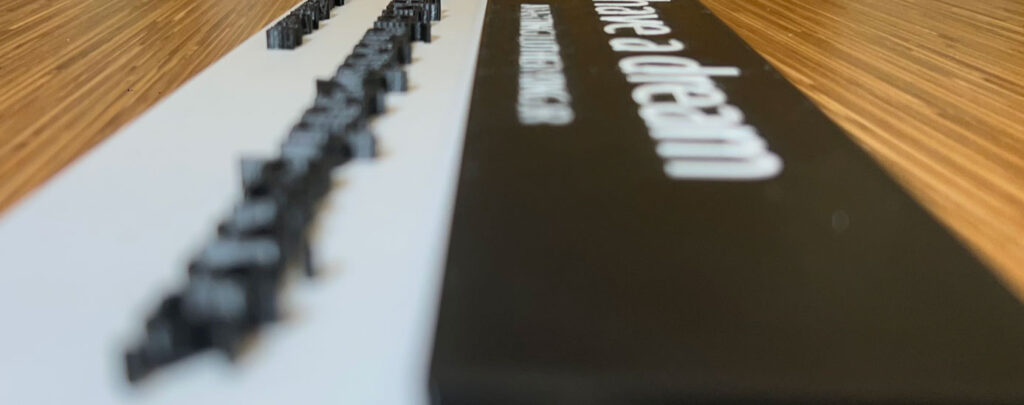
And printing small text in a 3d format can be a bit challenging; mLabbies explored having the text embossed on a surface, or embedded into a surface, both which required separate ways to design and print the 3d model.

another 3d print example with text

Dual Filament Printing

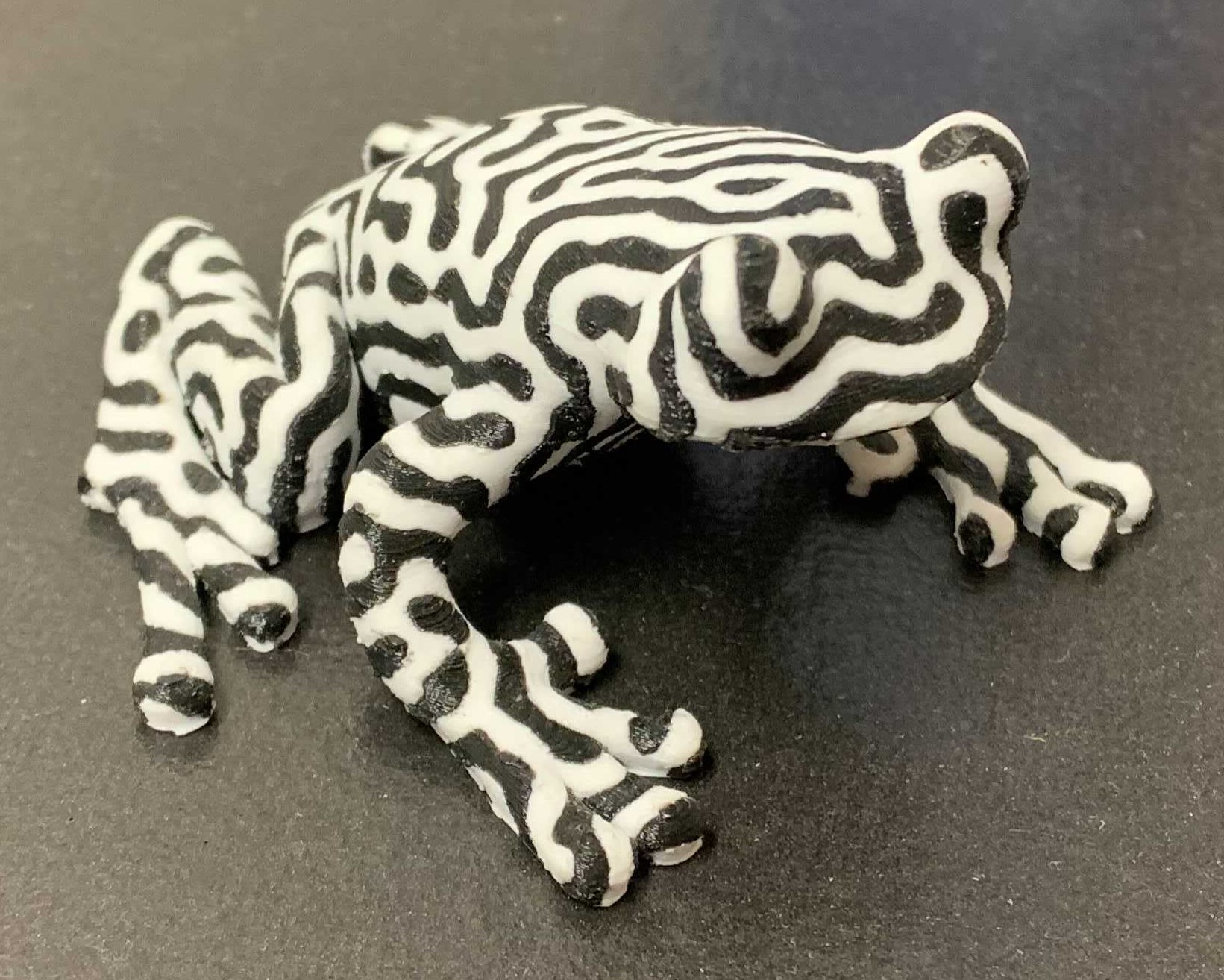
Printing made with two different colored filaments (model can be found here: https://www.thingiverse.com/thing:329436)

Both 3D printers in the fabrication lab come equipped with dual filament printing heads that allow for a variety of effects including printing in multiple colors, multiple transparencies, or printing with dissolvable supports. Here are the steps required to make use of this process.

Continue reading “Dual Filament Printing”

H5p Example: Image Hotspots

H5p.org is an open source platform that has a suite of learning resources that can be created within WordPress or Moodle.

The organization has an abundance of great examples on their website that can be explored. Creating branching scenarios, image hotspots, quizzes, interactive timelines, and interactive images are just a few of what can be created using their services. Read more about using H5p, or learn how to create your own.

Continue reading “H5p Example: Image Hotspots”

Customizing a 3d Model

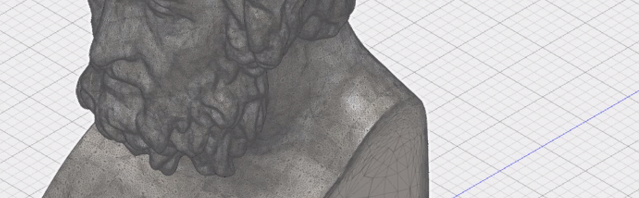
A classics professor was retiring from Reed College, and as a parting gift, a bust of Homer (one of his favorite Greek poets) was to be made at the Digital Fabs, a space located in the Reed physics building with 3d printing capabilities. After consulting with the classics department, I planned on finding a 3d model of Homer, then I wanted to alter the model, adding an engraving with Greek text of the Iliad to the base.

Continue reading “Customizing a 3d Model”

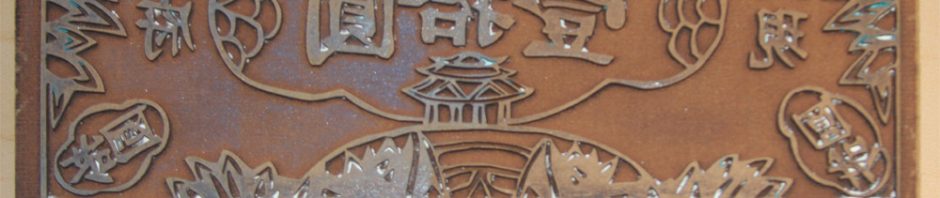
Laser Cutting a Chinese Print Block (part two)

Part one’s project created a replica of a Chinese woodblock, in this case a woodblock from the 1970s that was in fairly good shape (at 40 years old!); the woodblock itself  was intact, and the wood carving still had pretty crisp lines for printing. We were able to successfully create a new block from the previous artwork in a fairly straightforward manner.

Continue reading “Laser Cutting a Chinese Print Block (part two)”

Discontinuation of VHS Support at Reed / YouTube to VHS ?

fullsizerender-10

Notices have appeared in the various media labs around campus: Reed is discontinuing all VHS support, beginning this Fall.

The news has come without fanfare, and those who did see the signs were, in all likelihood, even more surprised to learn that, until now, Reed’s A/V department actually still did support VHS. After all, nearly thirty years have passed since the format’s peak popularity. By the time most current Reedies’ autobiographical memories began, VHS was already on its way out; even DVD, its successor, is on its last legs. So, in some ways, we all said goodbye to VHS a long time ago, and the announcement comes as a formality.

Continue reading “Discontinuation of VHS Support at Reed / YouTube to VHS ?”

Laser Cutting a Chinese Print Block (part one)

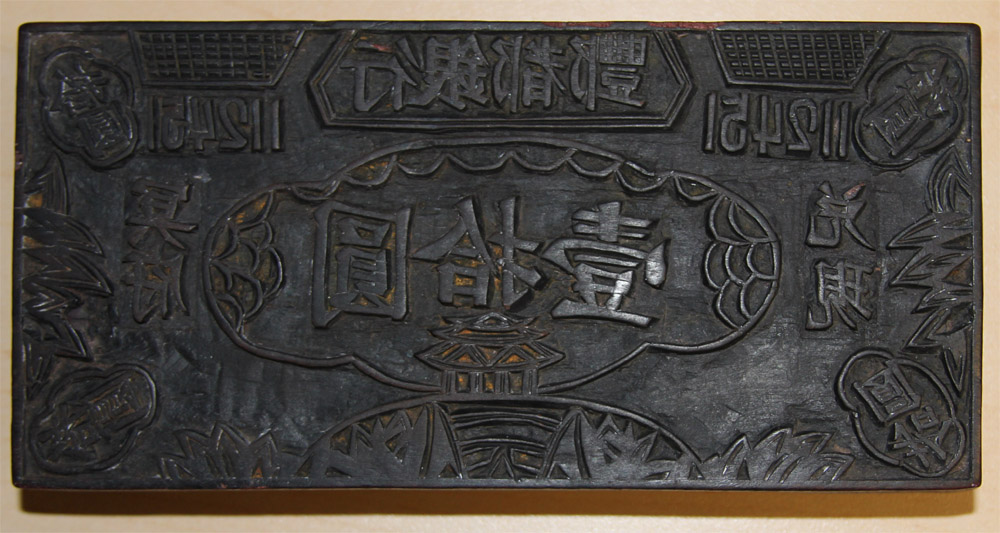
For this project, the goal was to make a print from a Chinese wood block. The block depicts paper money that, after made into a paper print, is then burned up as an offering to ancestors during the annual Qingming Festival.

We didn’t want to use the original block itself for making prints for fear of causing damage to the original artwork, so we hoped to make a reproduction of the artwork. This was a great time to use the physics building’s laser printer, which could burn artwork into a linoleum block. From that, we’d create a replica of the printing block, then make new prints.

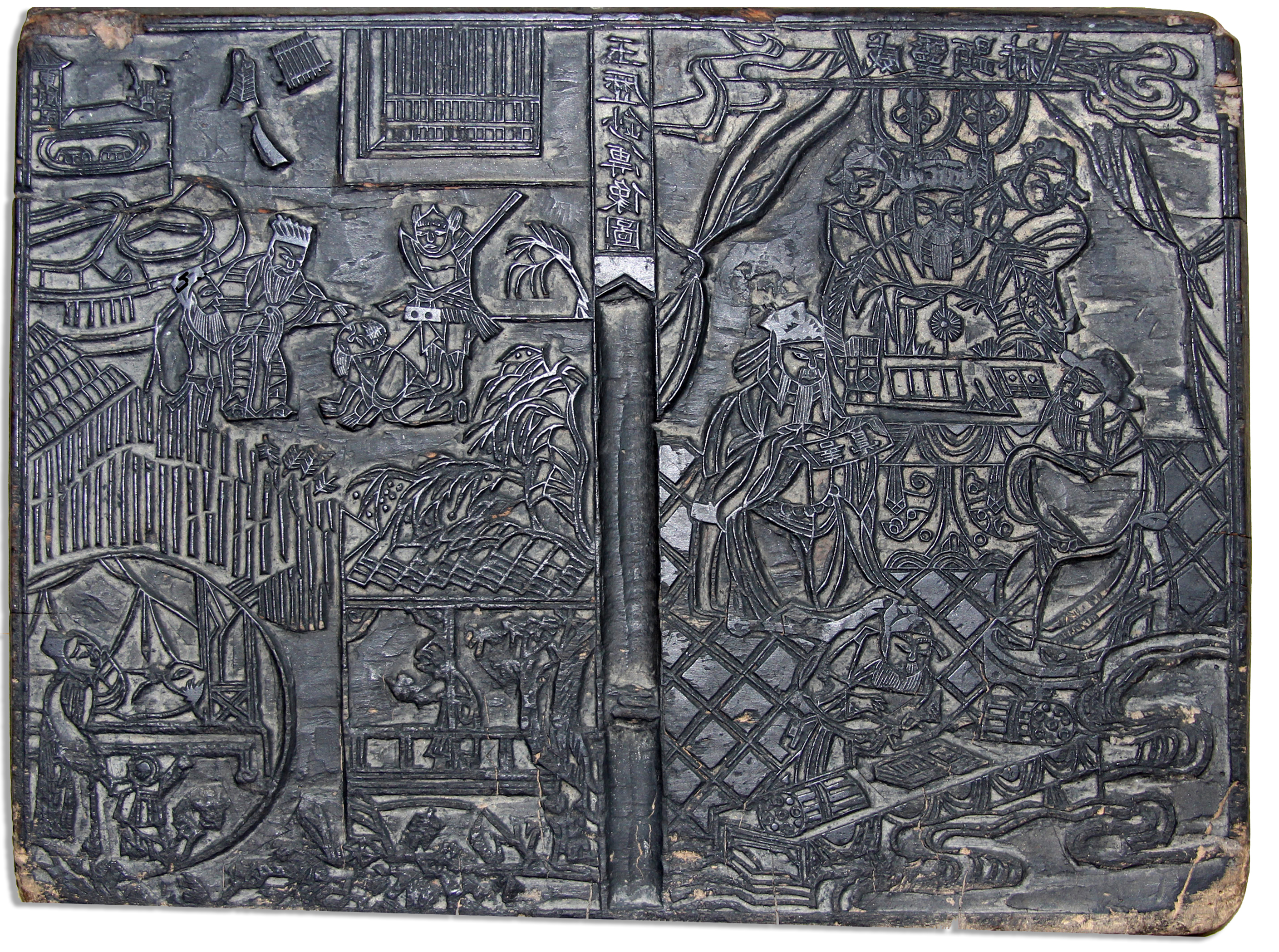
woodblock
The original woodblock
Continue reading “Laser Cutting a Chinese Print Block (part one)”

Mapping Unimproved Roads

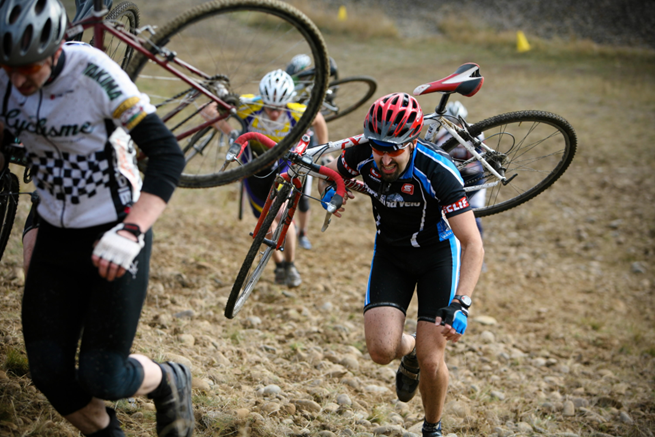
Cyclocross is a one of those weird sports I’d never heard of until I moved to Portland. Essentially cyclocross is a form of bike racing that entails riding on pavement, trails and grass while occasionally dismounting to carrying your bike over obstacles. Surprisingly cyclocross complements another Portland oddity, the huge number of unimproved roadways in the city. These unpaved roads are great for cyclocross training!

mapping-unimproved-roads
image from https://hurricanebikepark.files.wordpress.com/2011/04/cyclocross-race.png
Continue reading “Mapping Unimproved Roads”