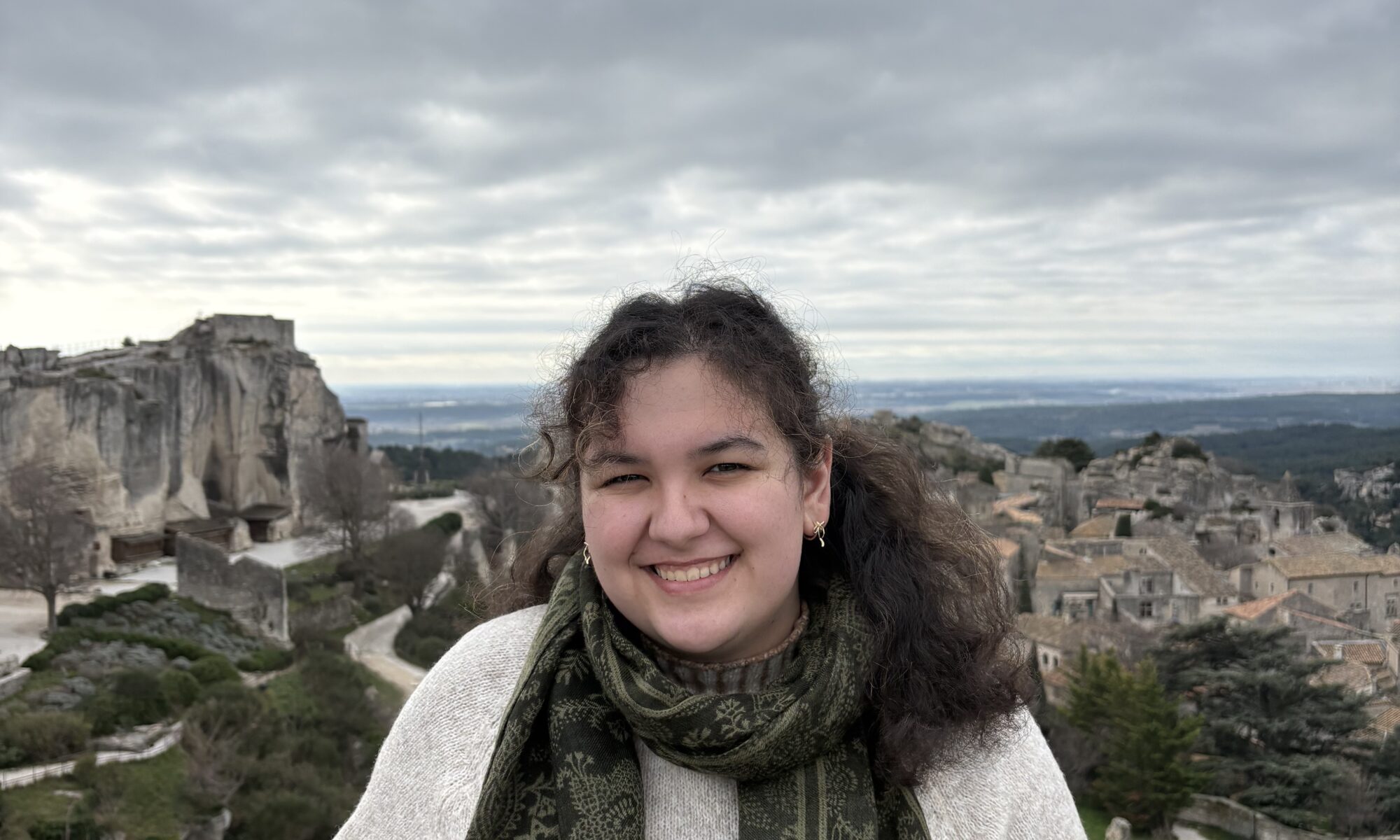
I interviewed Miriam, a Russian tutor here at Reed. You can visit her drop-in tutoring hours from 6-8 PM on Thursdays.
Could you introduce yourself?
My name is Miriam, otherwise known as Masha (in Russian); that name was given to me on my first day at Reed. I’m a senior Russian major, and I’m the Russian House HA (I’ve lived in the Russian house for three years (including this year)). I came in as a linguistics major, but I switched to Russian when I fell in love with it.
Read more: Chatting with MiriamYou’re a linguist and have learned a variety of languages; what interests you about Russian in particular?
I wanted to try something completely different from Romance or Germanic languages; I love that you have to forget English in order to really speak Russian. It was also fun learning a new alphabet (that’s taught in cursive, too), so there’s an artistic element as well. I have a background in Latin, and a lot of that crosses over into Russian; the case system is similar (in that you can say the words in a sentence in any order, and the endings of the words determine what function they play in the sentence).
What’s changed in your relationship with Russian since you were last interviewed by a LangLabbie? Any particularly notable experiences/events?
Well I wasn’t a Russian major. But also I’ve read a lot; I’ve been in the Russian sections of all of my lit classes. I’ve been able to read War and Peace in Russian, so you can go really far. My lit sections now are entirely in Russian, including talking about the book, which I wouldn’t have expected in my first year.
I also studied abroad in Estonia with a family that spoke only Estonian and Russian and not English, which was a good experience in figuring out how to express yourself with what you’ve taught and the words you have: being an effective communicator.
I studied abroad in France as well. I took a French class where we were discussing a book in Russian in French, which was confusing but good for my brain.
Oh, also, this is important to add: I interned at a nonprofit immigration law firm over the summer, and I translated documents and interpreted for Ukrainian refugees. It was good for exploring possible careers using language.
Can you give me an elevator pitch for your thesis?
Sure; I can try. Since Russia’s invasion of Ukraine, it’s fascinating how all the authors, all the artists, are in exile. Everything that’s happening in the Russophone world is taking place not in Russia. It’s about artists in exile, and about how to talk about something from outside. I’m analyzing an author, Maria Stepanova; her recent work, The Disappearing Act, is about meandering through a world that isn’t yours: you’re crossing borders, and trying to figure out who you are in a new landscape. What does it mean to be an immigrant?
Any media recommendations? Movies or TV in particular?
I’m HA of the Russian House; we have Russian movie nights at the Russian House every Wednesday at 8:00pm (you should come!). My favorite Russian movie is Solaris: sci-fi by Andrei Tarkovsky. Also, Kidnapping, Caucasian Style is a Soviet slapstick comedy. They embed Soviet values while having people slipping on banana peels, which is hilarious and absurd.