It is so sad to see you go… or me go? Perhaps I’m glad and relieved that I’m graduating. I will sincerely miss this basement, with its lack of sunlight and abundance of candy. Before I leave, I would like to impart some sage wisdom (thank you Patricio for the inspiration) from someone who has taken an unreasonable number of language courses and still wants to learn more.
Shokan was famously “besties” with Dostoevsky sparking rumors about their homoertoic relationships.
Shokan Valikhanov the father of modern Kazakh history and ethnography and simultaneously the most-known Kazakh scholar, ethnographer, historian. As a Russian Imperial officer, he explored Central Asia, mapping regions like Kashgar and recording significant cultural, geographic, and historical data while advocating for his people which didn’t save him from being a target of post-colonial criticism. Lang Labbies are starting our weekly rubric of “not-so-Russian-Russian literature” focusing on literature written in Russian by not necessarily Russian personas.
Shokan Valikhanov was born in Kostanay, Eastern Kazakhstan and spent his youth in his father’s traditional nomadic yurt. Shokan’s family was very respected by the government of the Russian Empire, and Walikhanov’s father was awarded, during his life, six appointments as senior Sultan of Kushmurun region. Born into privelege, Shokan raveled extensively in Central Asia in the late 1850s after having graduated from the military academy in Omsk.
Walikhanov collected materials on Kazakh judicial practices in 1863. This was part of a government-backed project given by Duhamel, and led to the 1864 Memorandum on Judicial Reform. In 1864, Shoqan was assigned to help with Colonel Cherniaev’s continued conquest of Central Asia. Cherniaev’s forces marched west from the fortress of Vernoe (modern-day Almaty). Chernaiev advanced towards the Khanate of Kokand, planning to attack the fort at Aulie-Ata (modern-day Taraz). Shoqan unsuccessfully pushed for a negotiated result without violence.
Young Valikhanov was a big proponent of Westernization although was critiqued by his fellow ethnographers for “playing the double game” due to his primarily russian education and deep friendship with writers such as Fyedor Dostoevsky.
In spite of it, Shokan remained the face of Kazakh intelligentsia — his early death at just 29 years old left a large hole in the history of Kazakh ethnography written in Russian. One of Shokan works (in both Russian and English) I would recommend to our readers is “Chinese Turkestan and Dzungaria: Walikhanov and other Russian travellers”, The Russians in Central Asia, London, Edward Stanford, 1865.
Today we’re speaking with Qiuyi, our drop-in French tutor! We chatted about the experience of learning French from the beginning level, adjusting to intermediate classes, and Marguerite Duras. Meet Qiuyi in the Language Lab during her drop-in tutoring hours!
Leilani: Hi Qiuyi! To begin the interview, could you tell me a little bit about yourself and how long you’ve been speaking French?
Qiuyi: Yeah! My name is Qiuyi, and I’m a sophomore majoring in Comparative Literature. This is my second year learning French, so I’m a new learner.
As we approach the end of the semester, I thought I’d recommend a for-funsies book to read over winter break: In Other Words by Jhumpa Lahiri (2015). Last semester, I wrote a blog post on journaling as an effective language-learning strategy. Jhumpa Lahiri’s memoir expands on this idea of writing in a second language (Italian), and also talks more on her experience living in Rome, Italy, to immerse herself in the language. Lahiri is the author of The Namesake (2003) and Interpreter of Maladies (1999), and this is her first nonfiction book.
It’s official, the K-pop (Korean pop) craze has arrived at the Language Lab. I’ve become enamored with K-pop’s fan-cams, shiny photocards, and the trendy choreography. Fortunately at the Language Lab, the K-pop culture has spread worldwide, and I made a list of international pop groups to keep an eye on. These groups have taken the popular model of K-pop but with a local flair that makes the music appealing to its country of origin. Give them a listen!
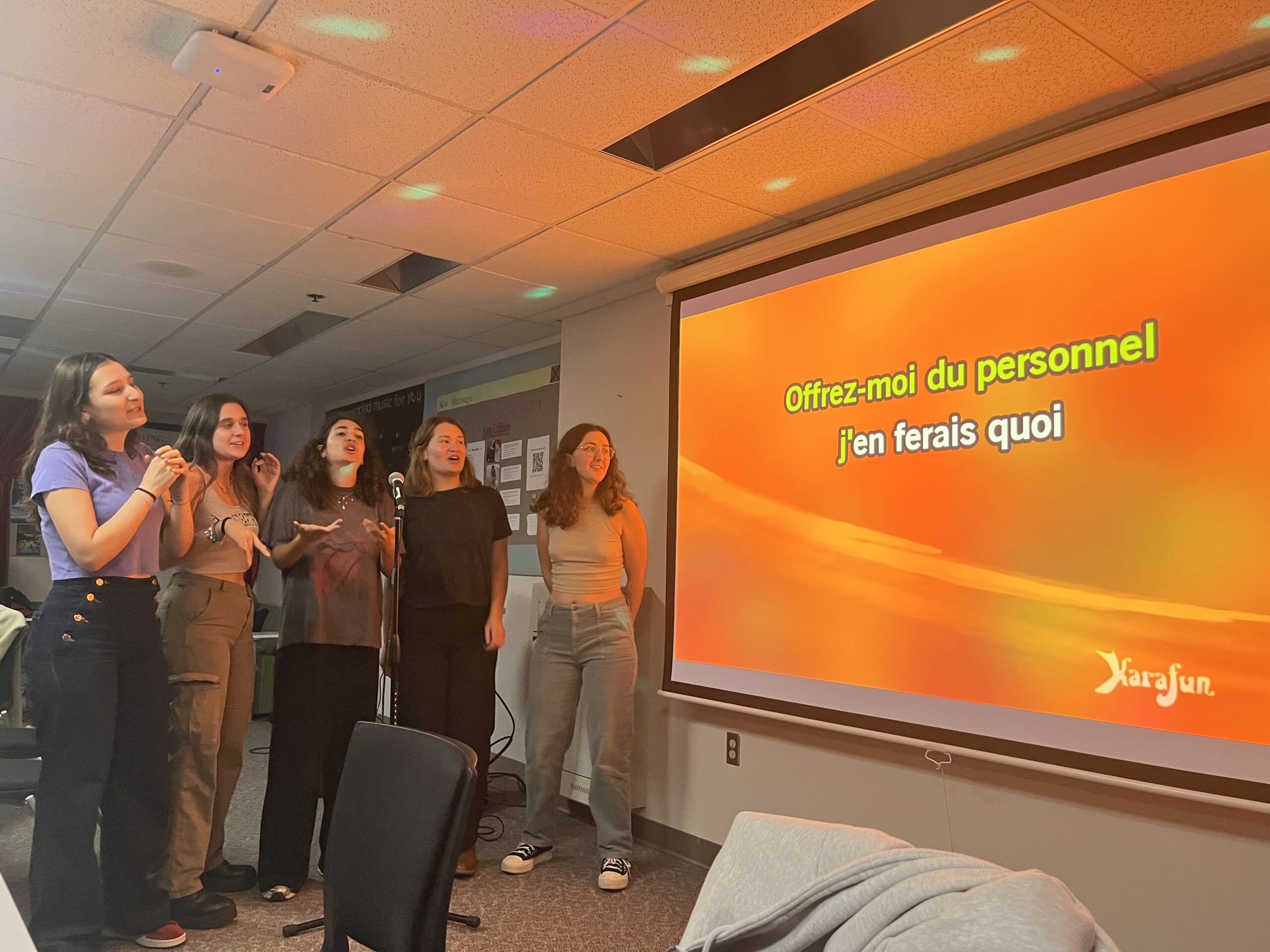
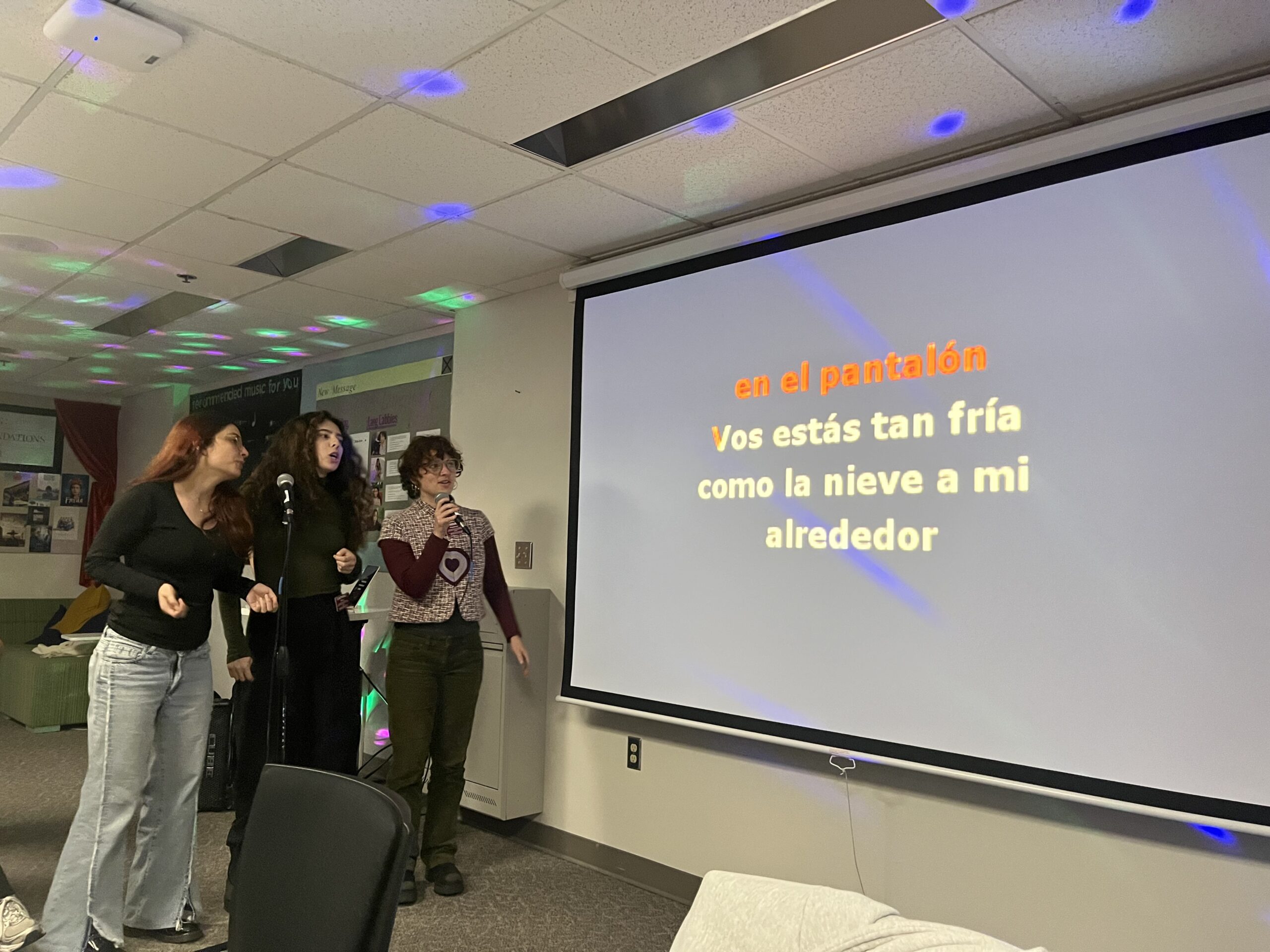
Thank you everyone for attending our highly-anticipated Karaoke Night event! We had so much fun sharing songs and experiencing songs from around the world (I still have 小蘋果 stuck in my head…). Special shoutout to our Language Scholars, who got the party started! We hope to see you at future karaoke events… stay tuned!
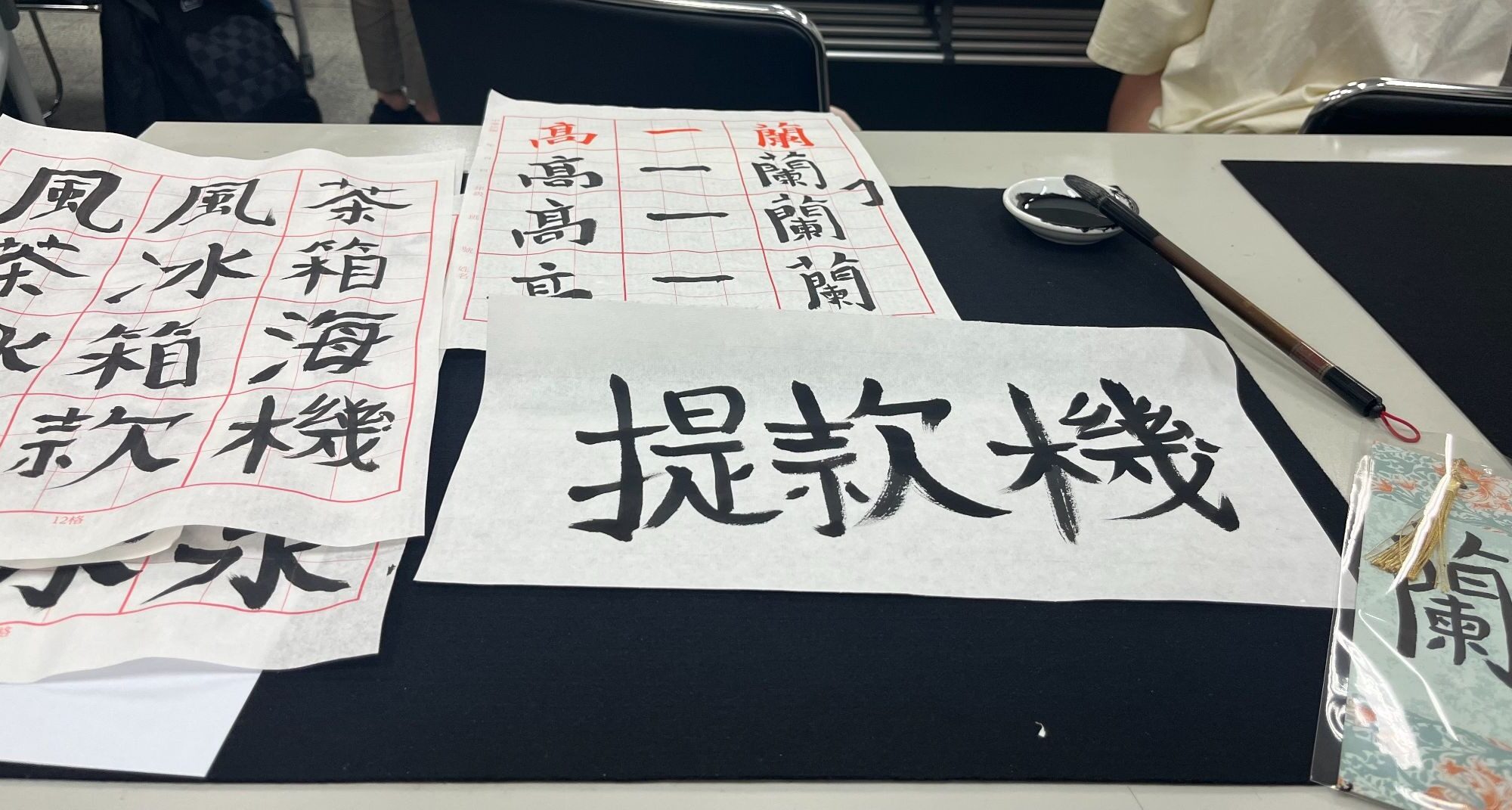
Maybe you’ve been wanting to start learning Chinese, but don’t know how to get over the initial hurdles that make it seem impossible. Never fear, for I am here to help demystify this incredible language! I started learning Chinese at Reed from the beginning level and studied abroad this past summer in Taipei, Taiwan. Trust me when I say that it’s a challenging language to learn, but not impossible! (And I might even argue that it’s been the easiest and most fun language to study…) Here are my personal strategies for approaching Chinese as a beginning student, while keeping it fun!
Today we’re interviewing Bruce, our drop-in Spanish tutor! We chatted about what first motivated him to learn Spanish, and the amazing power of language tutoring at Reed!
Leilani: Hi Bruce! First, could you tell me a little bit about yourself, and for how long you’ve been speaking Spanish?
Bruce: My name is Bruce, and I’m from the Portland area. I started speaking Spanish, or at least taking classes, in seventh grade. And then I did it for five years. I did the IB [International Baccalaureate] program, so I did IB Spanish in my junior year. In my senior year, I wasn’t able to take Spanish because I had already taken the highest level my school offered. So I started again last year in college. I started at the intermediate level, and now I’m taking 321 [Theory and Practice of Hispanic Literature].
L: What initially motivated you to start learning Spanish?
B: I don’t come from a family that speaks Spanish at all, but it was the only language that was offered at my middle school. My brother was also a couple of years older than me, and he was starting to learn, as well. It was more so that I wanted to learn another language. Now, I’m glad I chose Spanish because it aligns with a lot of what I’m interested in. I’ve been really interested in Latin American politics, art, and history. When I first started to learn, I didn’t have that reasoning. But now I’m really glad I chose to study Spanish.
Today we’re chatting with Vincent, our French tutor, as well as the HA for French House II (Farm House). We talked about French programming at Reed and how Vincent is preparing for his semester abroad in Paris this spring!
Leilani: First, could you tell me about your background and how long you’ve been speaking French?
Vincent: Yeah! I first started taking French classes in high school, and then I placed into second-year level French when I came to Reed. I lived in the French House last year, and I’m living in Farm House this year. So those are the French experiences I’ve had here.
L: What has your experience been like as a French tutor?
V: It’s been pretty interesting to get a sense of how other people learn a language in ways that are different from what I’m more used to. And I think that’s a way of helping me to understand the language better and get more practice with it by working with other people.
Hispanic Heritage Month starts today, September 15! Learning a language is more than memorizing grammar and vocabulary—it’s about connecting with people and cultures from around the world. Hispanic Heritage Month occurs every year from September 15 to October 15, in commemoration of the many independence days and national celebrations across Latin America. Whether it’s meeting new friends at Spanish House’s weekly events, celebrating with Latinx Student Union, or engaging with the Hispanic community in Portland, here are some ways to celebrate Hispanic culture all month long!