Epic Friendship – Beyond Gilgamesh and Enkidu

On Wednesday, September 2, Visiting Assistant Professor of English, Robert Ribera, gave a lecture to Reed’s class of 2030 for their second ever class of HUM 110. He lectured on The Epic of Gilgamesh, with a talk called “How Would it End? Ain’t Got a Friend” (which references the song “What Did I Do to Be So Black and Blue,” utilized across Invisible Man, which be the final unit of HUM 110 this year).

Weeks before, Professor Ribera had put out a call to Reedies far and wide: “I was hoping to end by telling the students that they are going to meet some lifelong friends at Reed, perhaps right there in Vollum lecture hall.”

Responses poured out of the woodwork—many Reedies truly did make friendships of epic proportions during their time at Reed. Professor Ribera and the freshmen left Vollum with a sniffle or two.

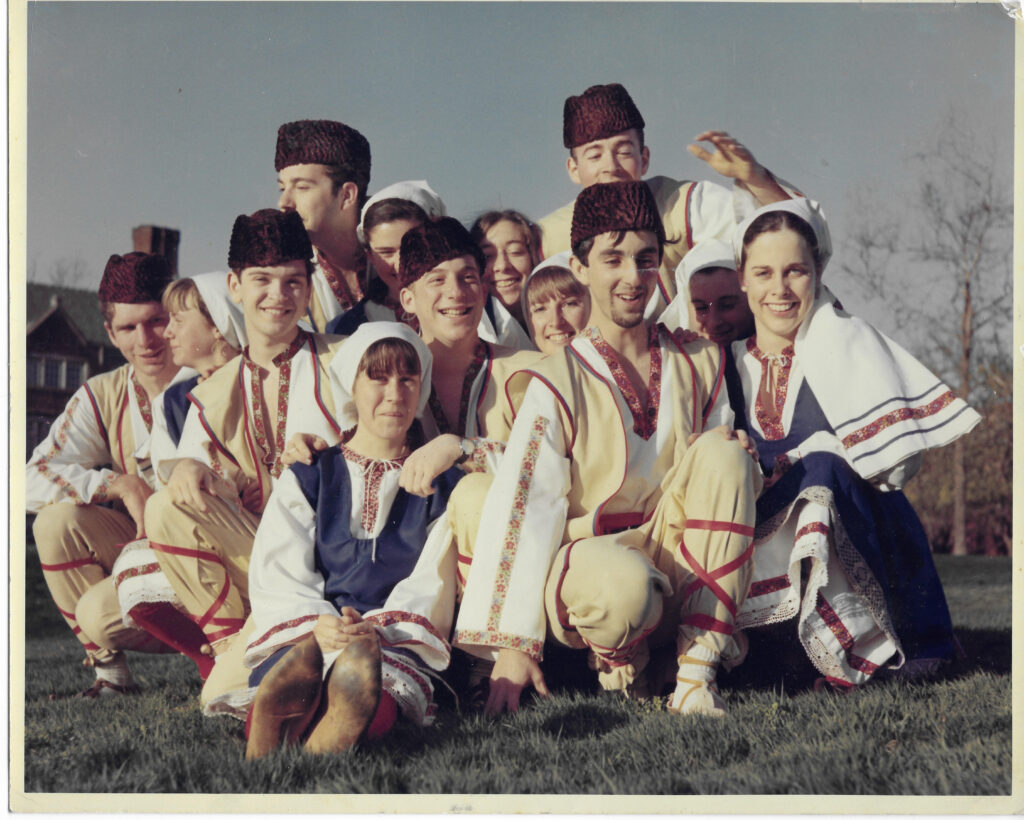
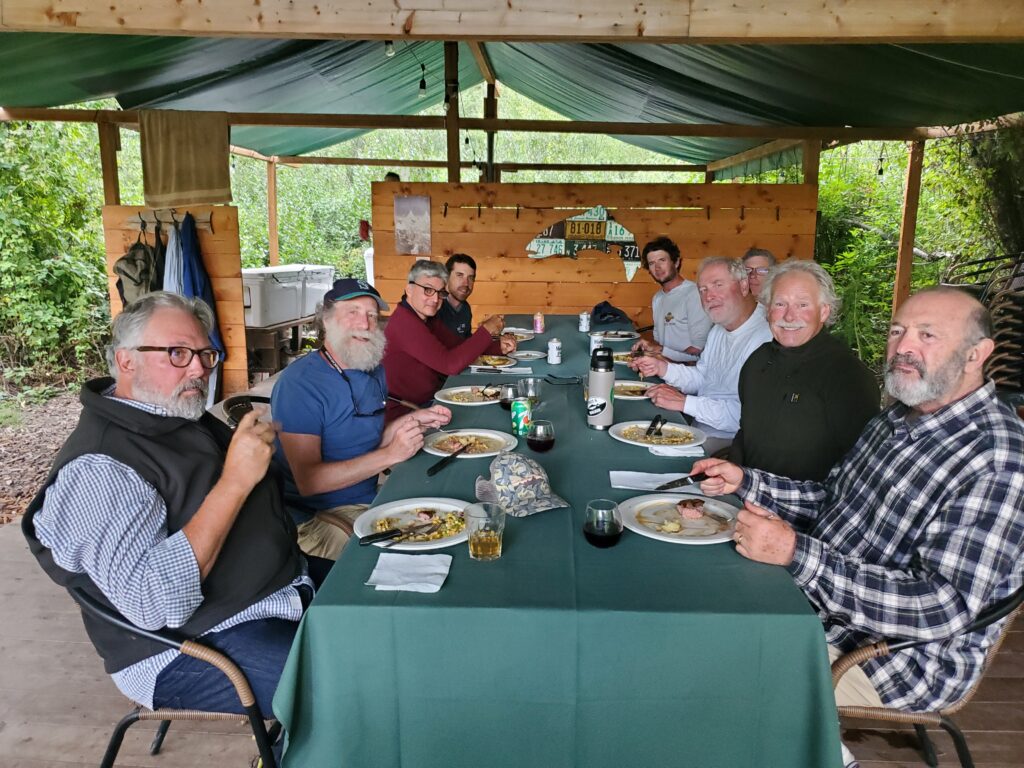
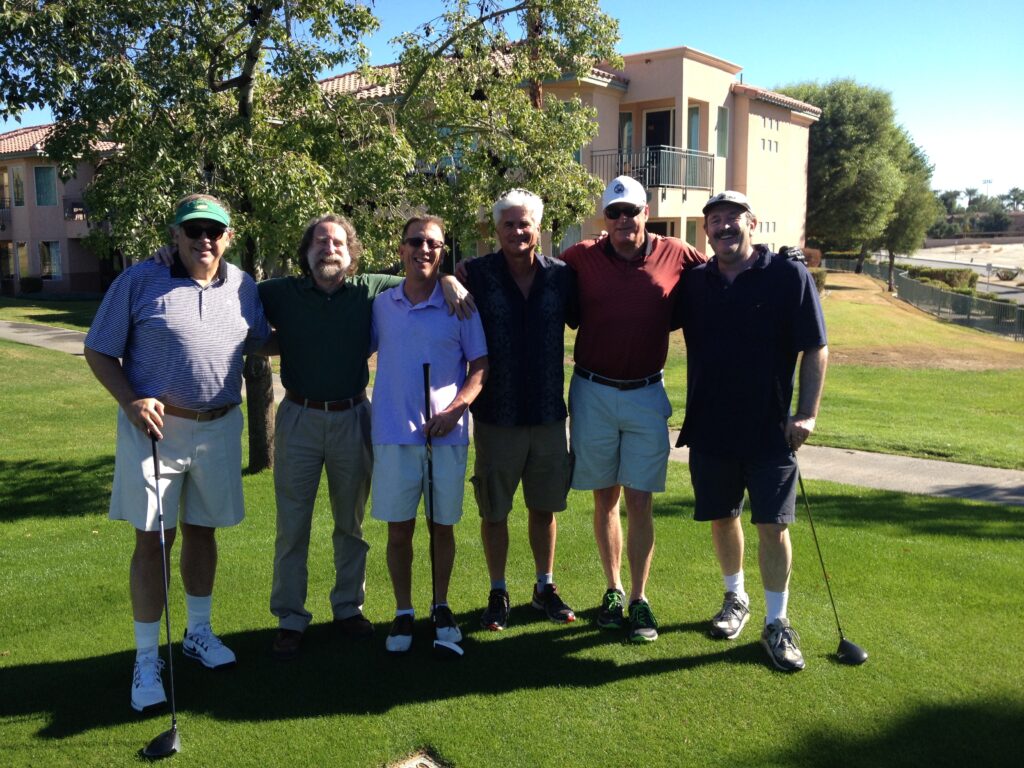
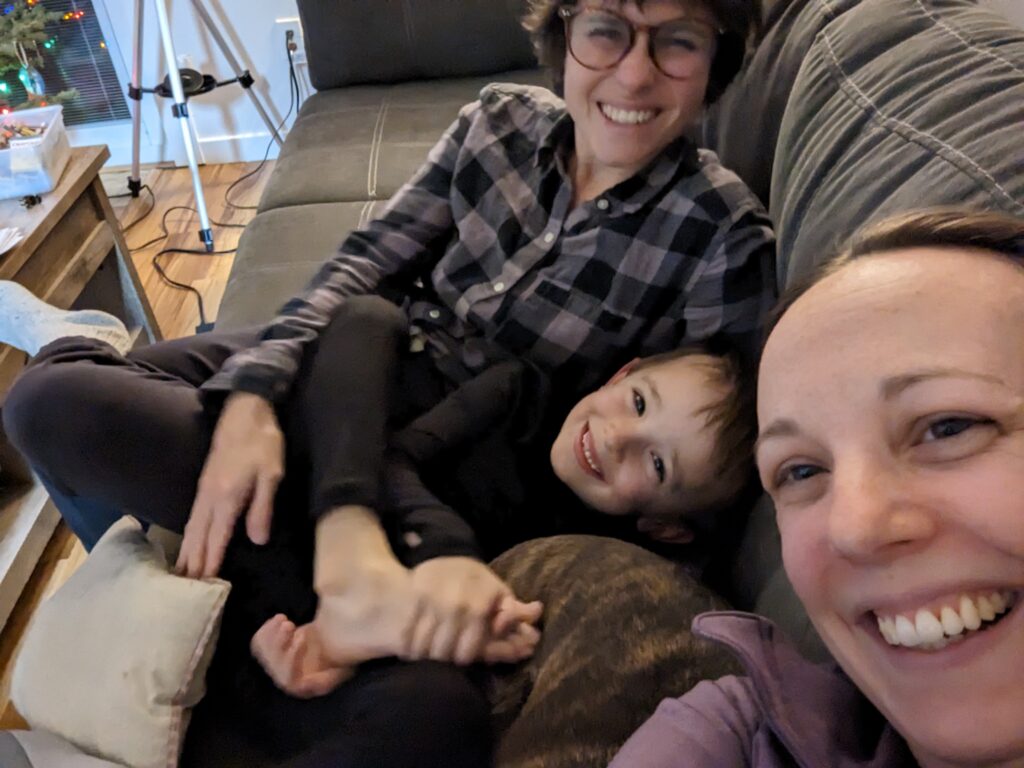
See a selection of our favorites:
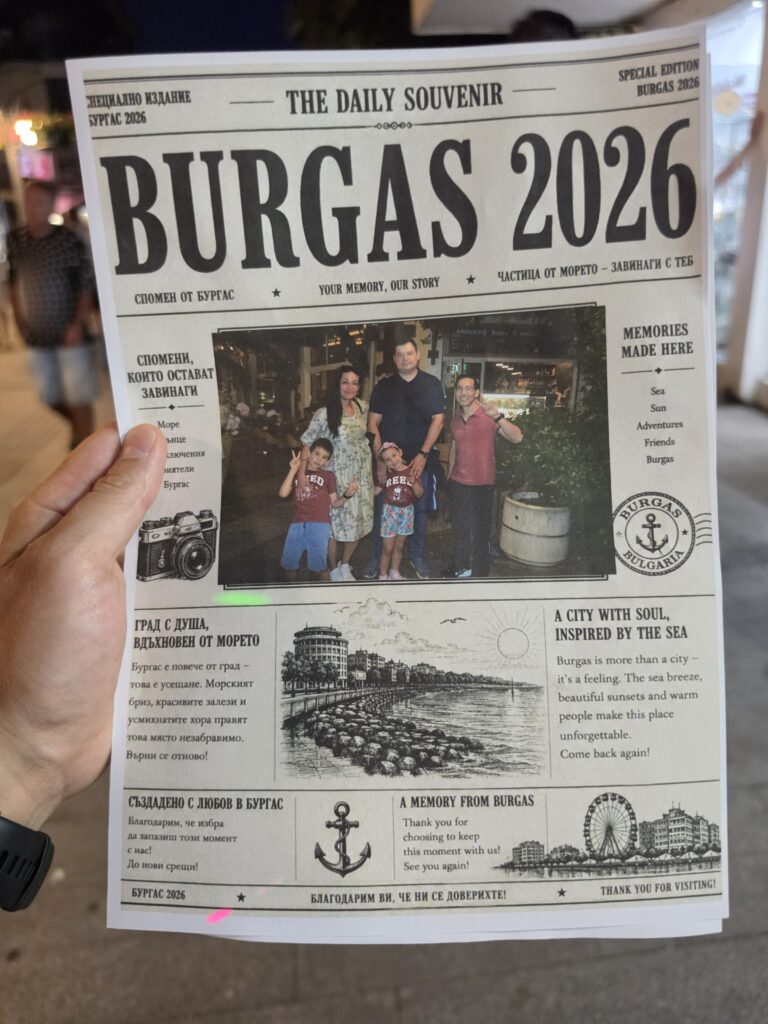
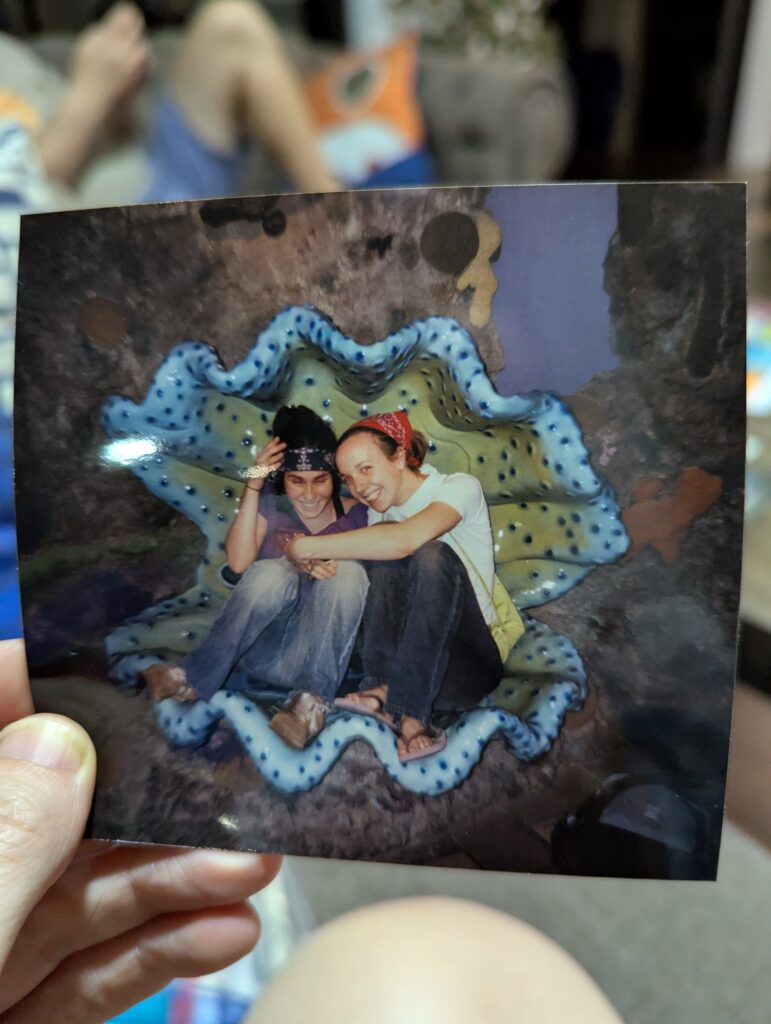
I’m currently relaxing on a couch in Burgas with my best friend, Alex ’04, and his family on my annual Bulgarian holiday trip.  Bulgarian Disney junior is playing on the TV  for the kids and I just read the request of professor, Robert Ribera. I thought I’d send a quick note that, yes, you will make life long friends at Reed. 

Evan Hayashi ’02
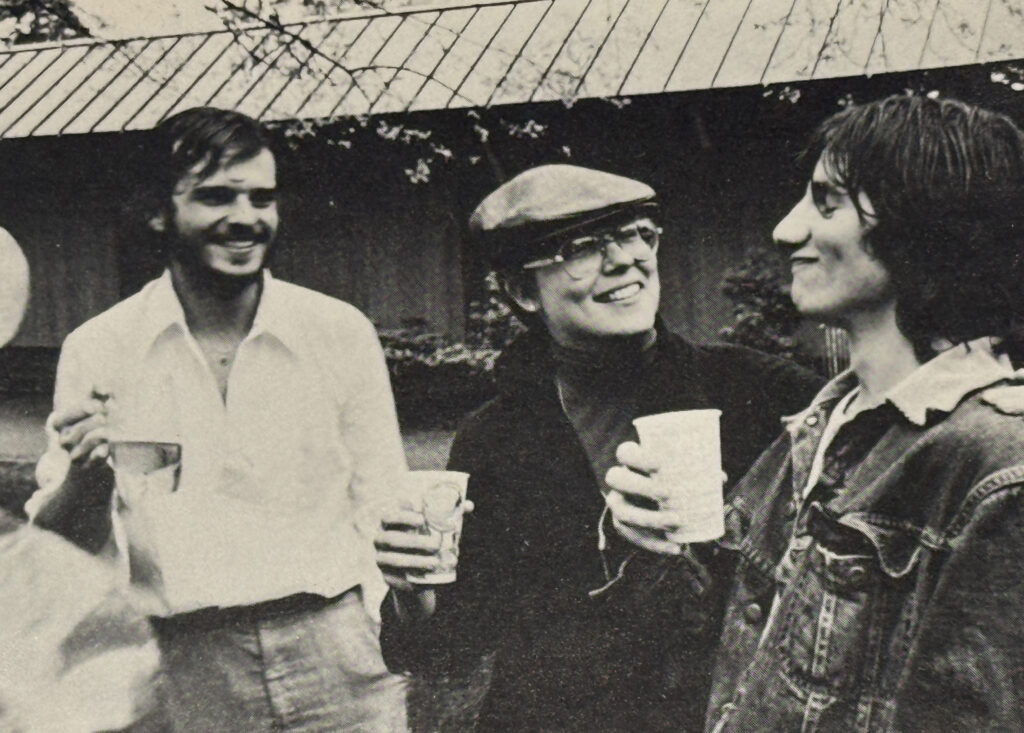

In the first black and white image from 1979, are (left to right), Mark Mosley ’81 , Beneth Sauer ’82, and myself (Jean-Pierre Masclet ’81).
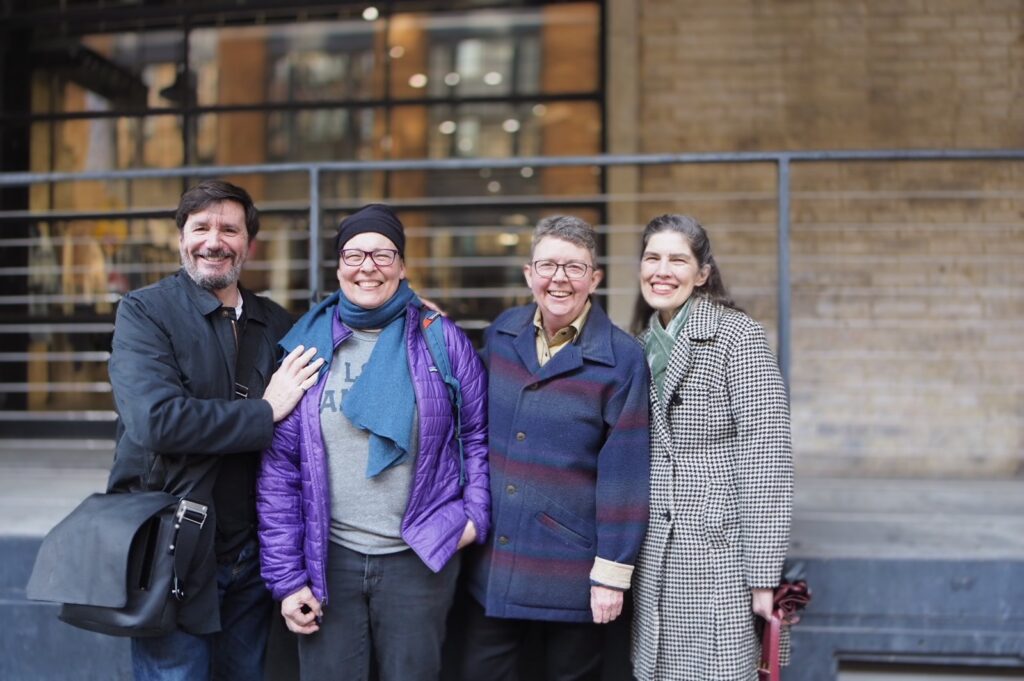
In the color image shot in New York City in 2023, a group of us chose to meet and see the Edward Hopper retrospective at the Whitney.
(left to right: me, Beneth Sauer ’82, Felicia Value ’82, Jane Page ’81). We all met at Reed and have stayed friends ever since
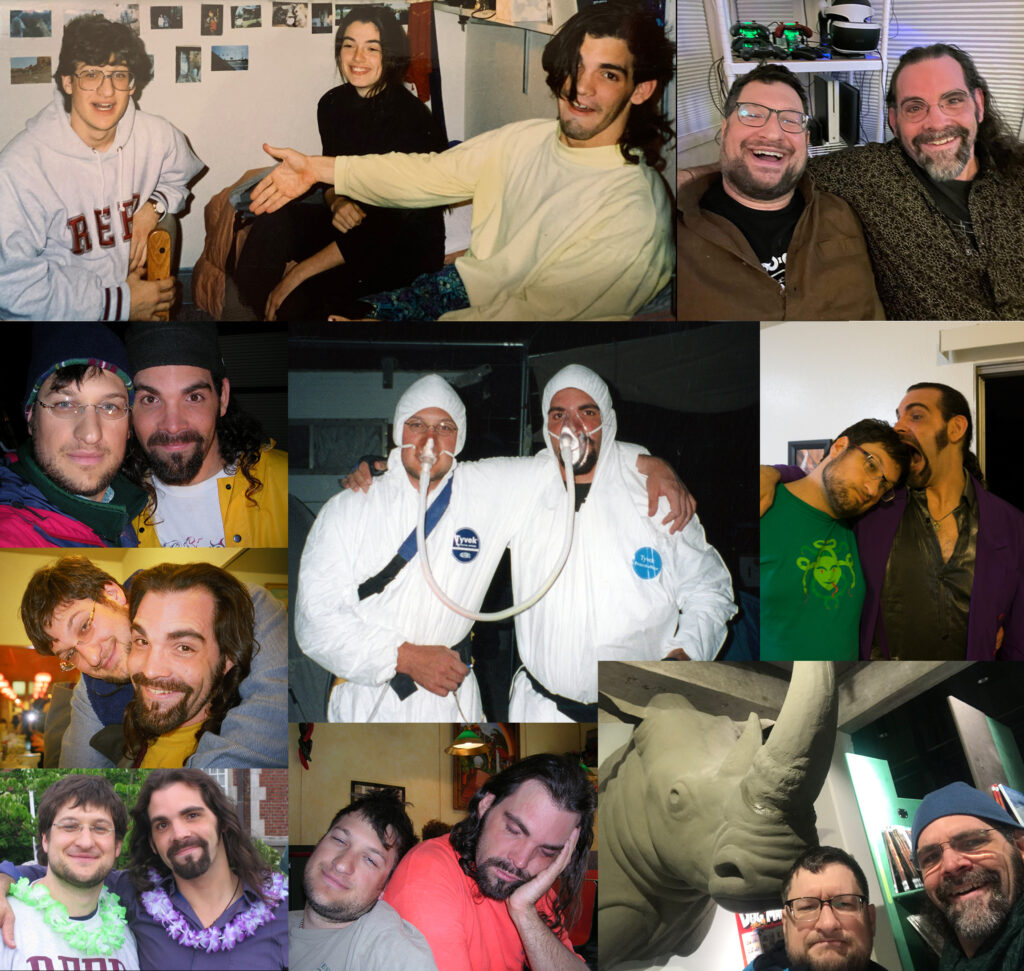
This is Noah Iliinsky (left) and Jer Faludi (right), both physics ’95. The earliest photo is probably in Sission dorm in the ’92-’93 school year. This photo montage was created for Noah’s wedding.

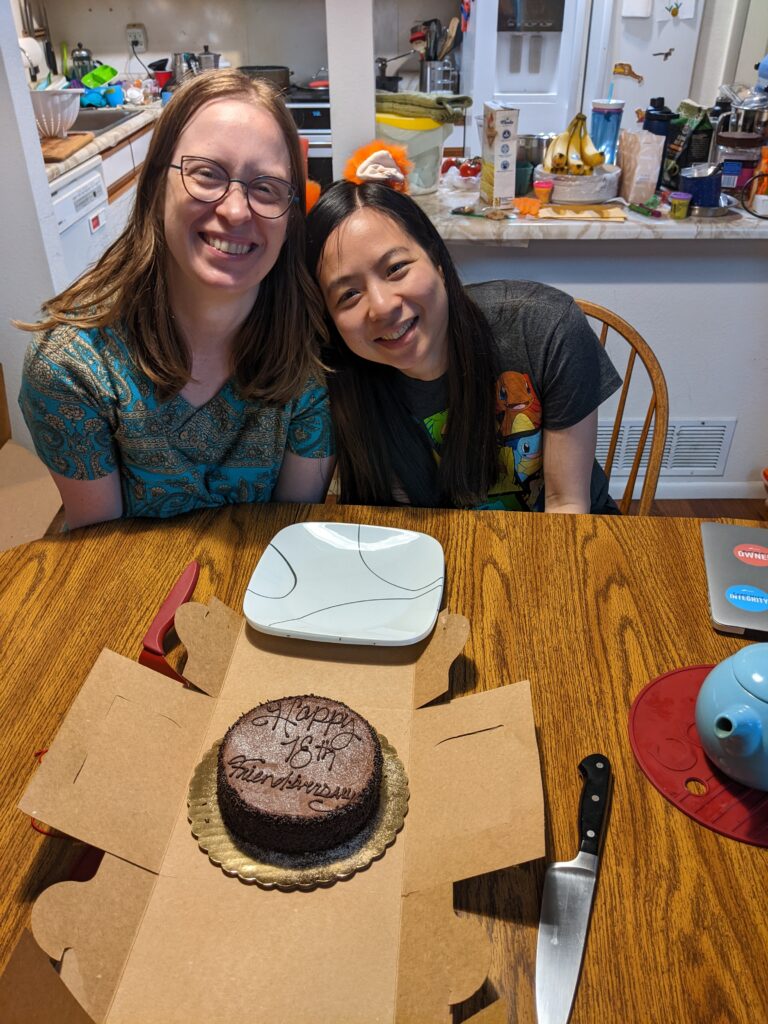
Tina Le and Jessa celebrating their 18 years friend-iversary after meeting at Reed, where they took HUM 110 together.

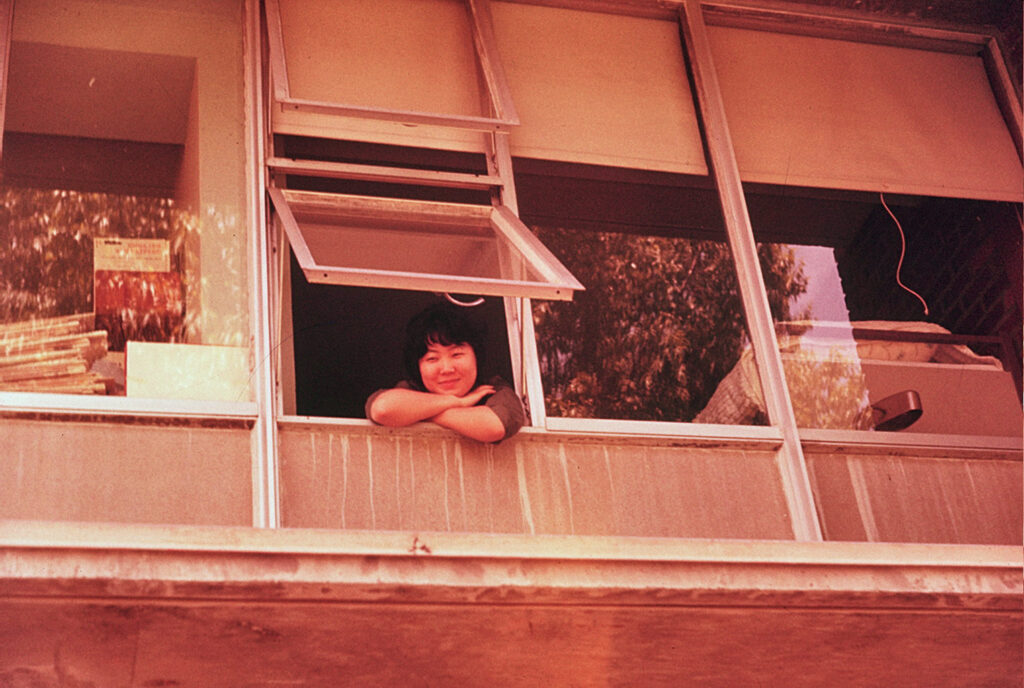
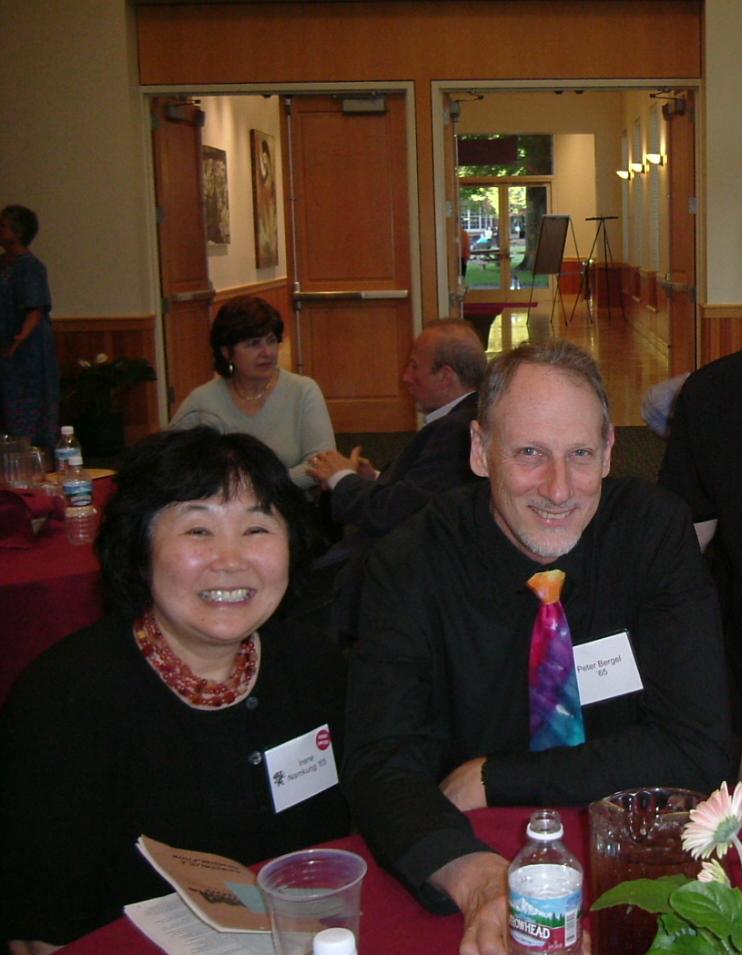
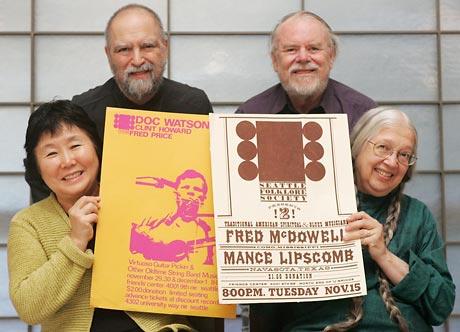
John Ullman ’65 wrote in about his wife, Irene Namkung ’65, who he met in freshman year:

“I suppose Irene counts as a friend. The first was taken in Fall 1962, or maybe spring 1963, our sophomore year. She’s looking out of her room in McNaughton, second floor. The second slide is Irene with Peter Bergel at our 40th Reunion. Peter has been a life-long friend. The third is with Phil and Vivian Williams who graduated a few years before us. They collaborated with us to start the Seattle Folklore Society. The pic is from a Seattle Times article  from 2006 about the Folklore Society’s 40th anniversary.

Making life long friends doesn’t begin to tell the story, at least for us. There were at least a dozen Reedies, probably more, who impacted our lives in profound ways, quite apart from anything academic.

Never thought of ourselves as characters from Gilgamesh, though.”
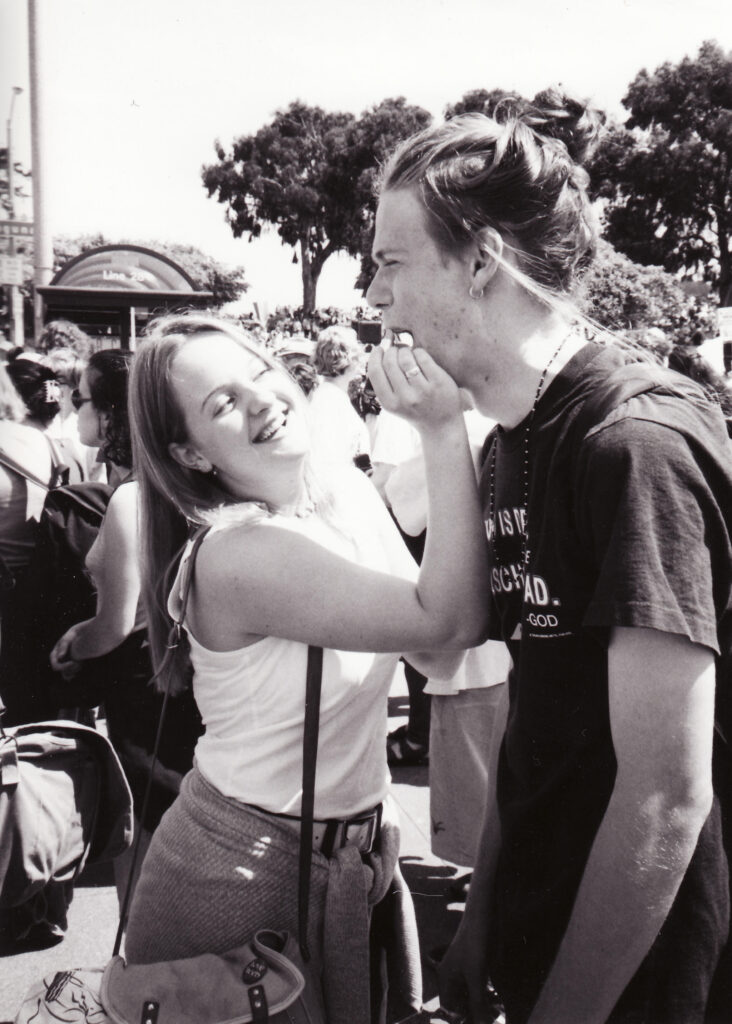

I met my best friend (and former husband) Jeremy Stone at Reed. As did many of my classmates! 
Here is us in freshman year.

Anne Pearson ’99

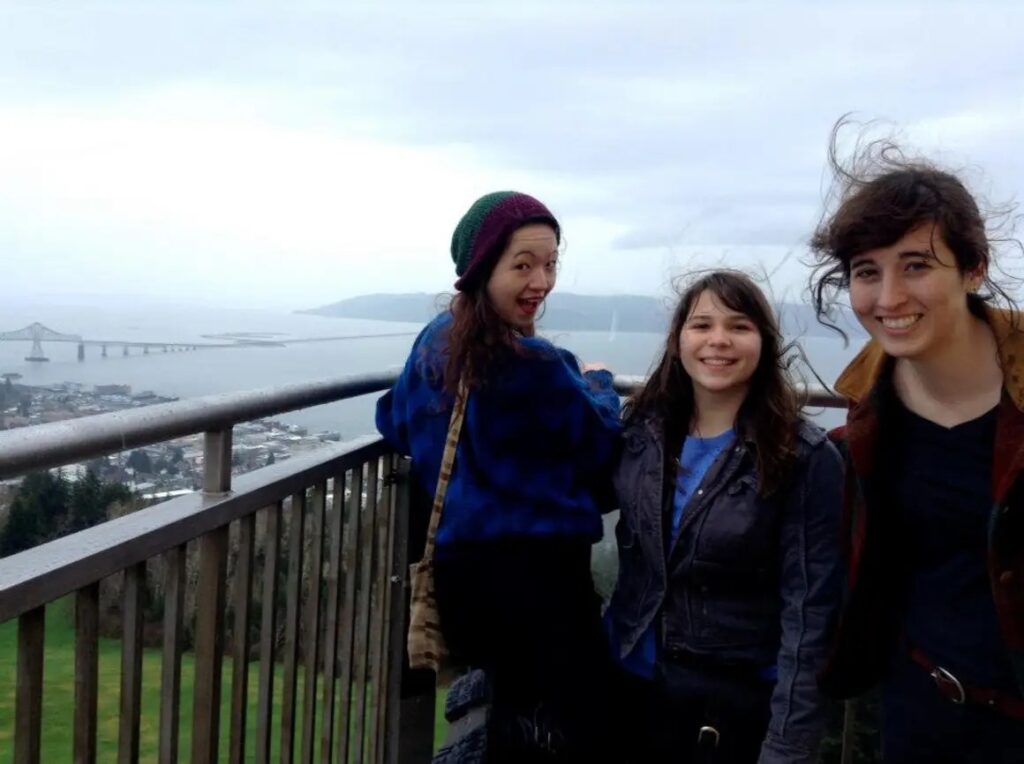
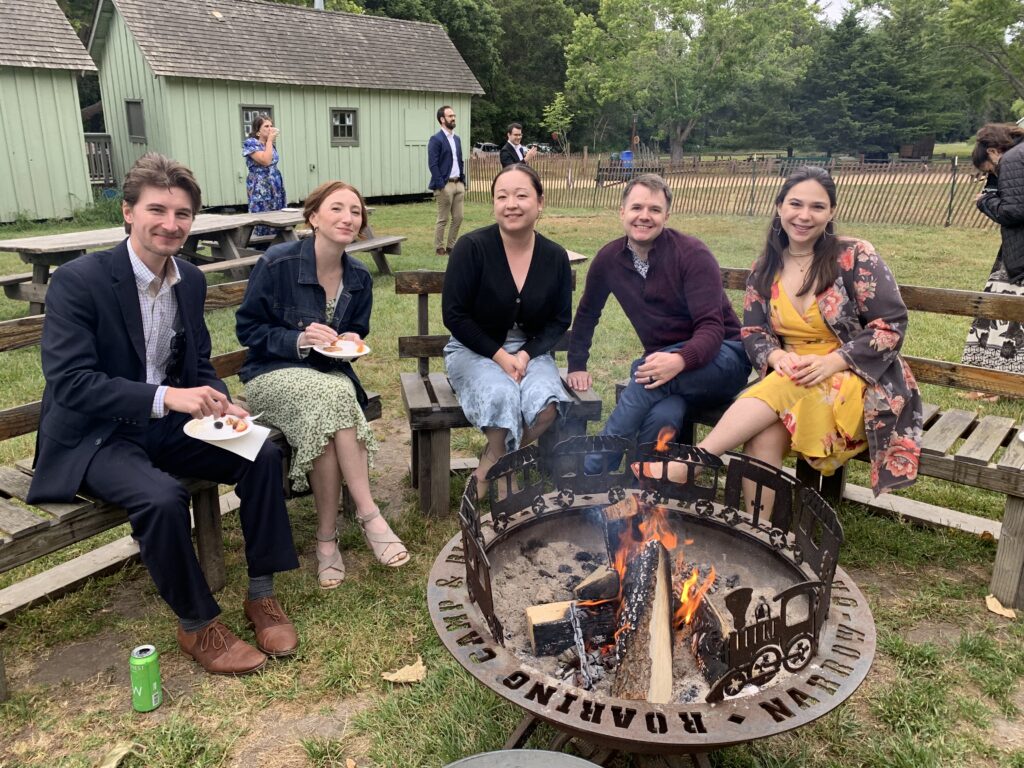
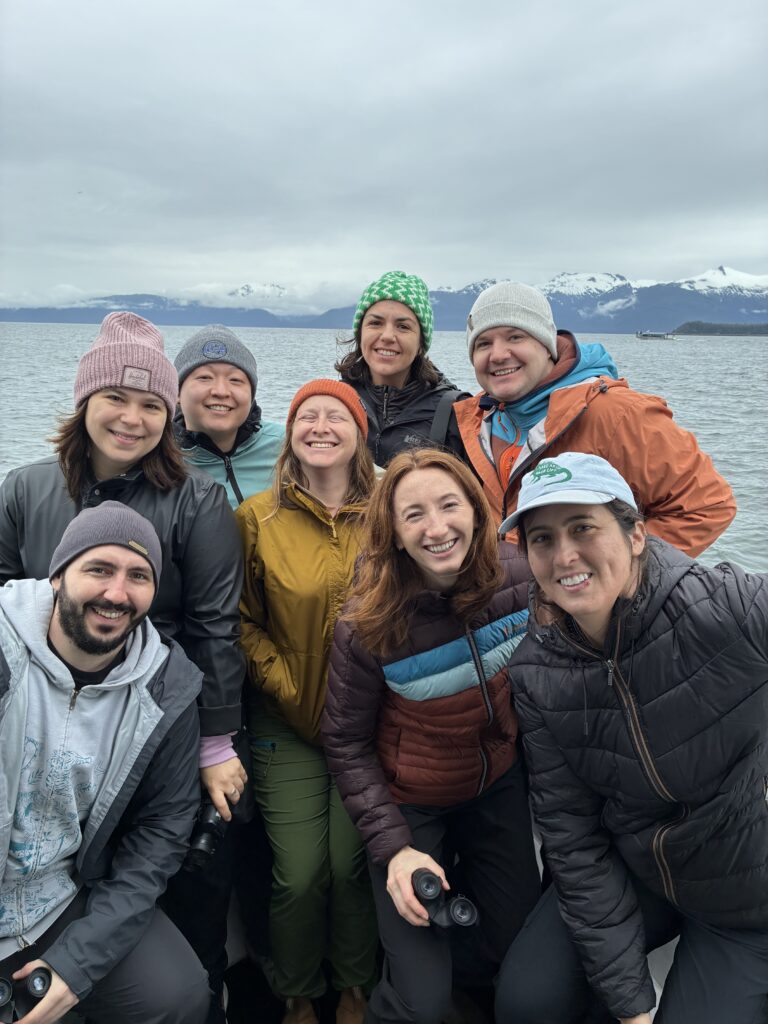
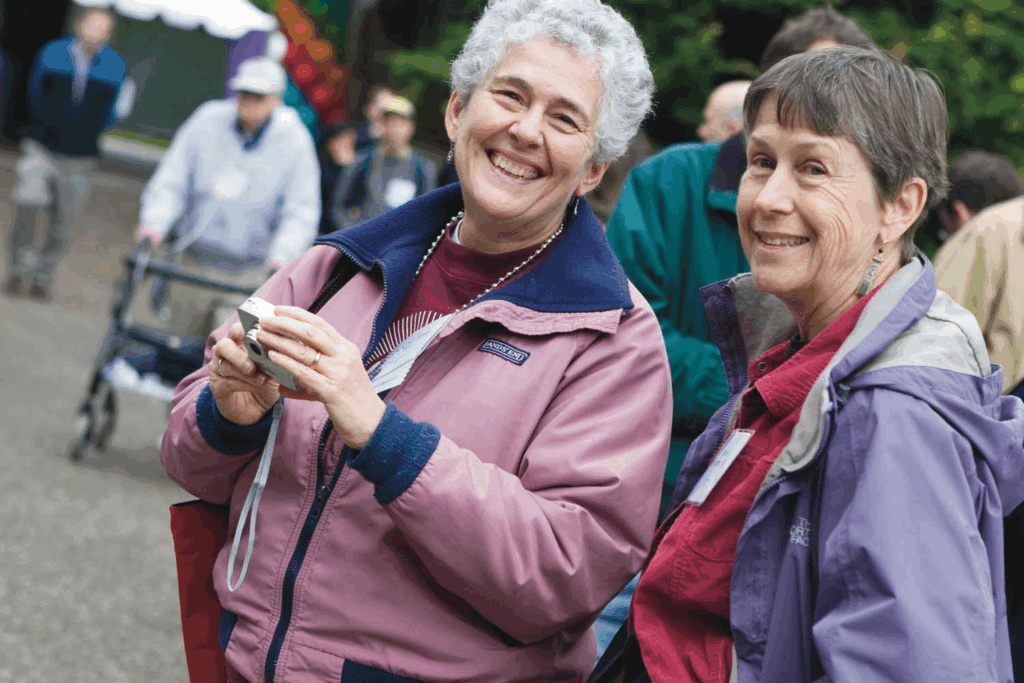
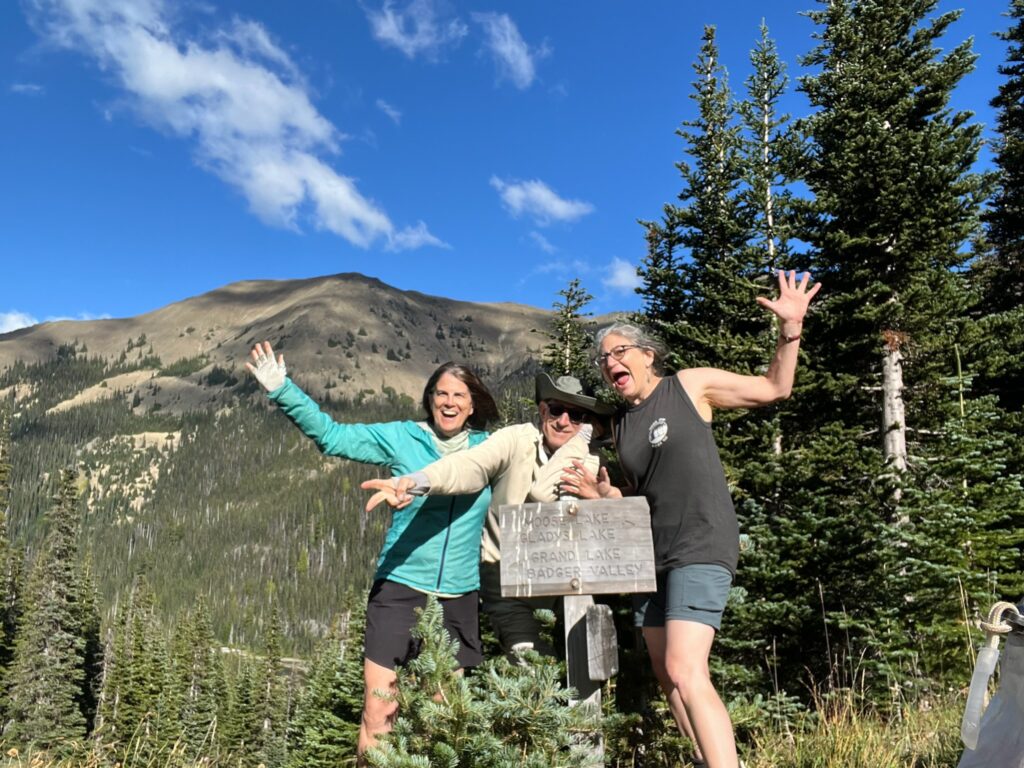
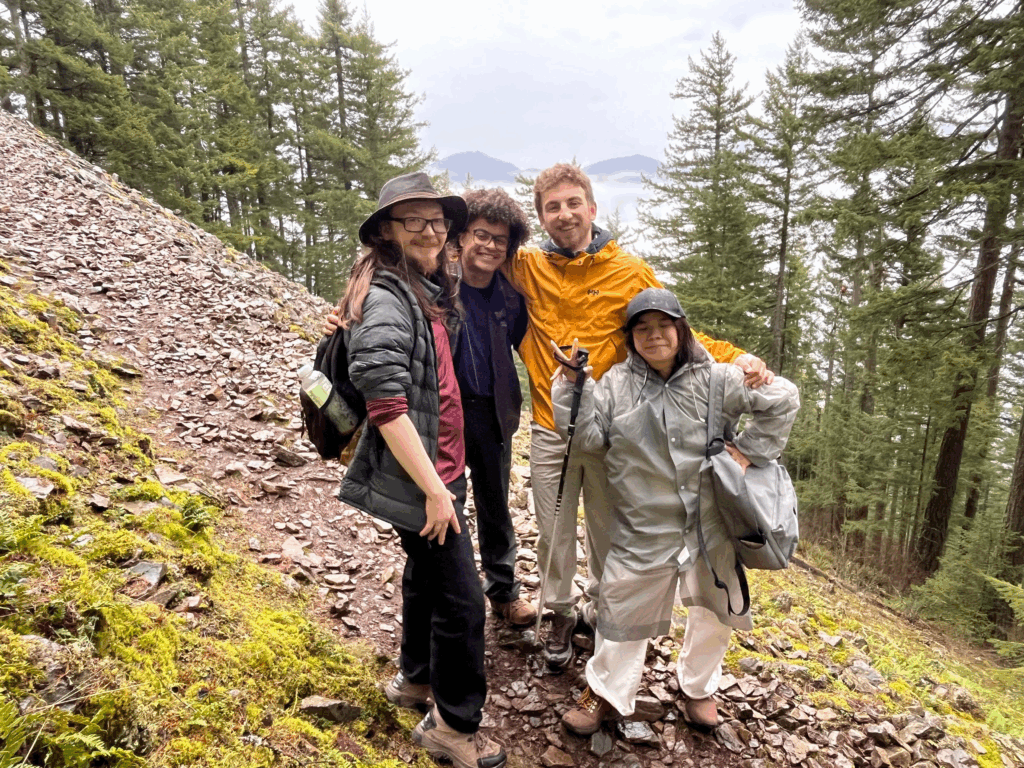
Two are from our time at Reed (graduation and spring break in Astoria). We graduated in 2014. The other two are pictures from a wedding and our group trip to Alaska in 2025. Despite living all over the country, we have remained friends and see each other every year or two!
Alumni pictured: Lisa Hiura ’14, Nisa Beceriklisoy ’14, Larisa Owechko ’14, Phoebe Young ’14, Alan Bauer ’13
Phoebe Young ’14

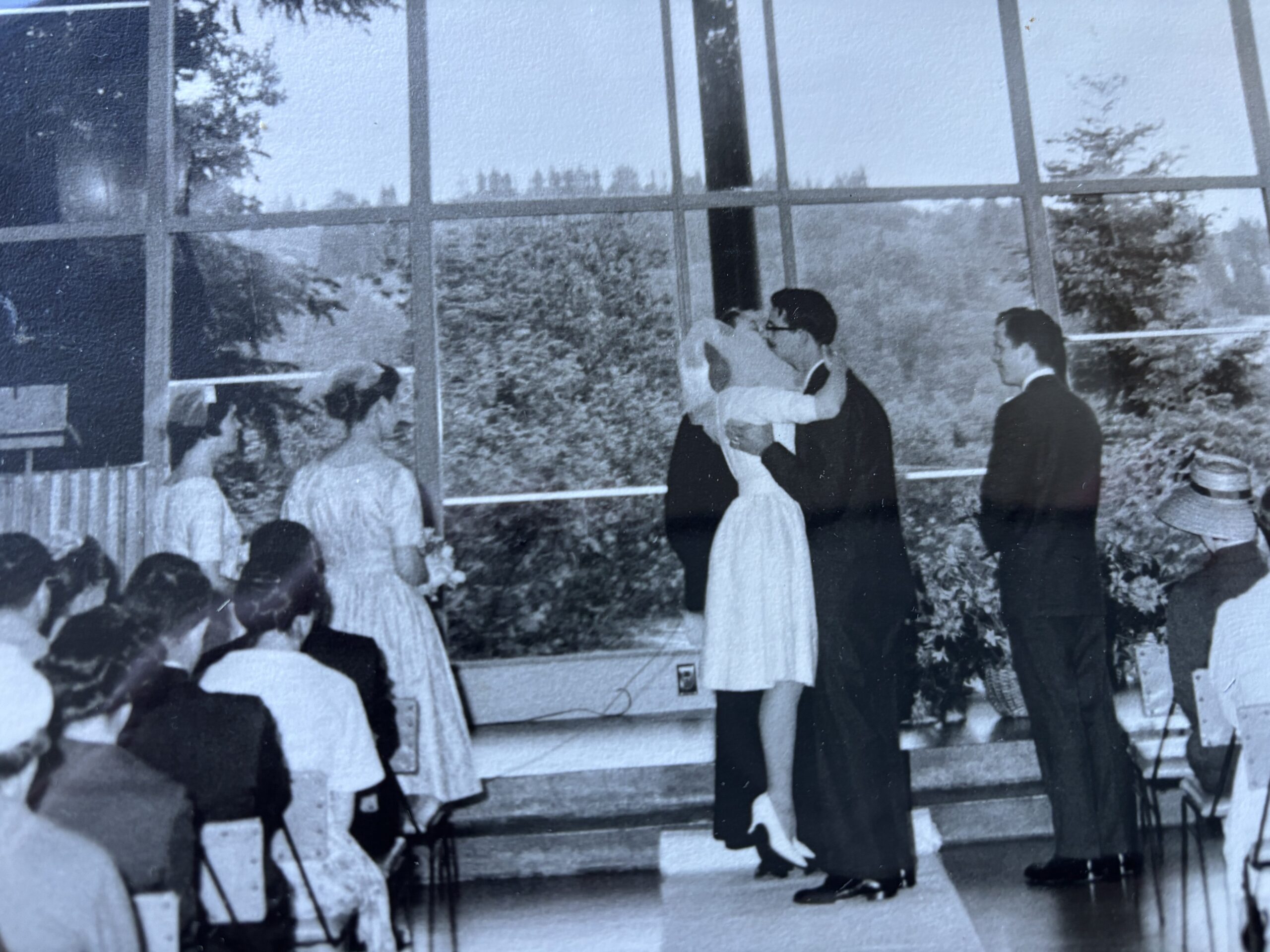
Larry Randall and Judith Gedney Baggs, class of ’64, remain friends. 

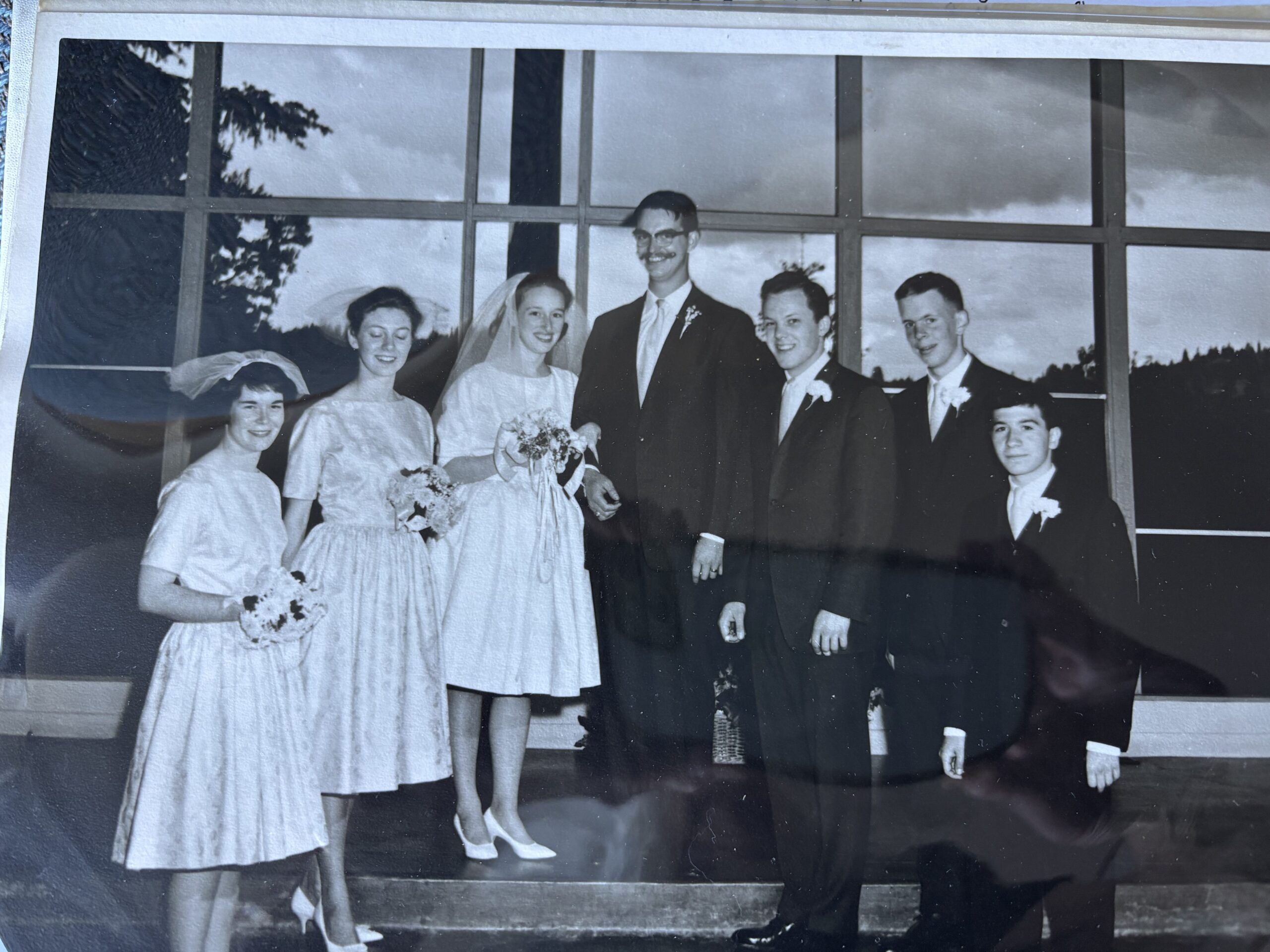
Larry and Judith have been friends since Reed days in the early 1960s. Larry lived in Quincy with Judith’s spouse, Ray, for their freshman and sophomore years, until Judith and Ray married in 1962. At the wedding, Larry was the Best Man. They all moved apart after Reed but had a few in-person visits in New York state, California (on Larry and Marla’s cross country honeymoon), and Washington state. Ray died in 2023, but Larry and Judith, both of whom now live in Continuing Care Retirement Communities, in New York and Seattle respectively, have kept in touch. Larry provided advisement to Judith when she moved.

Photos show Ray and Judith’s wedding, with Larry as Best Man
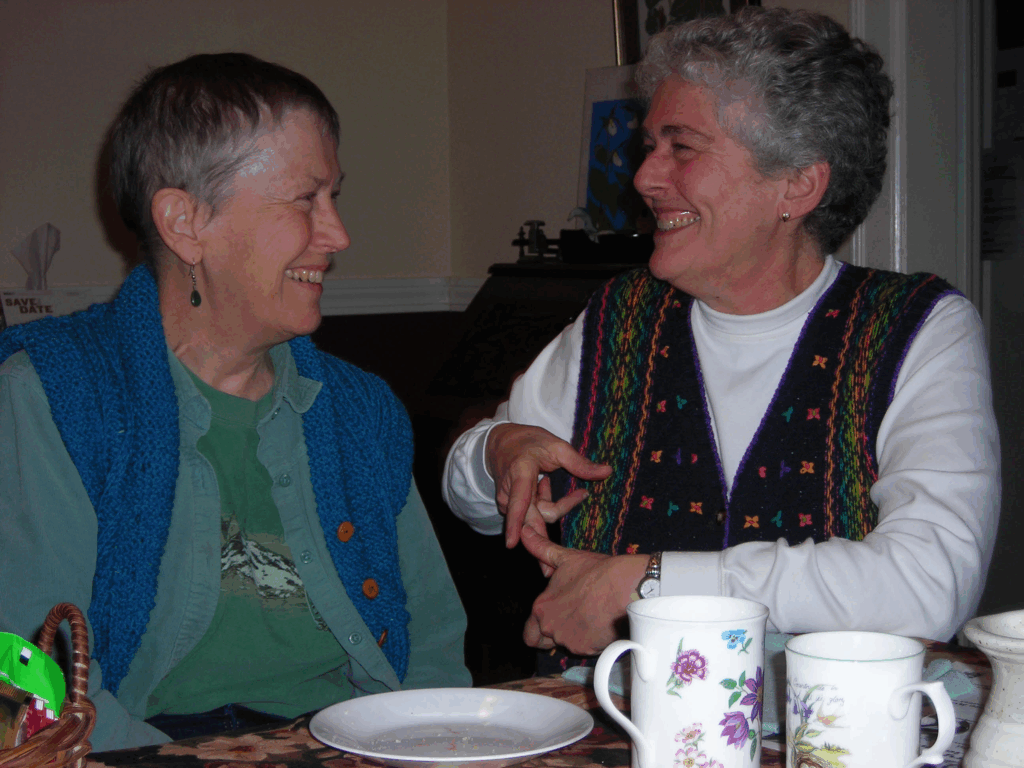

Bonnie Stockman and I became friends in fall 1967, when she was a freshman and I was a sophomore. We bonded over folk dancing, which was very popular at the time, sourdough pancakes, and in later years, horses. 
Here is the Peach Jam Story. In 1968, we found ourselves in the same city at the same time. Our first visit consisted in catching up on gossip about mutual friends. For the second, however…what else was there to say? Was continuing gossip healthy? I had a bag of peaches and she knew how to make jam. We spent the afternoon making peach jam, laughing and engaged in kitchen creativity. The lesson we both understood was that friendships endure when they are based on shared life experiences and mutual passions (and delicious jam is always a good thing.)
We remained best friends over the decades, living in different states, and vacationing together with our families. When she was diagnosed with ovarian cancer, I flew up for some of the initial rounds of chemo. Almost 5 years later, in 2013, she asked me to come when she entered hospice. I helped to take care of her and her family for the final 6 weeks of her life. I wrote her obituary for the Reed magazine.
Here are a few photos from across the years.
Deborah J. Ross ’68

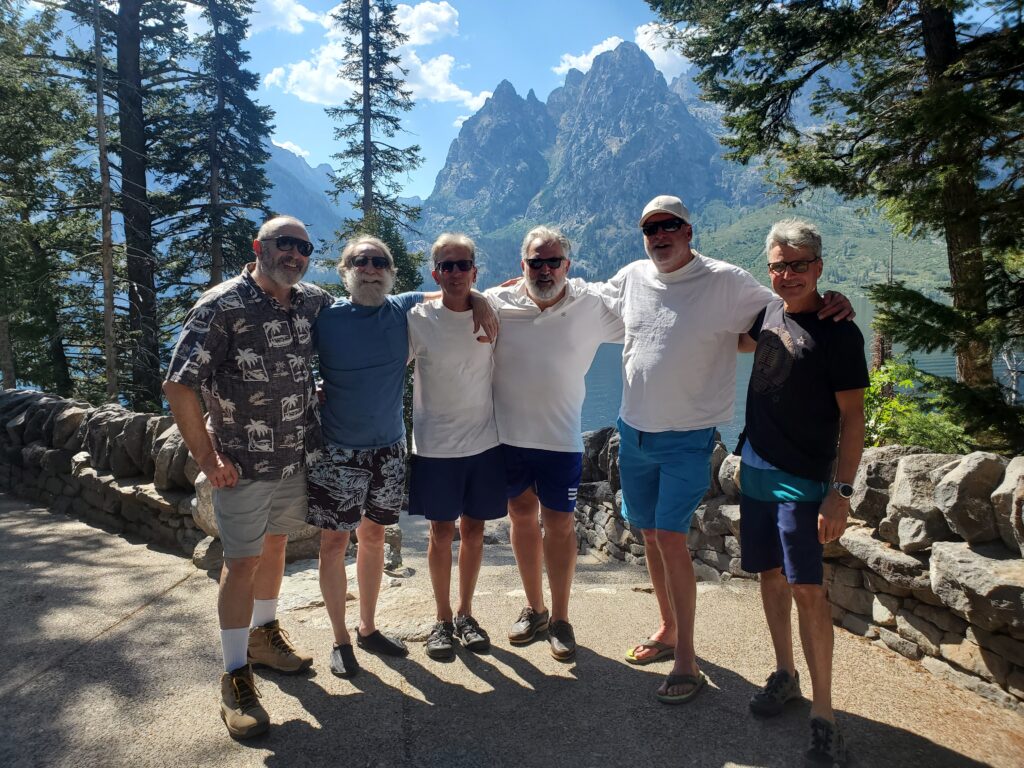
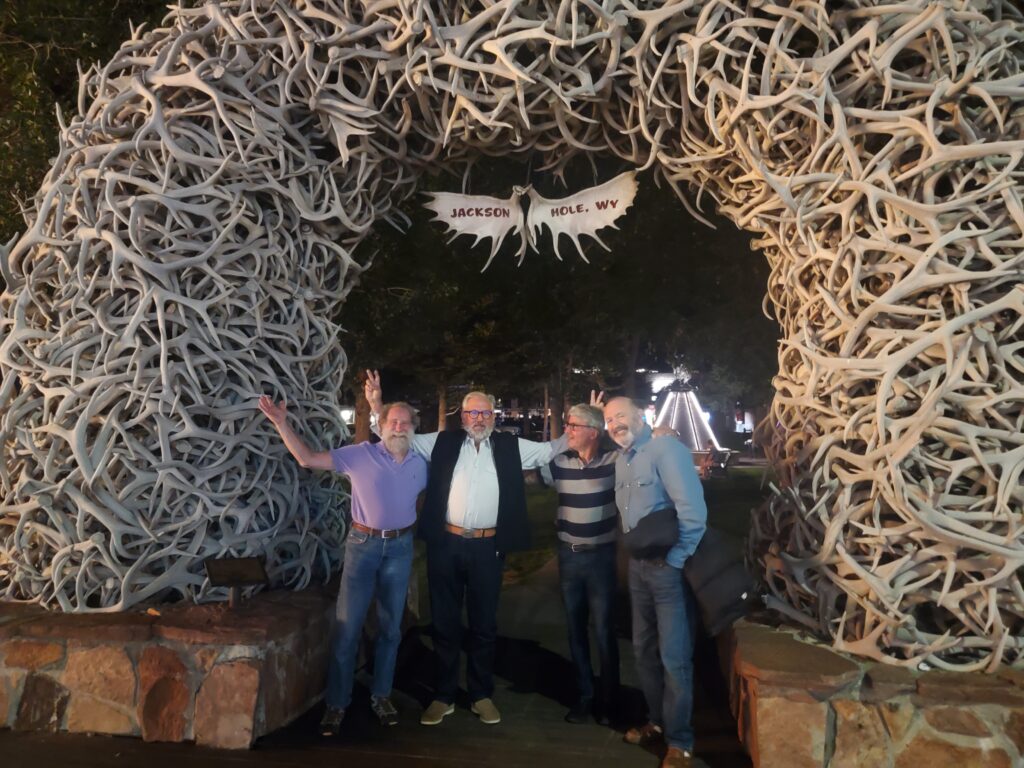
We all met in 1972 at Reed. We’ve stayed in touch since then over the years. From all over the US (NH, MA, MT, MI, NY, CA), we shared houses all over southeast Portland from Holgate, to Hawthorne to Carleton Street. Two of us became dentists, one a hand surgeon, one an ophthalmologist, one an investment banker, another an attorney and another a college professor. Scattered after Reed to the four winds, New Hampshire, Washington, Oregon, Montana, Wyoming, Connecticut, London, California. We are constantly in touch, messaging photos of our journeys…hoping to rendezvous once again soon… once we are all on the same continent at the same time!

Art Lyford ’76

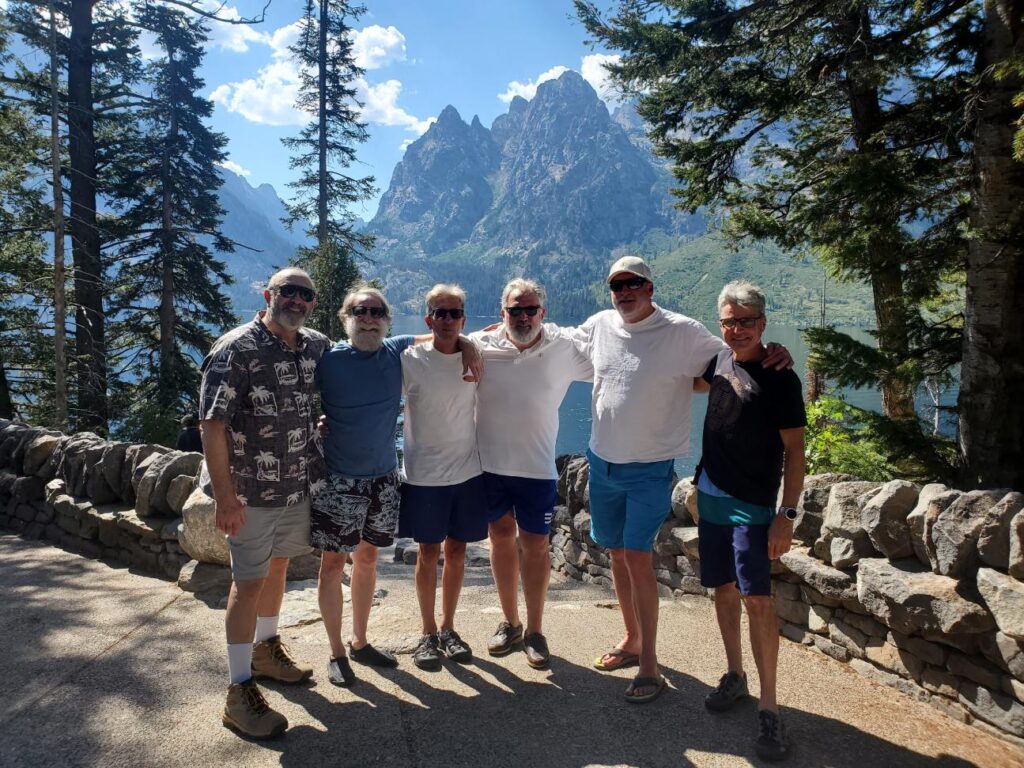
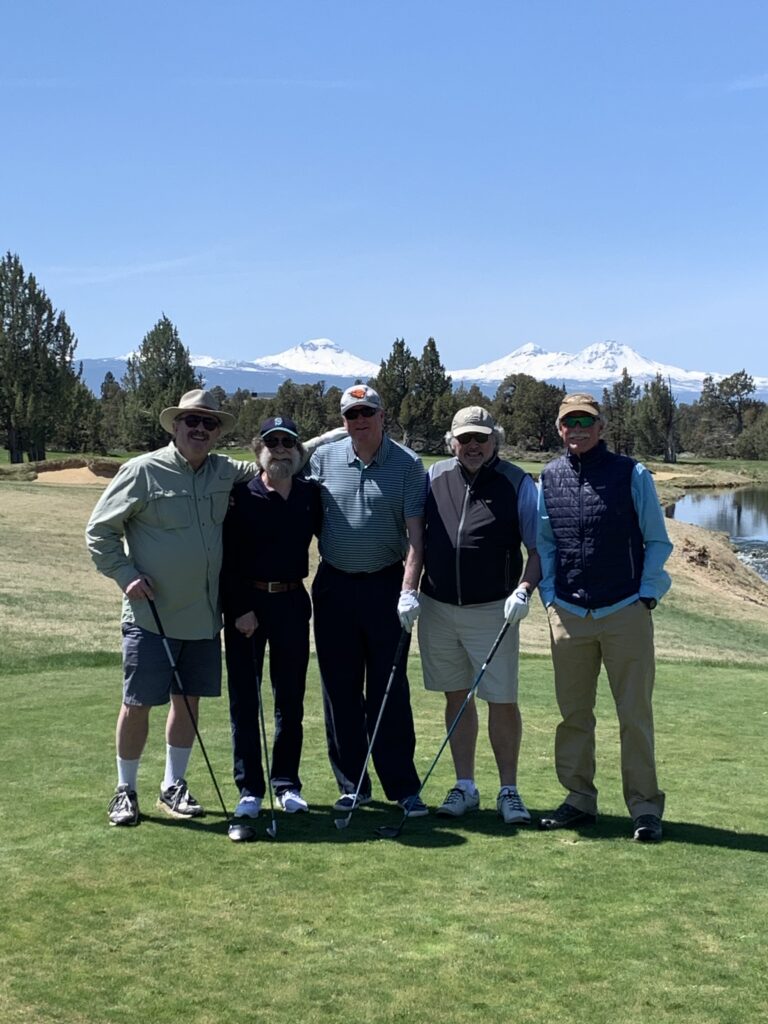
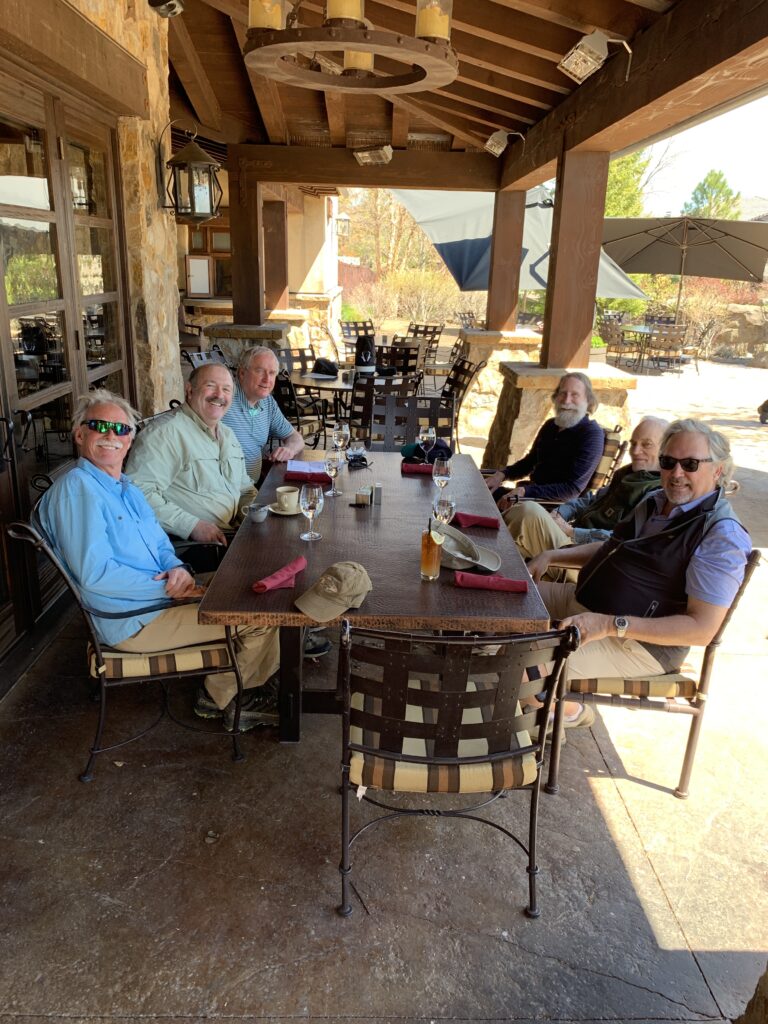
From Rafeal Gurvis ’77: “A group of LIFE LONG FRIENDS from the classes of 1976 and 1977 are shown in these 4 pictures. Not every picture shows everyone, but between the 4 pictures most members of the tribe are shown. We got together over the decades for various joyous occasions:”
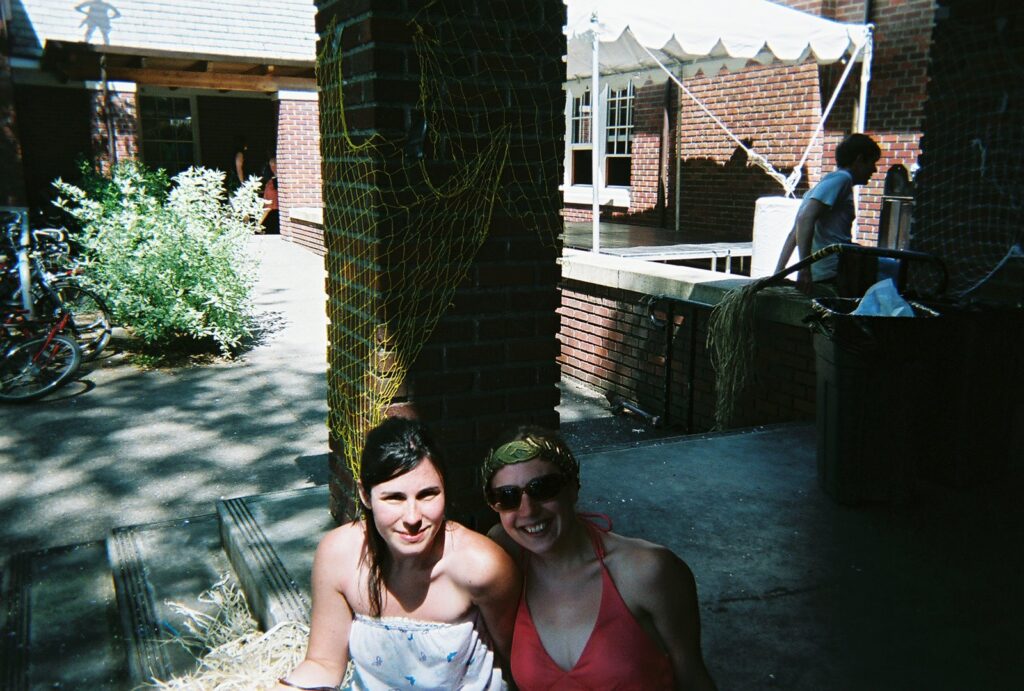
Lolo Scheiner and Beth Melton (née Ungerecht), both class of ’06, met during Prospie week. They immediately connected and spent the week together – eating in Commons, touring the dorms, and buying their first Reed sweatshirts in the bookstore together.

This was before the era of cell phones, so they stayed in touch by email when they headed back home. They both chose Reed as their first choice, and when they arrived, were in neighboring cross-canyon dorms (Bragdon and Chittick). 

They spent much of their time at Reed together. Parties in the Bragdon hallway and the Chittick balcony (RIP), knitting or studying in each other’s rooms, and even going in together on a slightly functional $600 car so they could get off campus.

Lo and Beth shared a thesis office in the psychology department. When Lo graduated a semester early, Beth’s disposable camera roll (remember, no cell phones yet) was full of blurry photos of her rainy spring-fall thesis parade.

After graduation, they went their separate ways, Beth staying in Portland and Lo headed to New York. But, as fate would have it, they ended up back in the same place – Boulder, Colorado – as Beth started her first teaching job and Lo started grad school.

They haven’t had the opportunity to live in the same place again, but it doesn’t matter. They talk constantly, sending each other “which bird are you?” quizzes, obscure questions about niche linguistic observations, and photos of the new and interesting plants and fruits they find. Weddings, kids, land projects, road trips – they are in it together. Friends for well over half their lives.
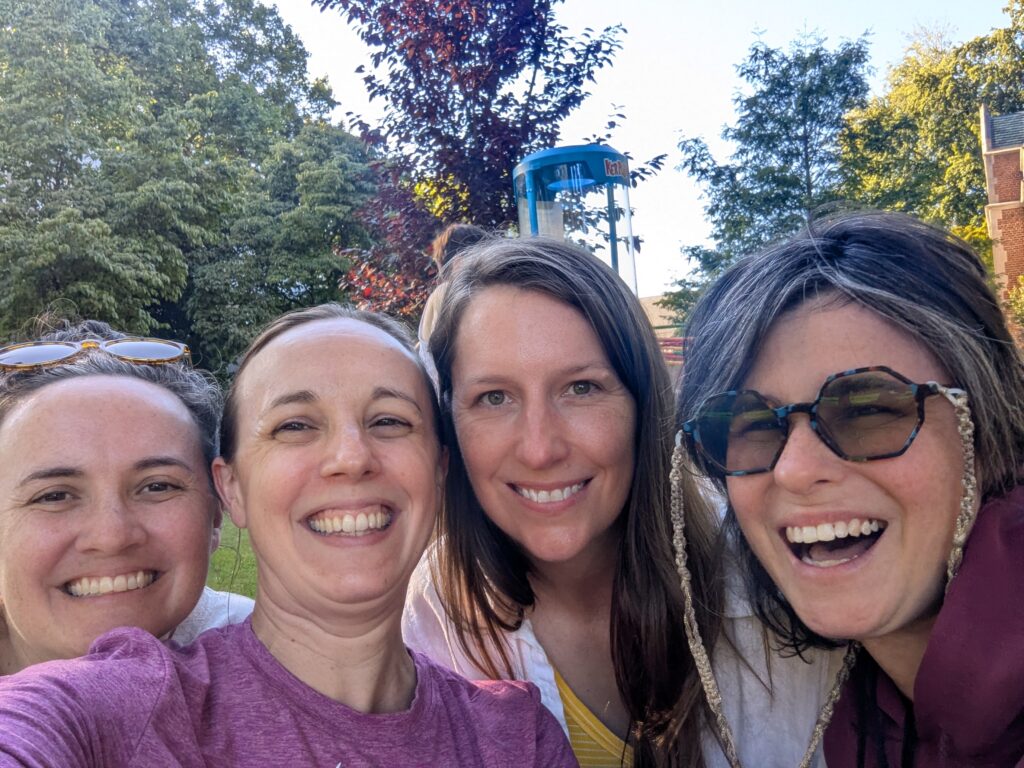
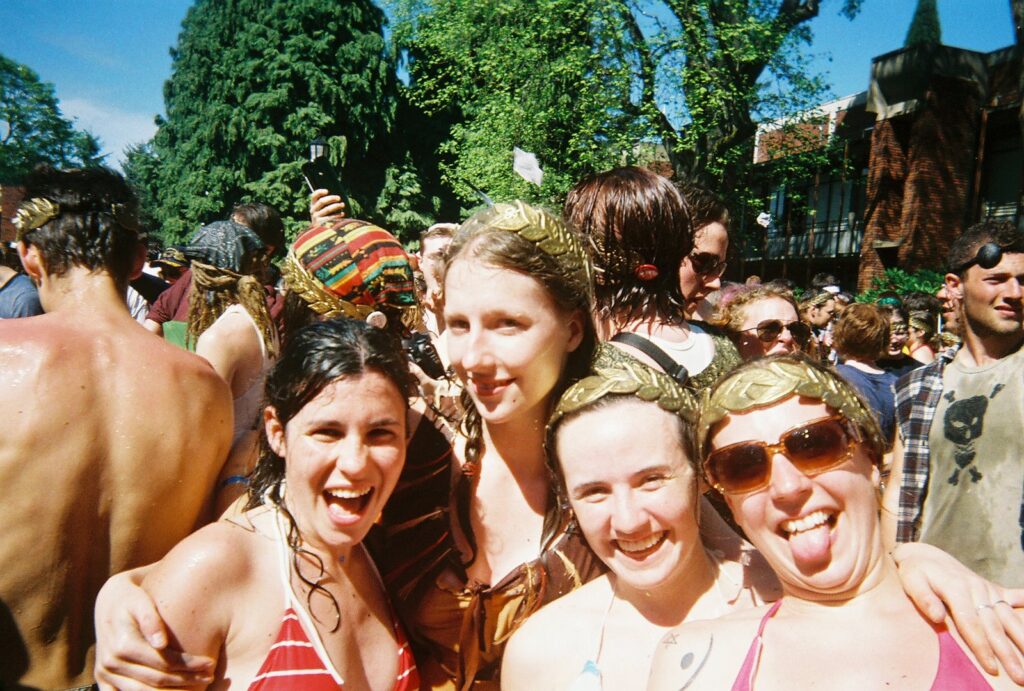
We met at Reed in the early 1980s. Cathy and Louis bonded during an Orientation Week hike in the Mt. Jefferson Wilderness. Laurie and Louis met in Hum 110 conference. Cathy and Laurie met later in an Anthropology class and lived together senior year, enduring the trials and tribulations of our theses. Over the past four decades, we’ve stayed in touch across the miles – attending weddings, bat mitzvahs, sharing meals and lively conversations in Seattle, Boston and points in between.

Cathy Baker ’86
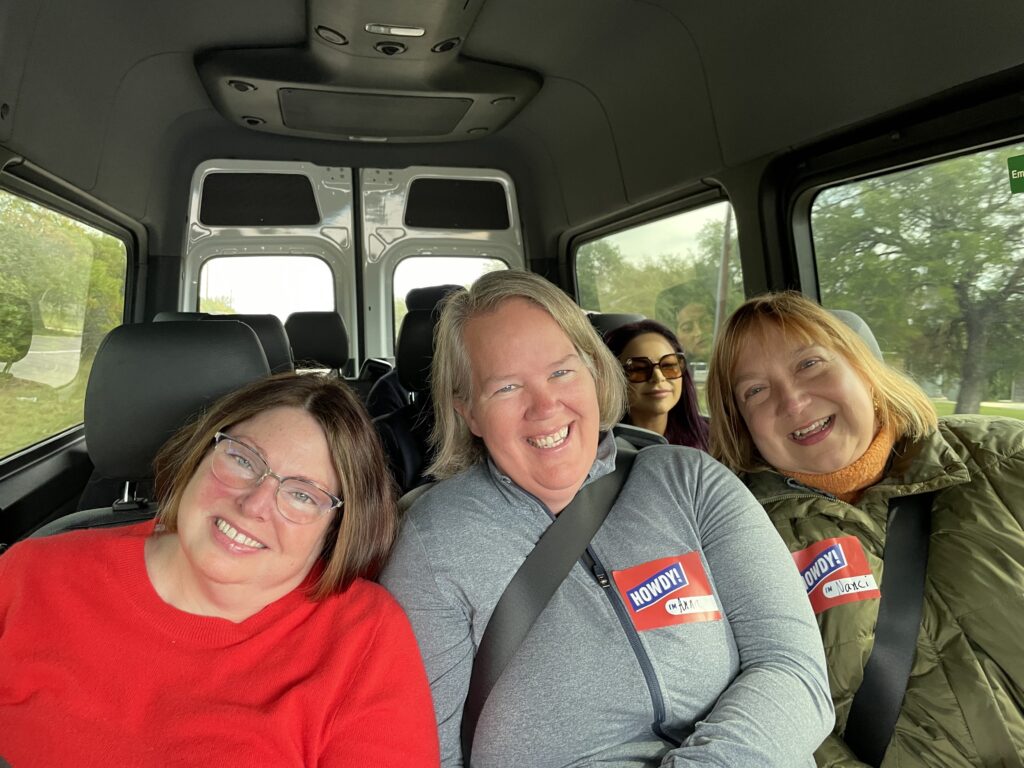
From Ann Campbell ’94: “Anna Billstrom ’94 and Nanci Surrett were my best friends. Nanci transferred to Mount Holyoke during her junior year (lots of people used to transferred out of Reed in the early 90s), but we’ve all stayed close over the years.

Nanci was my roommate during my first year of a PhD program at Emory in Atlanta. We lived together during 1994-1995. Anna and I have gotten together at reunions or on trips many times over the years. All three of us traveled to Austen in 2022.

I always tell students in a class I teach called “Applied Austen: Emotional Intelligence in Austen’s Novels” that you cannot make new old friends. Maintaining friendships is as important as cultivating new ones. Anna and Nanci have been important to me for more than 30 years now. And it’s great to make lifelong friendships at Reed, because you find out quickly once you graduate that Reedies are unusual people. They’re smart, quirky, funny, imaginative, and just interesting to know. They are great conversationalists. You never get another shot at that sort of concentration of “clubbable” (Samuel Johnson’s term– although it was actually “unclubbable” as applied to a boor) people in one place. “


As Professor Ribera said in his lecture, “look around you. In the coming weeks, semesters, and years, some of the people sitting around you will become your own lifelong friends.”

Who were your epic friends from your time at Reed, or the Reedies who have become your friends since?
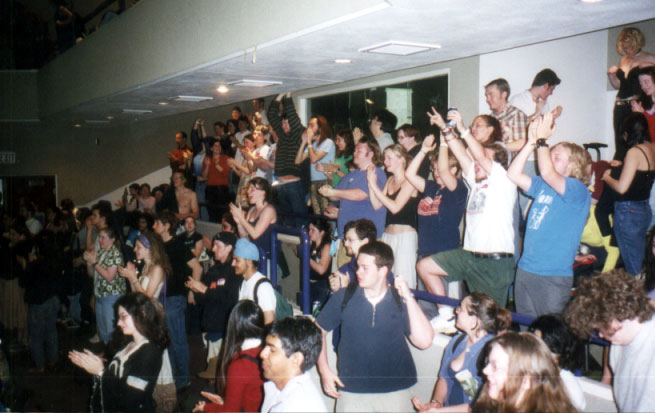
A group of freshman during the last session of HUM 110, A cluster of them near the back have remained friends to this day. Courtesy of Zach Babb.

CHEM 102 uses Reed’s Dye Garden

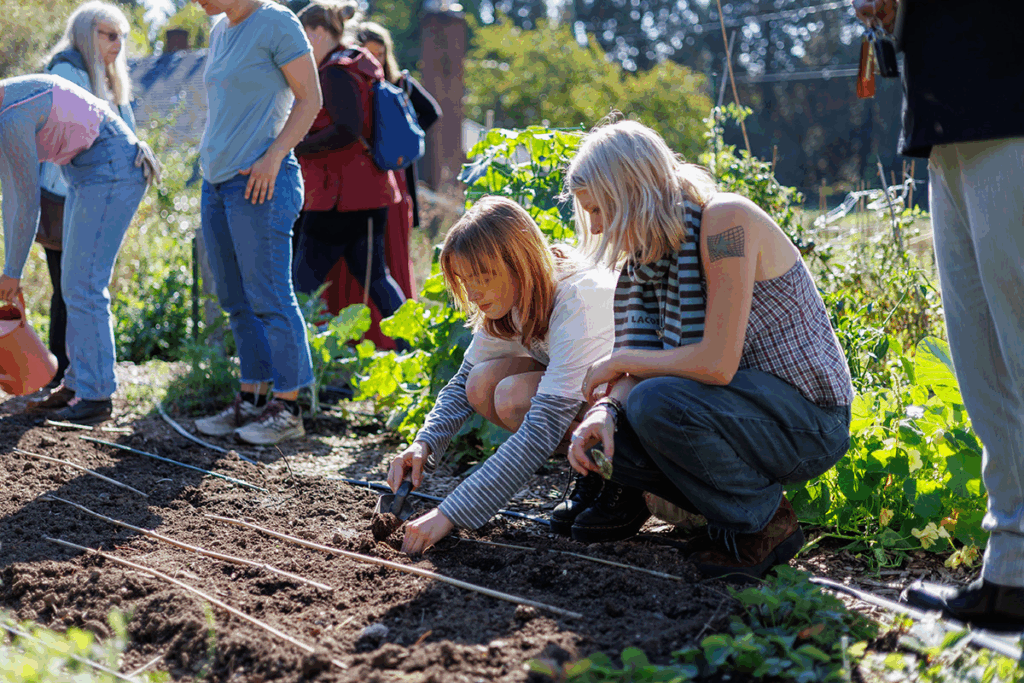
This past year, Chemistry instructor Patrick Poletti utilized the Dye Garden to make indigo dye for the first lab of the semester in CHEM 102 – Introductory Chemistry.

For quite a few years, CHEM 102 has done an indigo lab where they synthesize indigo from 2-nitrobenzaldehyde and acetone.  Once they have synthesized the dye, they use it to dye a test fabric swatch.

Instructor Poletti said, “Typically, the synthesized stuff works really well on spun polyamide (Nylon 6.6) as well as spun diacetate. Conversely, it chews up the worsted wool beyond recognition. A random conversation in the locker room at the sports center (of all places), made me aware that there was a healthy supply of natural indigo on campus.” He contacted Nar Johnson-Harmansah ’27, a Sustainability Intern and Studio Art student worker, who supplied the class with more than enough dried indigo leaves for use, in addition to a nice procedure to extract the dye.  

To introduce the natural dye, they broke each lab section in half, with half of the lab groups making the synthetic indigo dye and the other half of the lab groups extracting the natural dye from the leaves.  Each lab group first dyed a swatch with the dye that they had prepared.  They then added their dye to the synthetic pool or to the naturally obtained pool and finished by dyeing a swatch with the dye that they had not prepared.  The analysis included a comparison of the two methods.  

About their findings, Poletti said, “Generally, we saw that the natural dye didn’t dye the swatches as darkly as the synthetic dye, although that could have been because I was guestimating on the amount of the natural dye to use.”  It also took longer for the indigo color to evolve from the natural dye.  The trend with respect to the relative success of dyeing the six types of fabrics was roughly the same between the natural and synthetic dyes, although the natural dye was markedly better at dyeing the worsted wool (i.e., it didn’t chew it up beyond recognition).

Experiments like these are a wonderful example of endless ways our community garden (located outside of the Garden House) can be utilized!

Read more about the Sustainability and Environmental Justice program at Reed through their website!

They host regular work parties, where students, staff, and alumni can lend a hand for whatever work is needed. In the past, this has been everything from harvesting pumpkins and squash, to adding compost to the garden beds, to installing a drip irrigation system.

Hot Air Balloons & Monster Trucks

It’s the end of the semester, and programs across campus are wrapping up! That includes a spectacular year for the Gray Fund Outdoors program, which takes students outside of the Reed bubble for adventures of a lifetime.

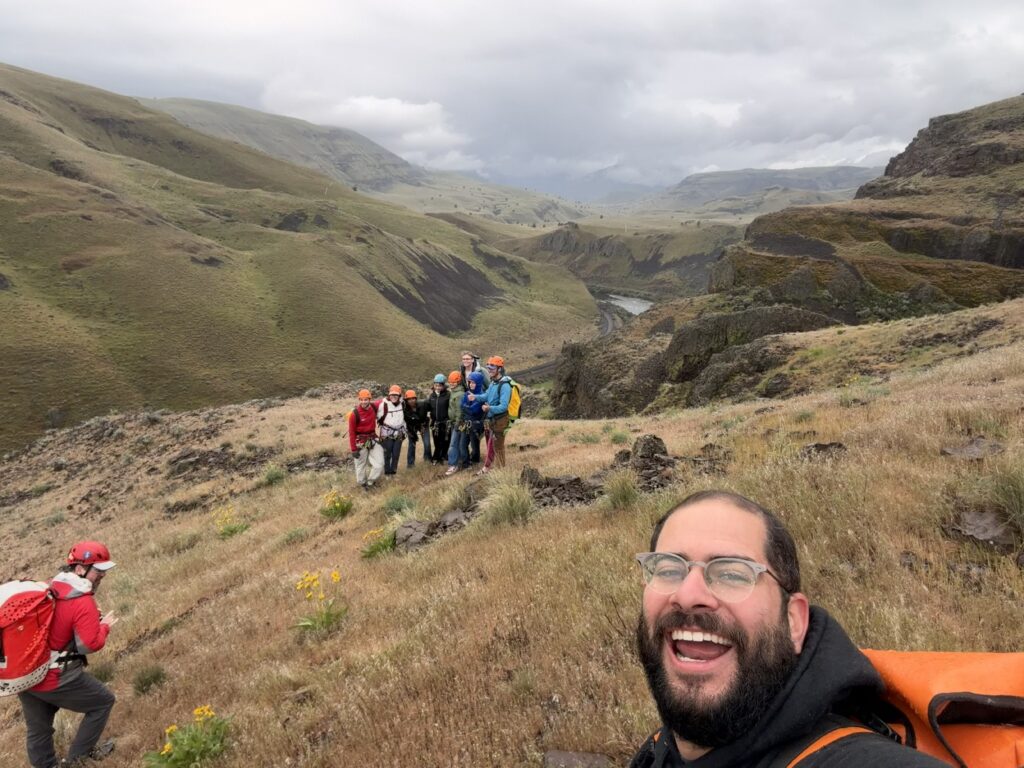
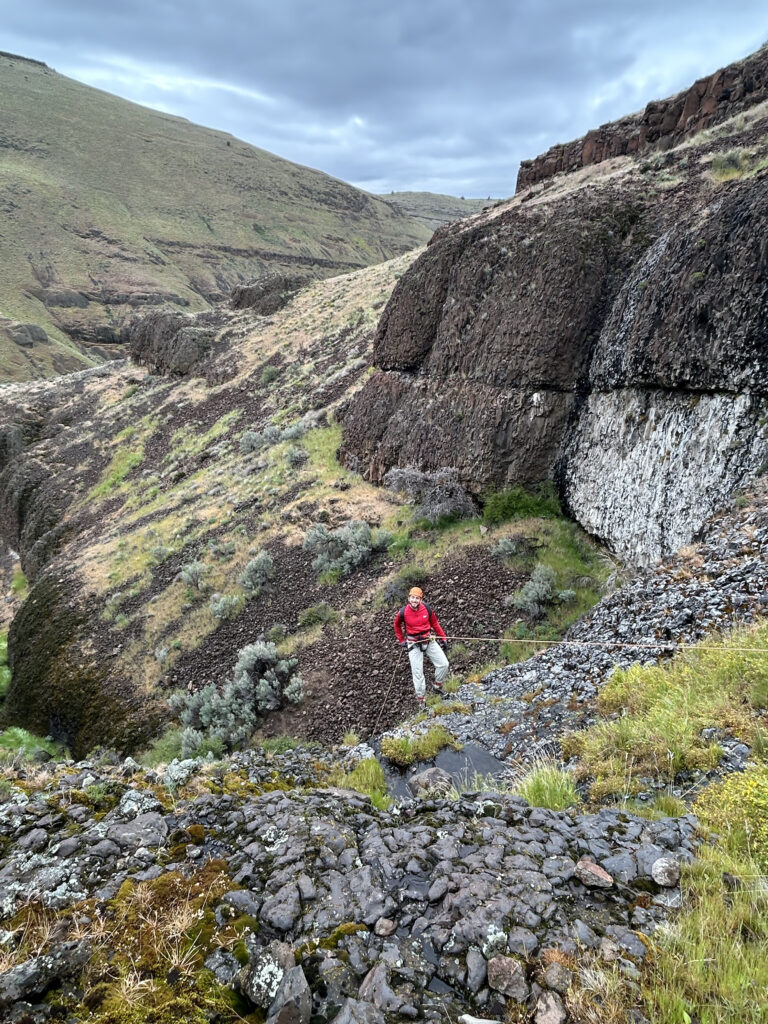
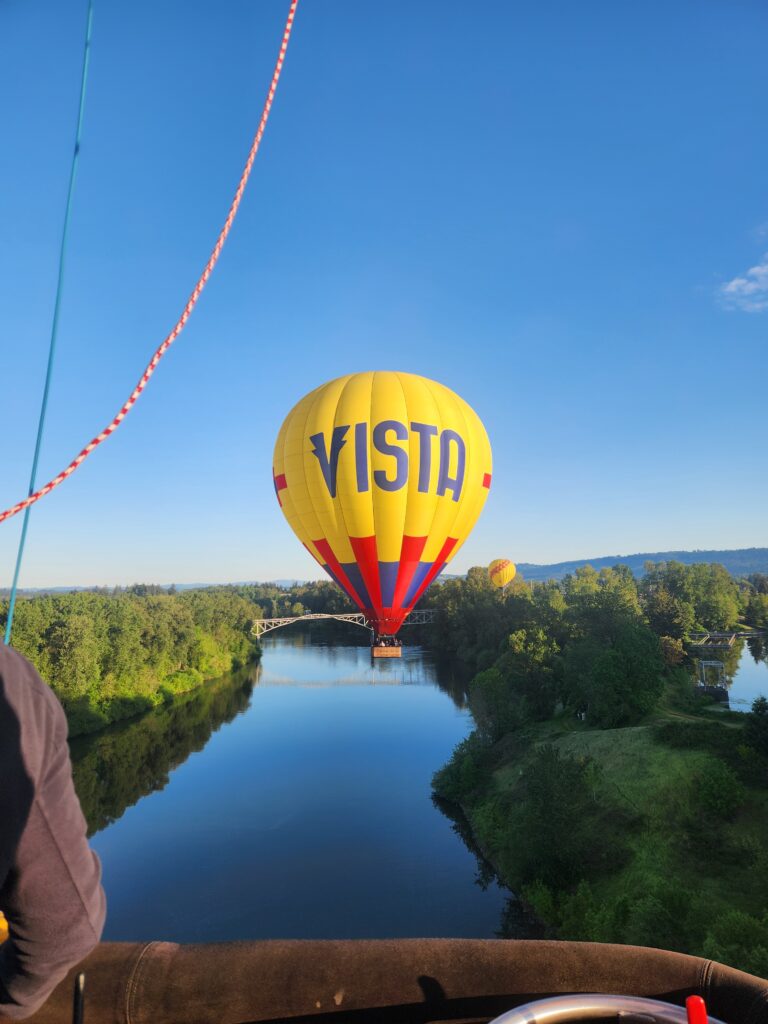
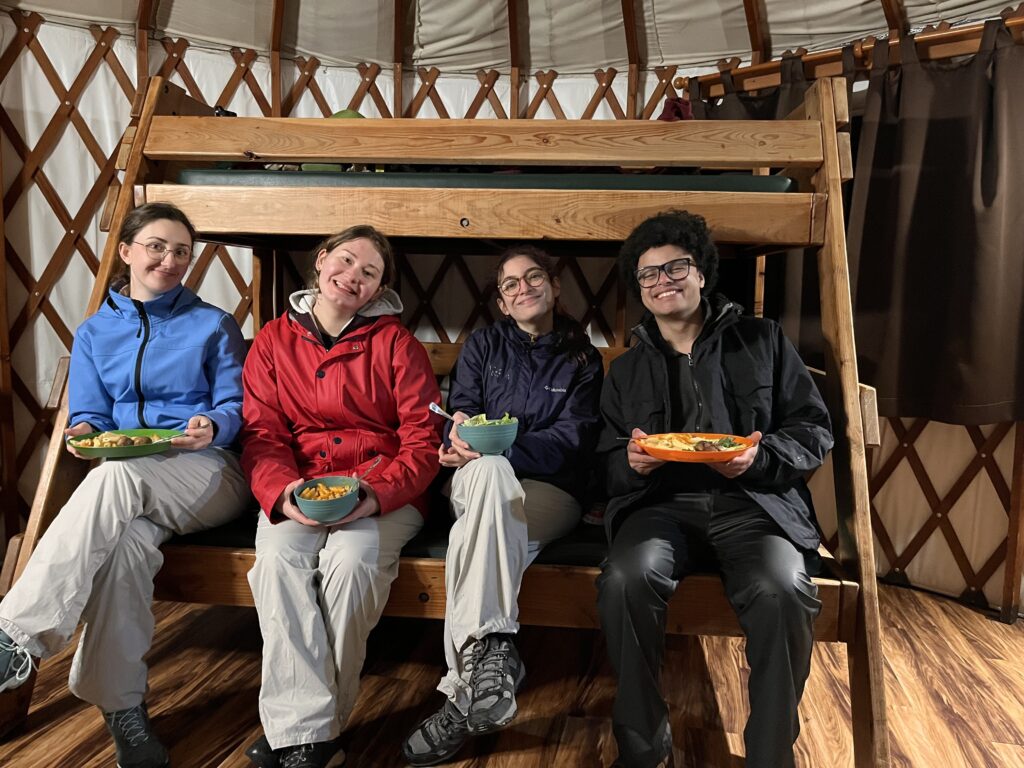
Trips this year included indoor skydiving, ice skating, an overnight trip to Cape Lookout, skiing and tubing at the ski cabin, rock climbing in Bend, a trip to the Gorge to meet Herman the Sturgeon, cross country skiing, a monster truck jam rally, paintball, seaweed foraging, a dawn hot air balloon ride, rappelling along the Deschutes River, and a visit to the famous Oregon tulip festival!

Check out these highlights:

Did you have the great good fortune of winning a Gray Fund lottery during your time at Reed? What did you get to do?

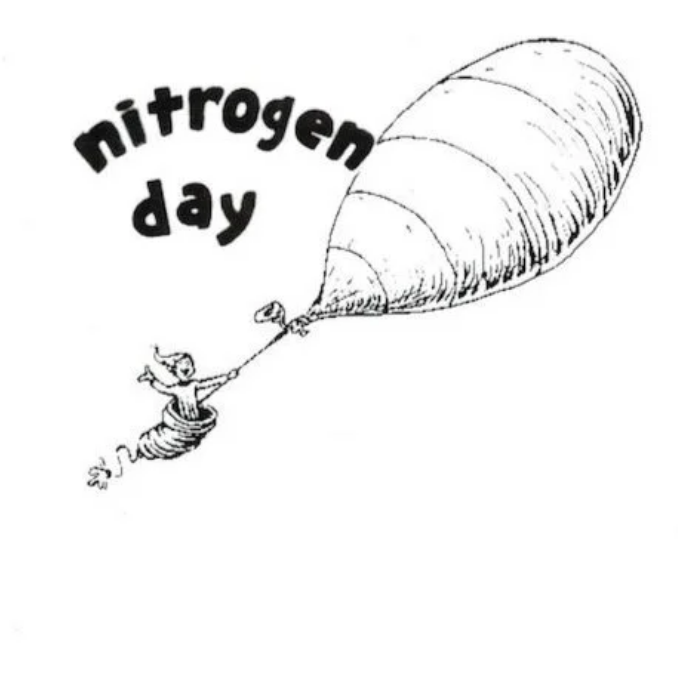
7th Annual Nitrogen Day, Again!

Wednesday, April 22, 2026 marks Reed’s 7th Annual Nitrogen Day, put on by Reed’s American Chemical Society and American Nuclear Society! Enjoy liquid nitrogen ice cream, hot dogs, and fun science demos! In Nitrogen we Trust! See the below article written by Raymond Rendleman ’06 for the May 2009 Reed Magazine, or this Grail article from 2018, or the Quest article from this year about it.


You can’t see it. You can’t smell it. You can’t taste it. It doesn’t burn, explode, alter consciousness or make you talk funny. It is anything but rare—in fact, it makes up the greater part of the atmosphere.

It is, of course, nitrogen, and it is the apotheosis of dull.

Except at Reed.

Once a year, Reedies fling aside all pretense of neutrality and plunge into communal worship of the seventh element. The nitro-veneration takes form in everything from the freezing of ice cream and everyday objects with liquid nitrogen (ever seen a sock snap in half?) to the recitation of elaborate pro-nitrogen odes.

Nitrogen Day, which usually falls on the Thursday eight days before Renn Fayre, has become one of the most popular traditions on campus, enduring for more than 15 years. Yet illuminating its origins is no easy task.

Longtime chemistry professor Alan Shusterman has no idea how it started. Biology professor David Dalton, who has affixed his career to unraveling the mysteries of certain plants’ ability to self-fertilize, and who argues that the ability to fix nitrogen industrially was the most important discovery of the 20th century, is similarly baffled.

The key to unlocking the elusive origins of N-Day came from emeritus professor of chemistry Tom Dunne, who remembers with pride the impassioned nitrogen-related speeches delivered by science majors in the quad. Dunne says he may have delivered a speech or two himself. “It was always a lighthearted thing,” he recalls.

Dunne suggested we contact physics major Rob Mack ’93, who confessed to being one of the instigators, although he stressed that it was a group effort.

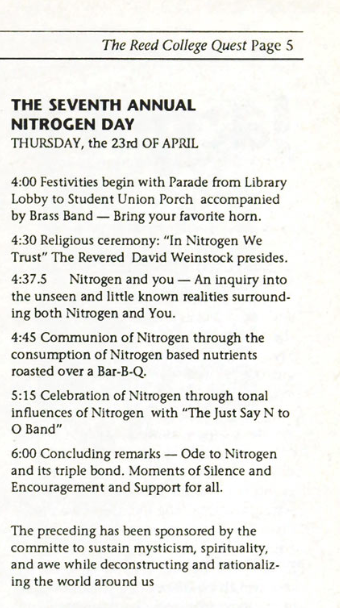
Posing as the “Committee to Sustain Mysticism, Spirituality, and Awe While Deconstructing and Rationalizing the World Around Us,” the organizers staged the first N-Day on April 23, 1992. Starting at 4 p.m., the festivities began with a brass-band parade from the library lobby. On the Student Union porch, religion major David Weinstock ’92 presided over a ceremony titled “In Nitrogen We Trust,” according to Mack’s original Quest article. Hotdogs cooked over burning charcoal, the Just Say N to O Band provided a musical interlude, and the celebration concluded with an “Ode to nitrogen and its triple bond.”

From Reed College Quest Vol 158 No 11 Apr 21 1992

Biology major Nick Kaplinsky ’93, who helped with the first N-Day, calls it another one of those Reed events that popped out of a “wouldn’t it be great if’ conversation among friends.

The event was so successful it was repeated the next year. “The most amazing part was how quickly it caught on,” says bio major Al Kun ’95, another principal organizer.

By 1994, political science major Francisco Toro ’97 wrote N-Day’s annual Quest advertisement, saying that seeing the inaugural event as a prospie was “one of the main reasons” he chose Reed. From the student handbook to admission office literature, the event—invariably described as the ‘Seventh Annual” in a nod to its place in the periodic table—has become a quintessential demonstration of Reed culture. Last year, the first known extramural N-Day celebration was held at the house of chem major Steve Carlson ’93 in California.

Besides the addition of tofu dogs to the barbeque, little has changed of N-Day traditions. The craziest thing typical of the celebration is a nitrogen-infused beer garden. (Professor Dalton regards the smaller bubbles of dissolved nitrogen in ale as the 20th century’s second-greatest discovery. )

Why nitrogen? Theories abound. “It was fun to say, ‘I will make you love something you didn’t know anything about,” Mack recalls. Nitrogen’s tendency to be overshadowed by flashy elements such as oxygen also appealed to Reedies. “People feel they must root for the underdog,” recalls physics major Ben Brau ’93.

If one were to remain neutral on the subject, one could argue that other elements are as interesting and as important. Oxygen supports combustion; carbon is essential to all known forms of life; helium makes you sound like Donald Duck. Among Reedies gathered in the Quad for N-Day, however, any suggestion that another element might make a superior object of veneration will elicit a chorus of boos. Whatever the reason, Reed and nitrogen share a unique and powerful bond.

Historical Reed, the Imaginary Reed, and the Lived Reed

E. Asher Behmer ’26, winner of the Mason Student Opportunity Fellowship, undertook a project in the summer of 2025 to define Reed College and the Canyon. He researched what he called the Historical Reed, the Imaginary Reed, and the Lived Reed, through archived documents, creative works, and interviews, respectively. Practicing research in his classes at Reed, such as in the English Junior Seminar, prepared him for a larger, independent research project that culminated in the publication of a monograph. As an aspiring writer, Asher valued the reading and writing that were intrinsic to his work, both skills that will help him keep honing his craft.

The Mason Student Opportunity Fellowship was created with the goal of supporting student projects in any discipline related to the Reed canyon, including projects in the visual and performing arts. Read more about other Reed-sponsored grants and opportunities through the Center for Life Beyond Reed.

The 50th Anniversary of Reed Rugby: 50 Years of Reed-Sanctioned Mud Wrestling

Before American Football, there was rugby and before rugby there was rugby, and our school has been playing rugby officially for 50 years now. Starting in 1974, the proud members of the Rugby club had only a book on rugby as their head coach and a foreign exchange student from Keele as their assistant coach. Somehow, they managed to win their first game, but that was probably mostly due to dumb luck. Paul Lucre ’92 said that they only won two games while he played on the rugby team, but nevertheless he had a lot of fun. Eventually, the rugby team managed to get a coach by the name of Peter Carmini. The Rugby team back then was dirt poor and could not even buy their own Rugby balls, they had to ‘acquire’ them through various means (and from various teams).

Rugby players in 1974

One time the rugby team was going to play against a Catholic School, and some students decided that it would be funny to dress as monks, and bring out a cross and burn it in front of the Catholic players. Understandably, the Catholic players were not pleased and promptly left without playing a game. 

Typically, when people talk about Rugby, they are talking about two different styles of Rugby: fifteens and sevens. Fifteens is fifteen players versus fifteen players, and sevens is seven players versus seven players. The beauty of Rugby lies in the fact that you need all kinds of body sizes to make an effective team—you need your big guys to play forward positions because they can tackle and hit more effectively, meanwhile the smaller and faster people play as backs. These are your scorers, they run around with the ball and score tries (Rugby touchdowns). Personally, I enjoy the rush of tackling someone to the ground (Yes officer, I assure you I am indeed a sane person), but in rugby there is a position for everyone’s body size and for everyone’s interests. Rugby is not a gentlemanly game played by thugs, it’s a thuggish game played by gentlemen.

50 years of anything is bound to create traditions, and Reed Rugby is no exception. At the end of the year all the members, regardless of gender, put on prom dresses and play rugby. The Rugby team is also famous for winning the owl fight on multiple occasions, sometimes in collaboration with other entities like the Russian House, or sometimes just by themselves. (Bulky Reedies who exercise regularly and have built-in teamwork are bound to do well in a brawl for a concrete owl.) Some traditions have changed, for example, there used to be a tradition where after a person scored their first try they would have to strip naked and dance. This has (thankfully) been replaced with just drinking a beer out of a boot.Rugby players in prom dresses during a skirmish

The Reed Rugby Team is not just a team of Reed students; it merged with Lewis and Clarke to form the Reed Lewis and Clarke rugby club or simply RLC, which has two teams under it, the W+ team and the M+ team or the Porcupines and River Rats, respectively. This merger is most beneficial for everyone since we get to borrow LC’s football players while they get more bodies on their rugby team. At the end of the day, we get more wins, which is great for all parties involved. To celebrate the 50th Anniversary of Reed Rugby, there was a game held on the Rugby Field during Reunions. Many people showed up and despite some of the alumni’s ages, a lot of them were just as fast and just as slippery as they were when they started playing rugby.

Mildly Concussed,

William 

Oodles of Owlettes

At the beginning of the year, when Reed college gets a new group of students, these wide-eyed kids get to hang out for a week before the rest of us arrive. Orientation is the time for these upcoming freshmen to get acquainted with the campus, and each other. I have fond memories of greeting at least half the freshmen class during my first day of orientation week, and then spending the next two days in my room, slowly recharging my social battery. Other people who are extroverts actually spent those other days going about and making friends.

Another thing I remember during my orientation how there were long stretches of nothing followed by everyone getting crammed into the Kaul Auditorium to learn about the joys of drug abuse or Reed’s sexual harassment policy. All of which every new student totally remembers. One thing that the older alums might not remember ever seeing are the Orientation Week Leaders (OWLs)–these are students who are tasked with talking about the ins and out of Reed and answering any questions these freshmen might have. I remember how my OWL talked about which professors were amazing and which classes were hard to get. Freshmen then get the moniker “Owlettes” during these first few weeks. 

Some lucky Reedies even got to go on Odysseys, which are trips either around Portland or the Pacific Northwest, either to go white water rafting or walk around Portland and sample all the wonderful food carts. In years past, they’ve included bike tours, backpacking, and rock climbing trips too! Some freshmen this year went surfing on the Oregon Coast, or on a Deschutes river rafting trip, or out to explore the iconic waterfalls of the Columbia River Gorge. They have a chance to borrow outdoor gear they might need from the Backpack Co-Op. If you went on an Odyssey, I would love to hear about your experience and where you went.

Keeping an eye on the Owlettes,

William Clarke ’27

Another Monkey Takes His Place in front of the Typewriter

Greetings one and all,

I am a new disembodied voice behind the Riffin Griffin. My name is William Clarke and I am a rising junior history major. I will be posting most of the new content on this blog, but that won’t stop other folks (or the Prexy ghost) from posting.

My favorite things to do at Reed include taking long walks in the Canyon and playing rugby with the other members of the rugby club. A couple of alumni related things that I am excited about is learning about the history of Reed from the alumni themselves, participating in Meatsmoke (despite the fact that I am still a student), and also learning about the architecture of Reed.

On the left: Not William; Center: Not William; Right: William

I love to listen to people talk about their time at Reed and any crazy stories that happened on the Reed Campus.

Eagerly Listening,

William Clarke ’27

Goodbye…and Hello!

With theses completed and celebrations held at Renn Fayre, the seniors (myself included) prepare for their final day as Reed students and the event that will transform them into Reed alumni: Commencement.

Personally, I feel torn between a myriad of emotions. I’m relieved to be getting my degree and excited to move on to new exciting things, but I’m also nostalgic for the time I’ve spent at Reed and sad to be leaving the community I’ve become so ingrained in over the last four years.

I’ve been reminiscing on my underclassman years, and looking through photos from my entire time at Reed. How much I’ve changed and grown, and how Reed has shaped who I’ve become. I wonder how life will be outside of the Reed bubble and how my connections to this community will change as my class disperses into the world.

Working in the alumni office has definitely framed my outlook on the post Reed community positively though. The resources and connections available to us do not just vanish upon graduation (clearly, as I’m writing this blog for alumni). Knowing that the Reed community will still be there for me brings me comfort in spite of the uncertainty that the world outside Reed promises.

See you on the other side,

Soon to be Reed Alumna

Taliah Churchill ’25

Honor at Reed

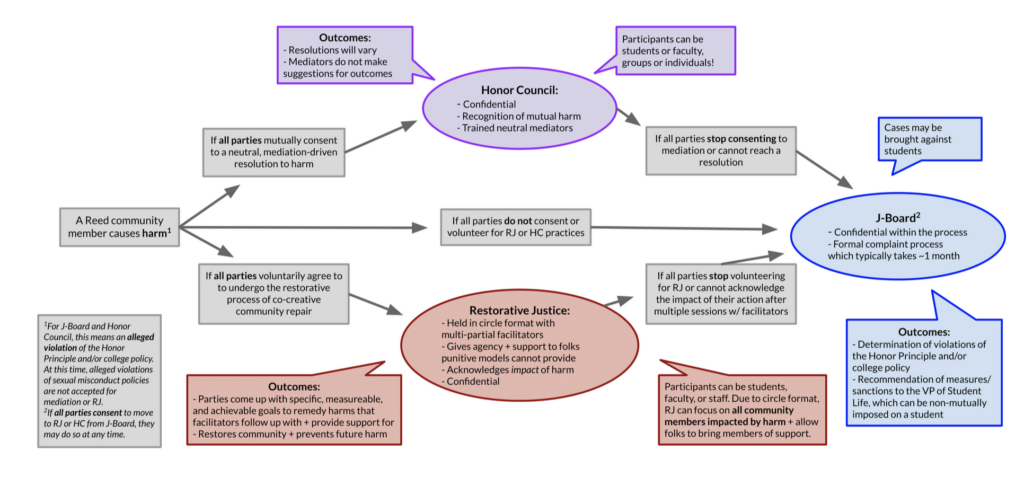
A core aspect of Reed that sets it apart from other institutions is the existence of the Honor Principle. While many colleges and universities have honor codes or statements clarifying the expected behavior of their community members, Reed leaves the interpretation of honor largely up to its community members. While the honor principle has no formal definition, the most common interpretation of the Honor Principle mentions that any action that causes unnecessary pain or discomfort to any member of the Reed community, group within the community, or to the community as a whole, is a violation of the Honor Principle. The Honor Council attempts to re-encapsulate what the Honor Principle means to the community at large every 20 years.

This code of conduct allows for the Reed community to develop our values together. Coming to an understanding of what honorable behavior is and what the Honor Principle means is a morally and intellectually challenging part of the Reed education. It is up to each member of the community to engage with the trust, as well as responsibility placed on them by the Honor Principle in order for the community to support everyone!

Flowchart outlining how the Honor Principle comes into play when a Reed community member causes harm

Below are some accounts about the honor principle from alum Andrei Stephens ’08 and current J-Board (Judicial Board) member Nicole Li ’25 respectively.


“The Honor Principle was a huge part of Reed when I was there. It permeated everything and was constantly reinforced. Professors would do things like give us a test on Monday and say it was due Saturday but to only spend 3 hours on it. They were able to do that because of the Honor Principle, it was understood. We all left food and electronics and anything else out in public spaces — if it wasn’t marked “K”, nobody would take it. You can test things that you can’t test in the absence of the Honor Principle. If you can’t cite sources directly or use the software that practitioners of your field would use because professors are worried about ‘cheating’, they can’t test the ability to use those tools effectively. The Honor Principle doesn’t mean never getting things wrong; it means that when you do get things wrong you did it from an honorable attempt to engage, and you take responsibility and seek to make things right. The assumption that in an argument all parties were engaging not to ‘be right’ but to probe the truth allowed us to learn more and deepen our perspectives in ways that we simply could not if we had different community expectations.

Unfortunately most of the world does not operate on the Honor Principle. I appreciate my time in the Reed community all the more because I know that we can speak openly with each other, and the assumption of good faith engagement drives our spaces.”

 – Andrei Stephens ’08, self-proclaimed Honor Principle Zealot and President of the Alumni Board


“As a J-Board member and student, the Honor Principle is near and dear to my heart. It shows me how much trust we have in this community, and the immense amount of care we hold each other to. Its beauty lies in its ability to be flexible and capture not only individual perspectives of Honor, but the communities beliefs and culture. That is why it is extremely important to me that the Reed Community continue ongoing conversations around the Honor Principle, encouraging education to give incoming students the foundation to critique and reflect about their own relationships with the Honor Principle, and for older students and alumni to revisit how their understanding of the Honor Principle has changed. 

In my life the Honor Principle goes beyond my role of J-Board, but thinking about the greater relationships I have with my peers, how we can support each other, and uplift the community. From an academic perspective I often think about Honor through making learning accessible and empowering for others in my other campus roles. Being able to live with the Honor Principle sparks a different type of purpose, a standard that you hold yourself to in hopes of building a strong and healthy community.” 

– Nicole Li ’25, Student J-Board Member

As the Honor Principle exists only in the confines of the Reed community, I hope that this reminder of its principles and ideals encourages Reedies of all kinds to remember the values that connect us.

With honor,

Taliah Churchill ’25