Simplified Spelling and Reed College

William Trufant Foster, the first President of Reed College, was a strong
supporter of reforming the spelling of the English language. In 1909, while a
professor at Bowdoin College, Maine, he was on the Advisory Council of the
Simplified Spelling Board as well as being the Chairman of the Executive
Committee of the Maine Center of the Simplified Spelling Board. When he was
appointed President of Reed in 1910, he brought his convictions about spelling
with him.


Due to Foster’s influence, simplified spelling was used in many of the college
publications. Perhaps the most notable was Reed’s first yearbook from 1915.
The students of the initial graduating class compiled it and included an
explanatory note on the verso of the title page that read:

Note—The simpler, briefer and more fonetic forms of English spelling recommended in the first four lists of the Simplified Spelling Board ar used thruout this volume

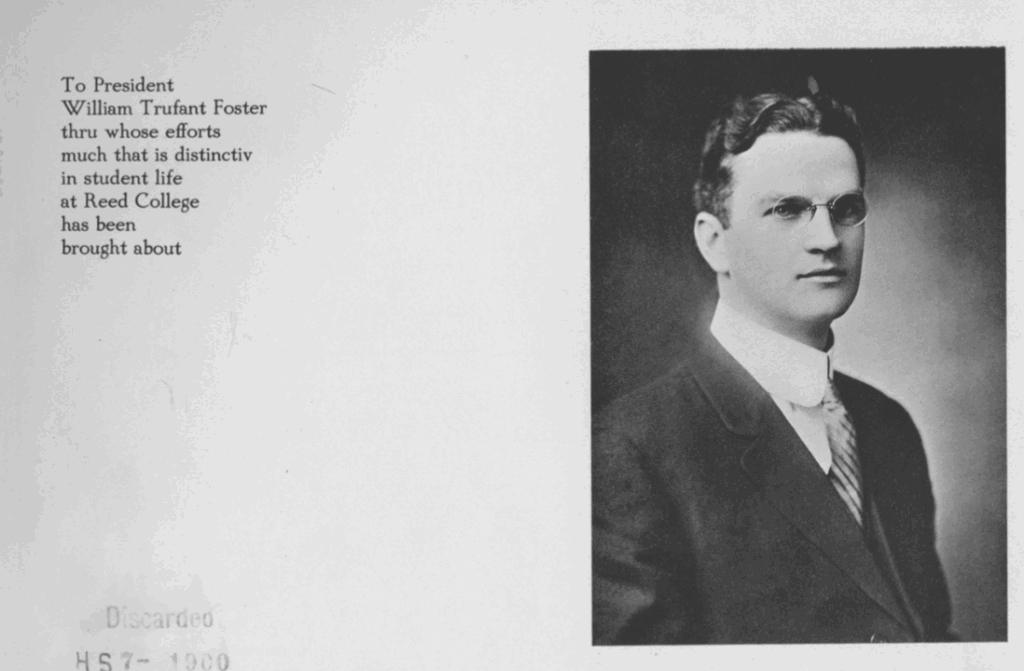
One of the opening pages of the Yearbook, which features a uniquely spelled tribute to Foster


This publication confused readers then and continue to do so today; some think
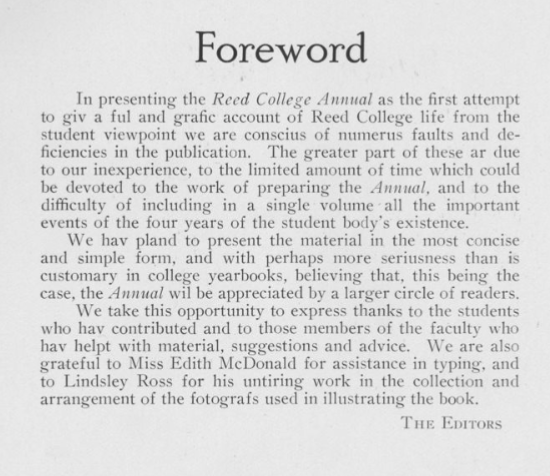
that these early students were woefully bad spellers. What follows is a sample
paragraph from that first yearbook:


Other publications that reflect Foster’s simplified spelling influence for the
period of 1911 through 1919 are the student newspaper—the Quest, the 1916
Yearbook, and many official college documents. Number 1 of the Reed College
Record for March, 1911, notes that it “…starts out with simplified spellings—tho,
altho, thoro, thoroly, catalog, program, addrest, publisht, thru, thruout” (from
Simplified Spelling Bulletin, Vol. II:4, March 1911). It is interesting to note that
several of these words have become commonly accepted today.


Besides influencing the college publications, President Foster wrote articles and
gave talks in support of the new system. For instance, he addressed the annual
meeting of the Inland Empire Teachers Association in Spokane, Washington, in
April 1913, with a talk entitled “The Economics of Spelling Reform.” At least one Reed faculty member, Professor George H. Danton of German in 1915/1916, also
supported the new spelling, and in fact served on the Advisory Council of the
Simplified Spelling Board in 1913.

The Simplified Spelling Board was created in 1906 by Andrew Carnegie, who
supported it for twelve years. In an article in The New York Times, he stated that
he believed “English might be made the world language of the future” and thus
encourage universal peace. However, its role was hindered by its “contradictory
and difficult spelling” (NYT, 3/12/06). Many people adopted this idea besides Foster, including Mark Twain and William Dean Howells. In 1916, the Simplified Spelling Board restated its mission in the following manner:

The purpose of the movement is to hasten the process of rational orthographic change, to guide it in the direction of simplicity and economy; and gradually to substitute for our present caotic (sic) spelling, which is neither consistent nor etymologic, a simpler and
more regular spelling, based on existing rules and analogies, and in harmony with the history and genius of the language.

By 1918, Carnegie gave up on the idea, since even the Carnegie Institution of
Washington, D.C., did not use it in their reports. He wrote to the Board saying “I
think I hav been patient long enuf…I have a much better use for Twenty-five
thousand dollars a year.”

Original article by Mark Kuestner and Gay Walker, May 2009, additions by Tess Buchannan in 2026

CHEM 102 uses Reed’s Dye Garden

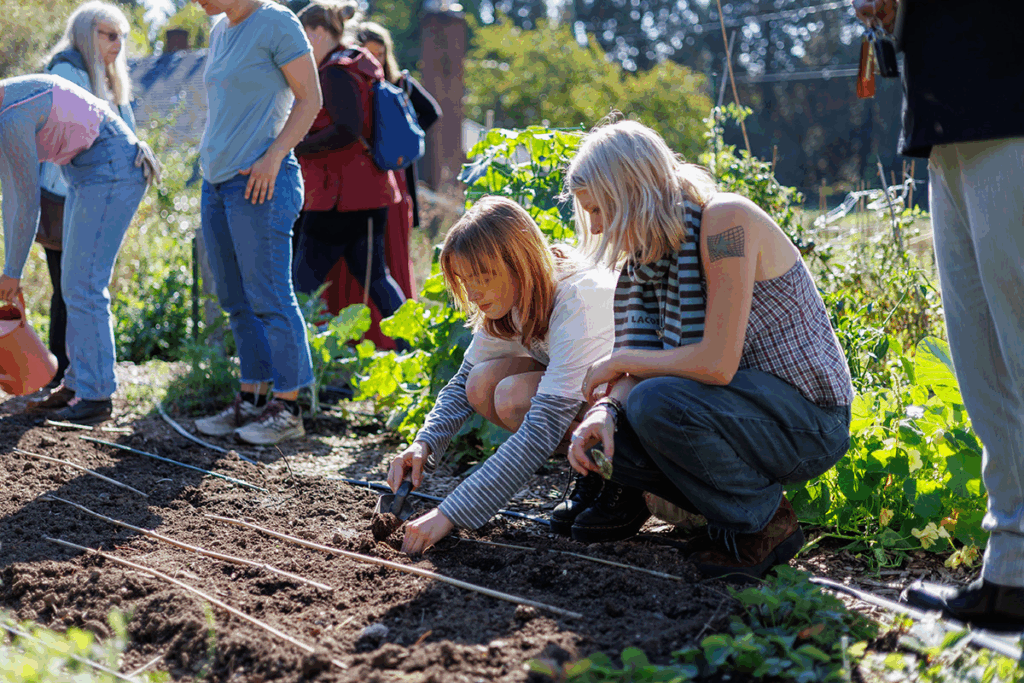
This past year, Chemistry instructor Patrick Poletti utilized the Dye Garden to make indigo dye for the first lab of the semester in CHEM 102 – Introductory Chemistry.

For quite a few years, CHEM 102 has done an indigo lab where they synthesize indigo from 2-nitrobenzaldehyde and acetone.  Once they have synthesized the dye, they use it to dye a test fabric swatch.

Instructor Poletti said, “Typically, the synthesized stuff works really well on spun polyamide (Nylon 6.6) as well as spun diacetate. Conversely, it chews up the worsted wool beyond recognition. A random conversation in the locker room at the sports center (of all places), made me aware that there was a healthy supply of natural indigo on campus.” He contacted Nar Johnson-Harmansah ’27, a Sustainability Intern and Studio Art student worker, who supplied the class with more than enough dried indigo leaves for use, in addition to a nice procedure to extract the dye.  

To introduce the natural dye, they broke each lab section in half, with half of the lab groups making the synthetic indigo dye and the other half of the lab groups extracting the natural dye from the leaves.  Each lab group first dyed a swatch with the dye that they had prepared.  They then added their dye to the synthetic pool or to the naturally obtained pool and finished by dyeing a swatch with the dye that they had not prepared.  The analysis included a comparison of the two methods.  

About their findings, Poletti said, “Generally, we saw that the natural dye didn’t dye the swatches as darkly as the synthetic dye, although that could have been because I was guestimating on the amount of the natural dye to use.”  It also took longer for the indigo color to evolve from the natural dye.  The trend with respect to the relative success of dyeing the six types of fabrics was roughly the same between the natural and synthetic dyes, although the natural dye was markedly better at dyeing the worsted wool (i.e., it didn’t chew it up beyond recognition).

Experiments like these are a wonderful example of endless ways our community garden (located outside of the Garden House) can be utilized!

Read more about the Sustainability and Environmental Justice program at Reed through their website!

They host regular work parties, where students, staff, and alumni can lend a hand for whatever work is needed. In the past, this has been everything from harvesting pumpkins and squash, to adding compost to the garden beds, to installing a drip irrigation system.

The Legacy of an Original Reedie

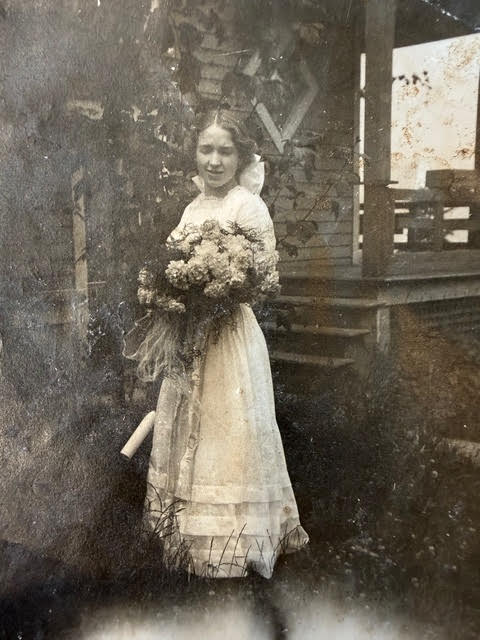
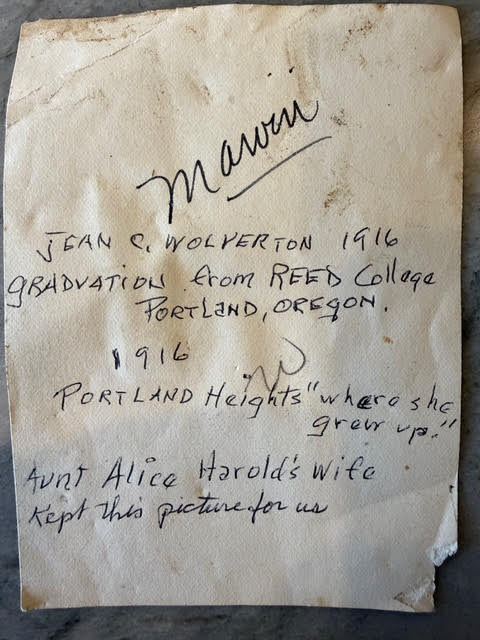
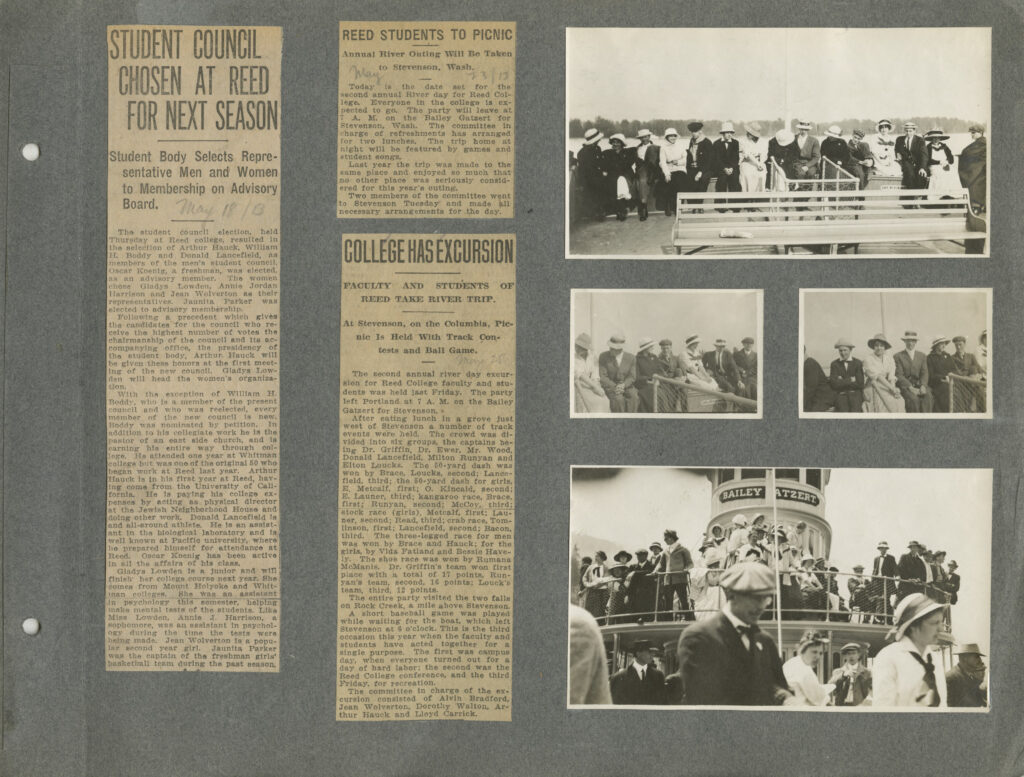
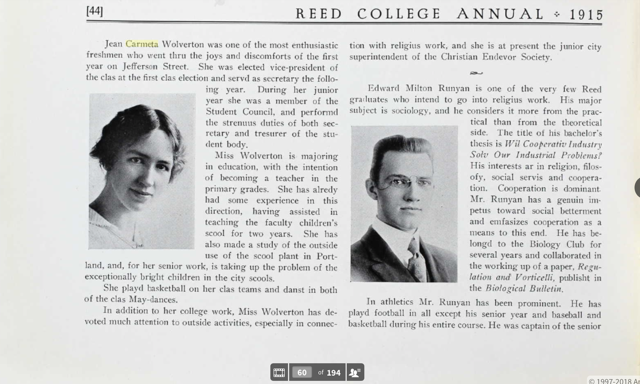
Jean Carmeta Wolverton (1892-1974), Reed College class of 1915, was an accomplished artist and naturalist. Her father, Bruce Wolverton, was born in a covered wagon on the Oregon Trail, and their family settled in the Willamette Valley. With Reed College opening its doors in 1911, Jean was one of the first women to attend. Reed welcomed women into their college and provided a pathway to education at a time when it was more unusual for a woman to have the opportunity to earn a degree. She played basketball and danced at Reed while teaching and working with students while pursuing her degree in education. Jean was able to break through these barriers while attending Reed, where she was elected Vice President of her Freshman class and later elected Secretary and Treasurer of the Student Body Council.

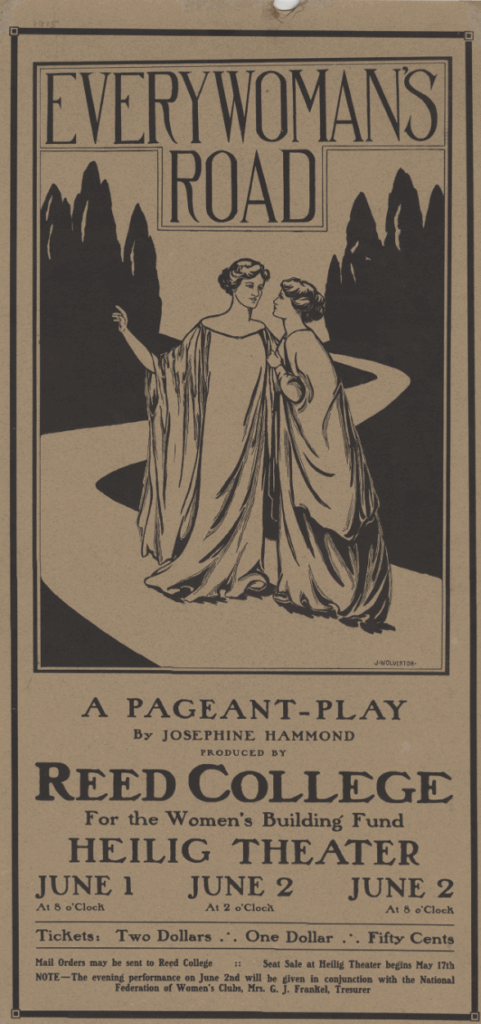
Jean practiced her artistic skills during her time at Reed, illustrating playbills on campus for student performances.

Poster publicizing the pageant-play of Everywoman’s Road written and directed by Reed professor Josephine Hammond. It specifies that it is in support of the Women’s Building Fund. The poster design was by J. Wolverton [Jean Wolverton Petite] ’15

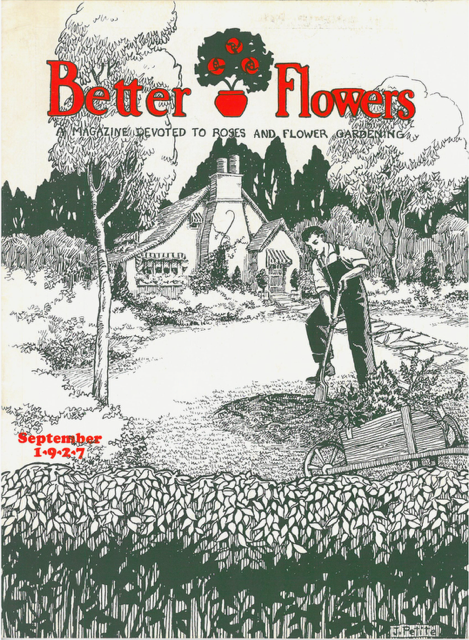
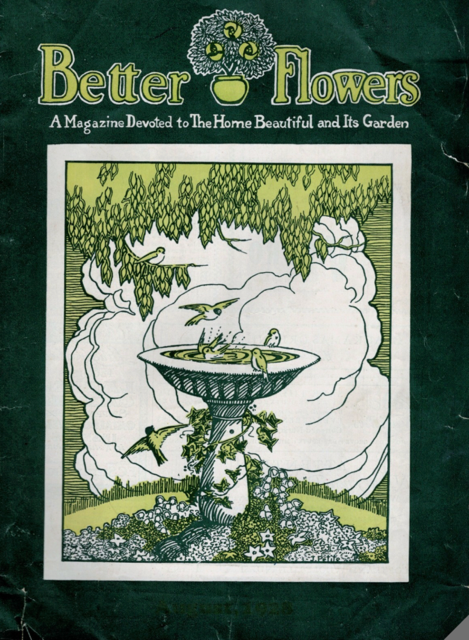
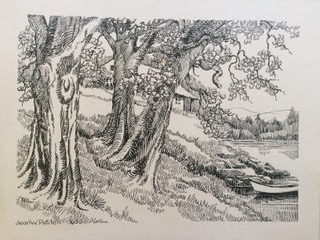
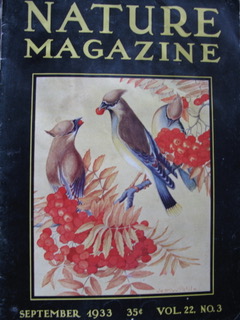
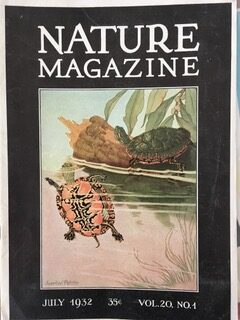
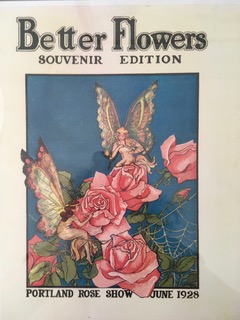
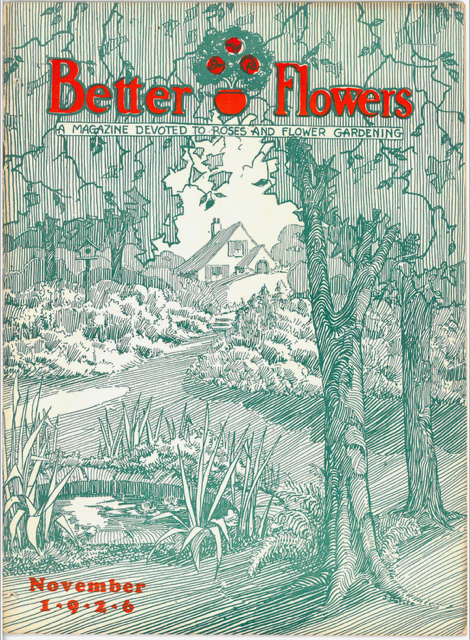
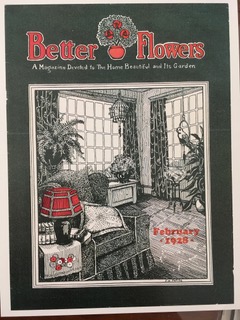
Later known by her married name, Jean W. Petite, she utilized her education at Reed to become a dedicated and accomplished educator, artist and illustrator. Jean was inspired by and specialized in birds, flowers and the nature that surrounded her. She illustrated several magazine covers for Nature Magazine, and Better Flowers (published by the Portland Rose Society).

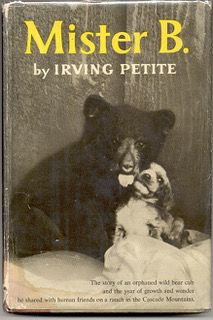
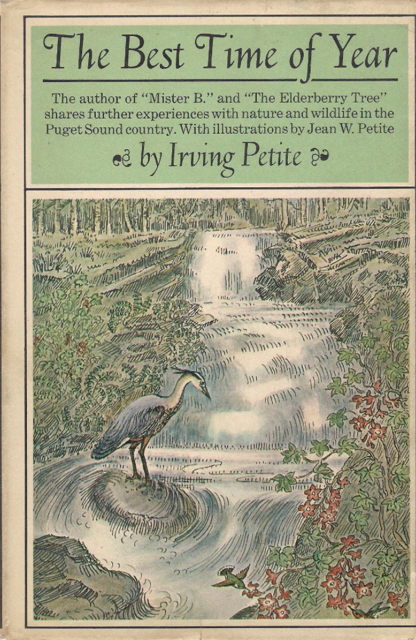
Jean also illustrated two books by her son titled “The Elderberry Tree” and “The Best Time of Year”. Her son, Irving Petite, was a NY Times best selling author and naturalist, who was heavily influenced by his mother’s respect and love of nature.

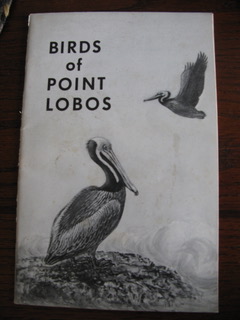
Jean held Art Shows along the west coast throughout her career and her art was featured in the Expo ’70 World’s Fair in Osaka, Japan. Jean’s intricately detailed and accurate paintings of birds, were utilized to document and teach about birds and wildlife. Her paintings of birds were made into slides and sold to Washington and California public schools as a teaching guide, which became one of her most outstanding art and educational achievements. She studied birds extensively throughout the Pacific Northwest, California, Hawaii and Mexico. In 1972, the State of California Parks and Recreation Department commissioned Jean to document 48 Shore and Sea Birds at the Point Lobos State Reserve which was published as a guide called “The Birds of Point Lobos”.


Jean was one of the original Reedies and her legacy as an artist was passed down through generations with a familial tradition of artists, musicians, writers and a family that embraces nature. 

–Tonya Morris, great-granddaughter of Jean

More than a century of Canyon Day

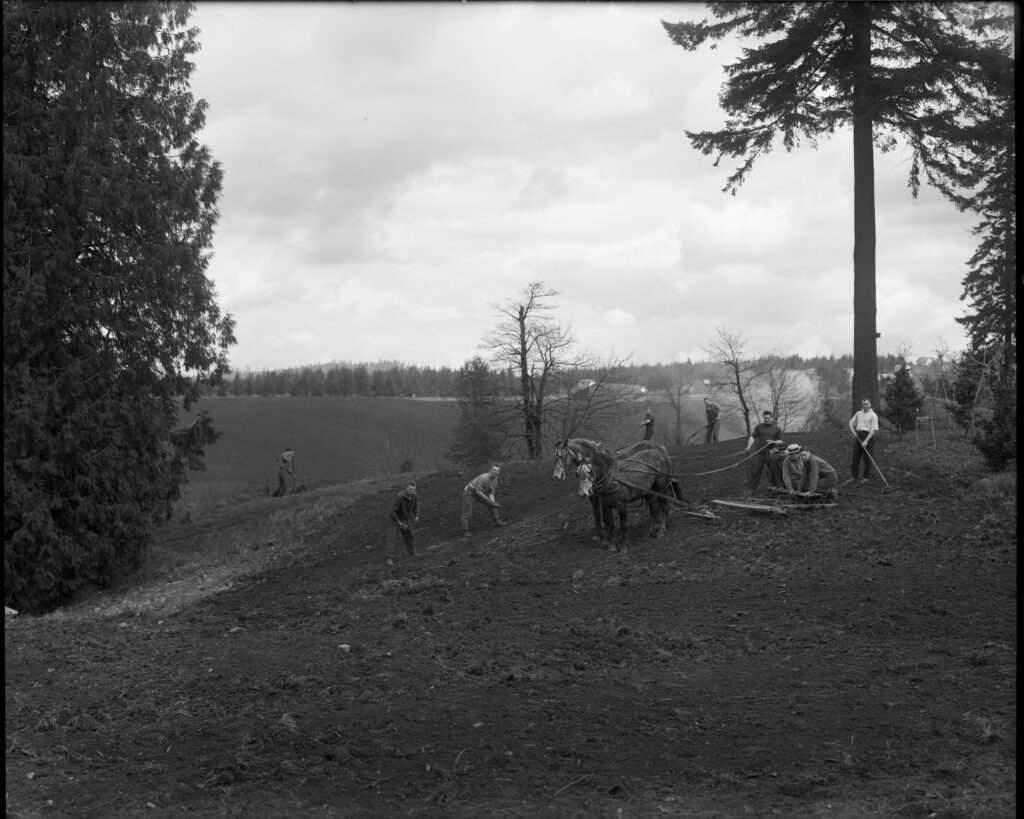
Reed is notorious for our traditions, but few have the staying power of Canyon Day. Canyon Day dates to nearly the school’s inception, with our first records pointing to April 15, 1913. At the time, Albert Doyle submitted plans to transform the canyon into “an artful landscape of Tudor Gothic quadrangles and formal gardens.” When the college’s shoestring budget of the time made that impossible, focus shifted to adapting the canyon from a cow pasture and trickle of a stream to a recreational area.

Campus Day work across the canyon with a pair of horses to help, 1913. Most of the students and faculty are clearing ground with rakes or hoes.

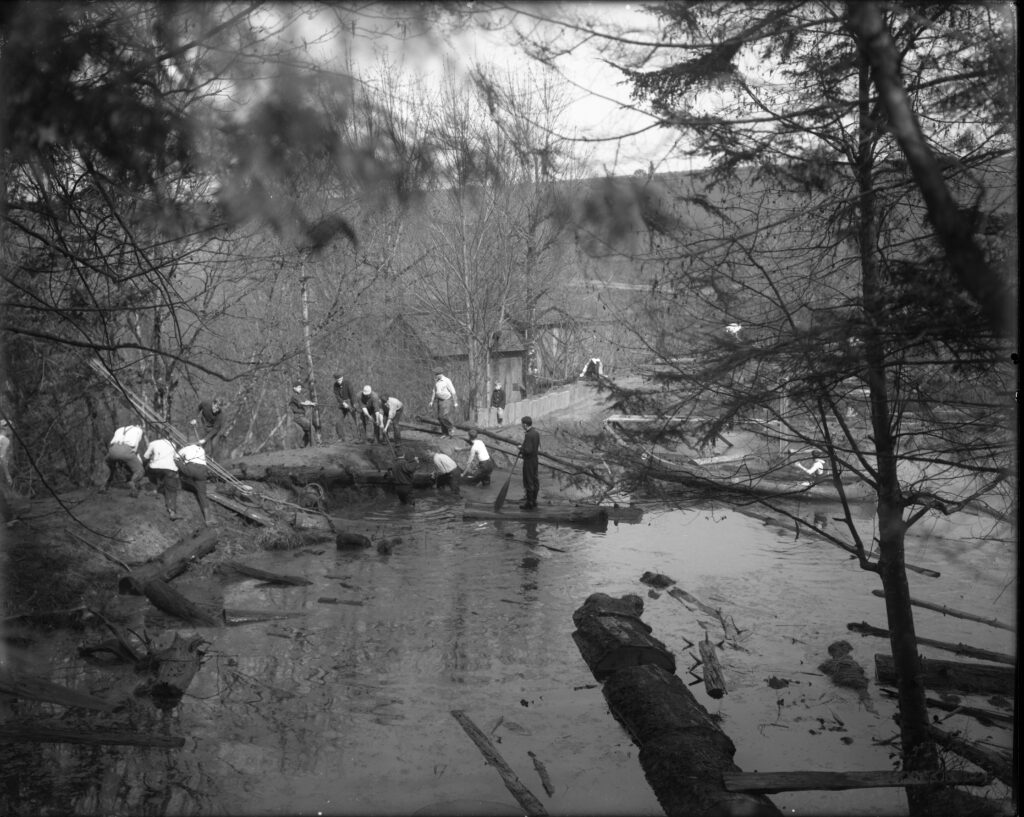
Even the college president, William Trufont Foster, put his back into it:

Campus Day near the Reed Lake dam, circa 1914. Students and faculty are clearing logs out of the Canyon Lake. President William T. Foster is in the water, pushing a log.

In 1915, students excavated a ten foot deep swimming hole on the west side, complete with bathhouses. In the ’20s, a dam was built to make way for a formal swimming pool. In the ’50s, the north bank was excavated for the construction of cross-canyon dorms. A Quest article from `1955 reminds students that they would soon,

“have a chance to uphold a miss-clad tradition when they forsake the cloisters of academic learning to shoulder arms . . . against the common enemy. Weapons will be rakes, shovels, hoes, and related miscellany suitable for an attack on the defiled beauties of nature.”

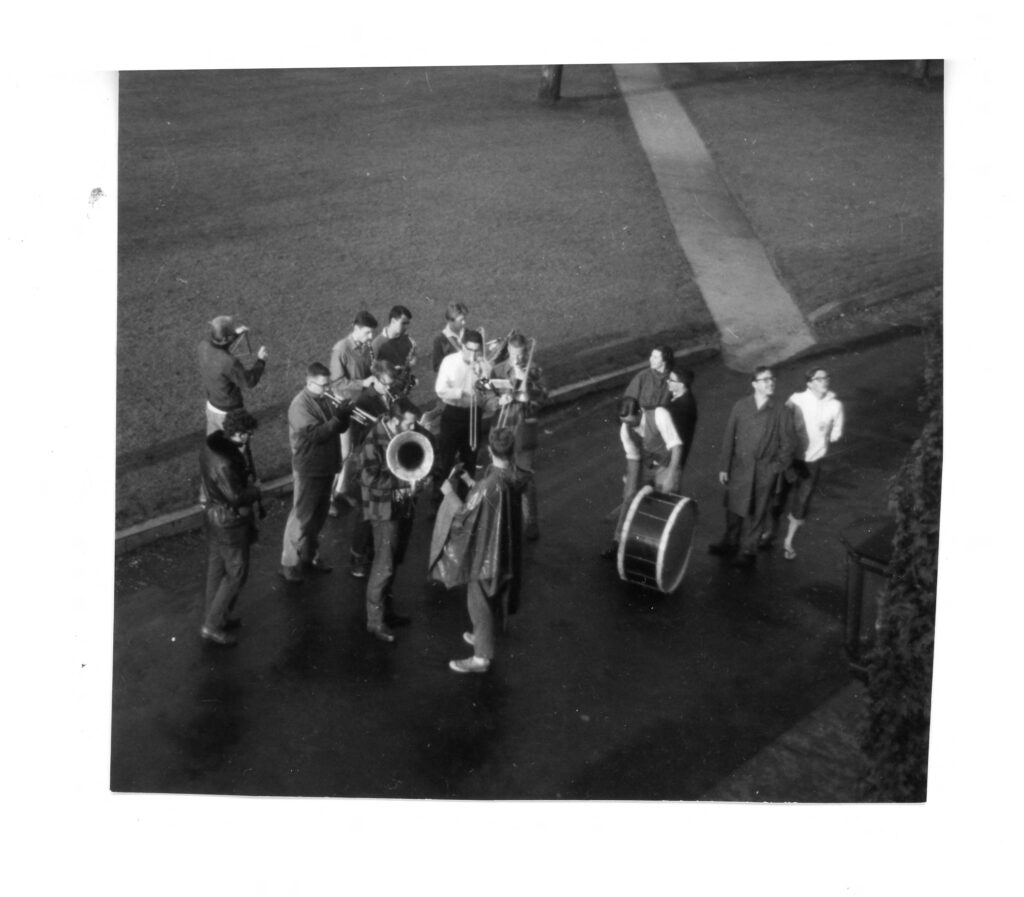
Year by year, the community gathered with snacks, gloves, shears, and every once in a while, with a live band to cheer them on.  

Canyon Day, April 1962. A student German Band is playing in the rain at 6:30 a.m., probably outside of the Old Dorm Block.

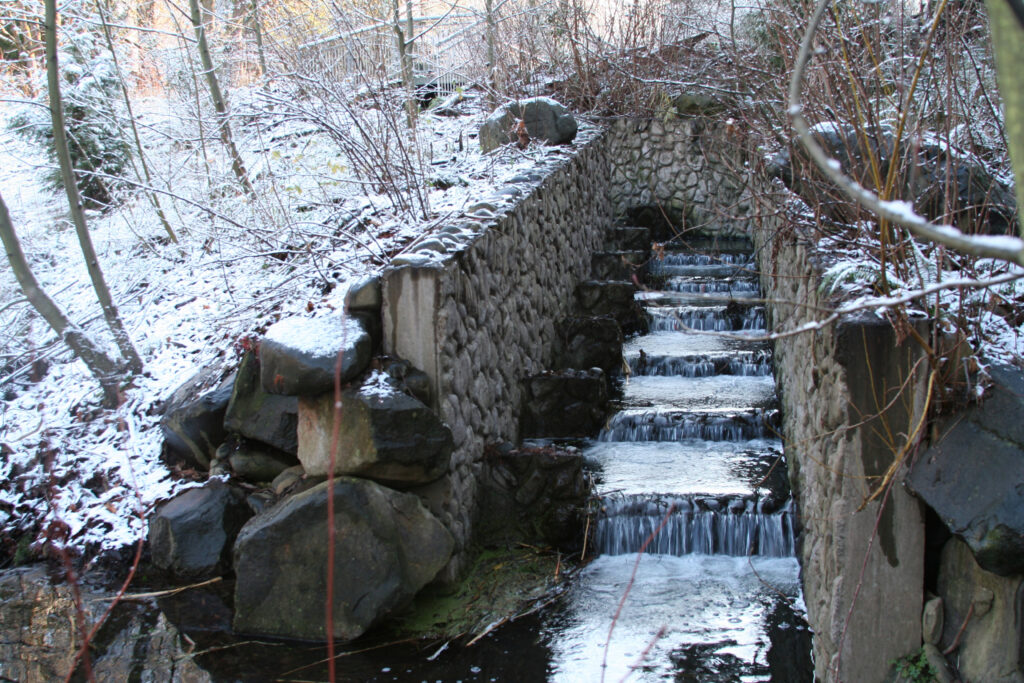
Over time, our approach to the canyon has evolved–it has been named part of the Johnson Creek Watershed in recognition of the headwaters of Crystal Springs Creek on the east end, and the canyon is now protected as 60 acres of habitat for urban wildlife. In ’01, the college constructed a fish ladder to re-establish connectivity between the lake and the lower creek, allowing access to the salmon spawning grounds. Opening day featured champagne and a timely spring downpour.

A snowy day in the Canyon, featuring the Reed College Fish Ladder, circa 2009

As such, a century into the tradition of Canyon Day, the focus is on planting native trees and shrubs, pulling out invasive plants, maintaining trails, and collecting debris. 

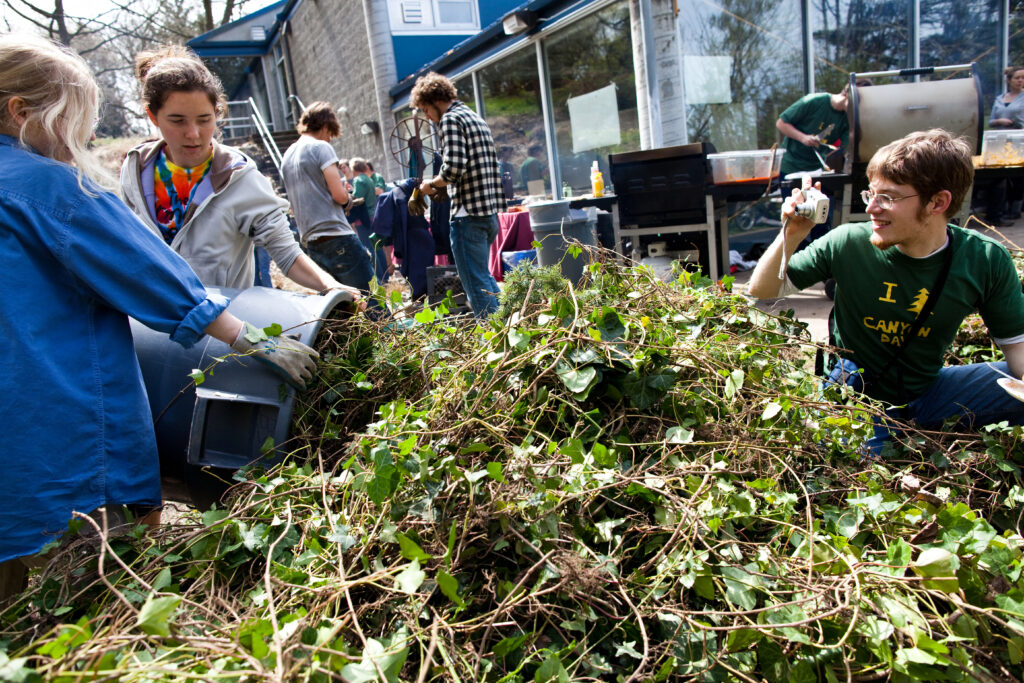
Canyon Day, April 4, 2010. Students are making piles of weed debris behind the Studio Art Building.

In the area? Join the community on April 4, 2026 to get your hands dirty! We can’t promise a live band, but we can guarantee camaraderie and a day’s work to feel proud of. 

Historical Reed, the Imaginary Reed, and the Lived Reed

E. Asher Behmer ’26, winner of the Mason Student Opportunity Fellowship, undertook a project in the summer of 2025 to define Reed College and the Canyon. He researched what he called the Historical Reed, the Imaginary Reed, and the Lived Reed, through archived documents, creative works, and interviews, respectively. Practicing research in his classes at Reed, such as in the English Junior Seminar, prepared him for a larger, independent research project that culminated in the publication of a monograph. As an aspiring writer, Asher valued the reading and writing that were intrinsic to his work, both skills that will help him keep honing his craft.

The Mason Student Opportunity Fellowship was created with the goal of supporting student projects in any discipline related to the Reed canyon, including projects in the visual and performing arts. Read more about other Reed-sponsored grants and opportunities through the Center for Life Beyond Reed.

Fall on Campus

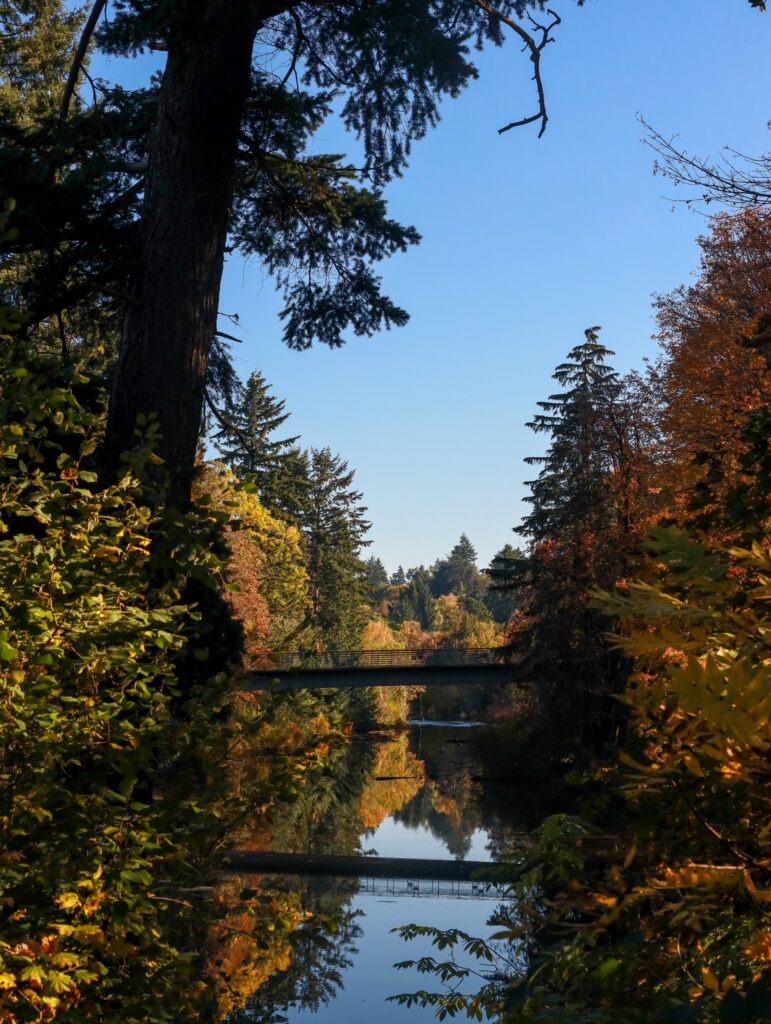
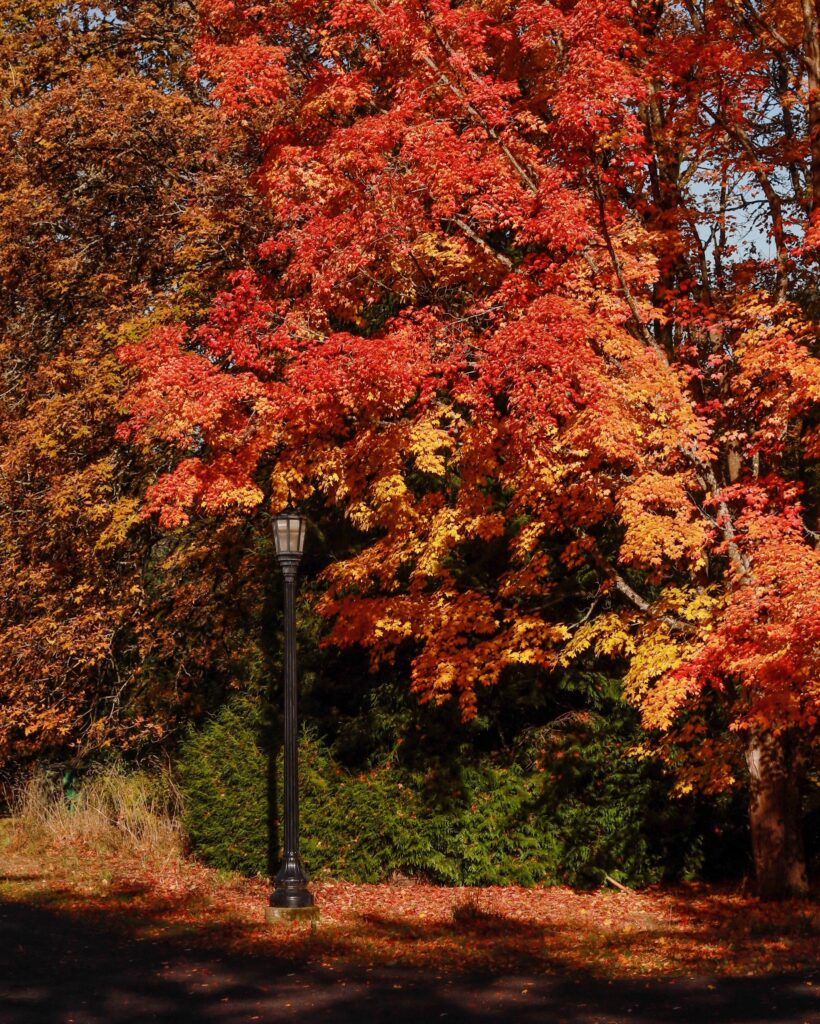
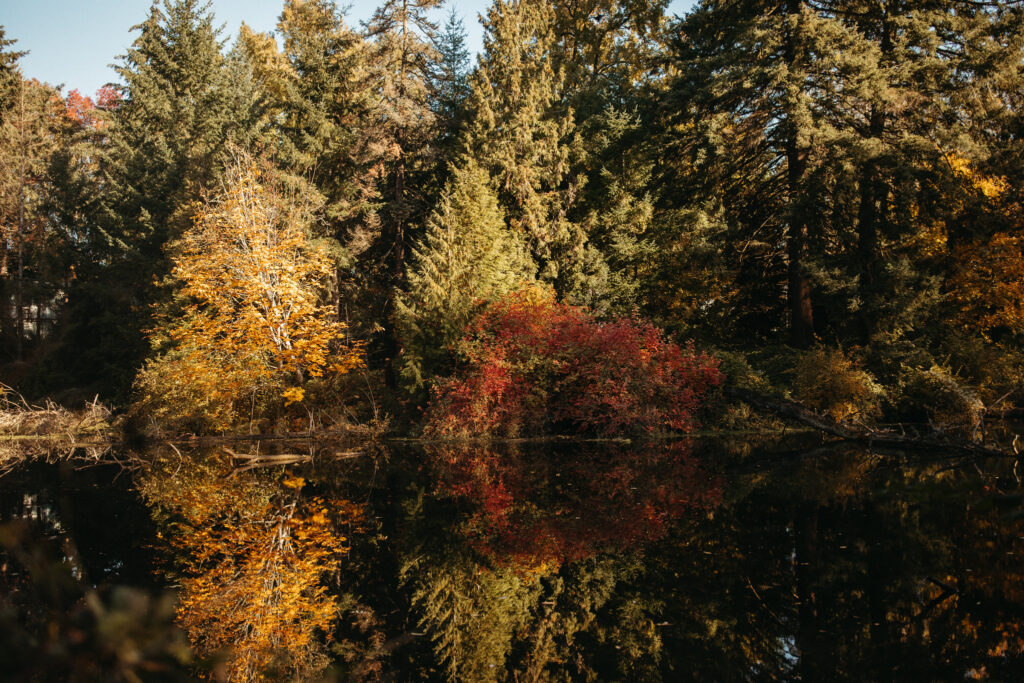
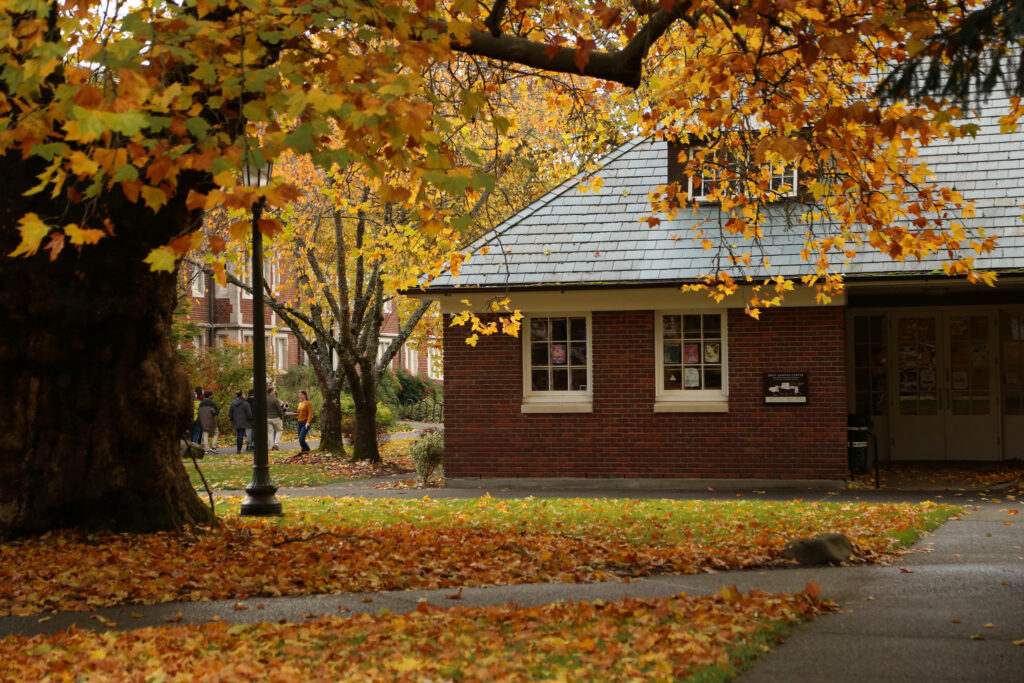
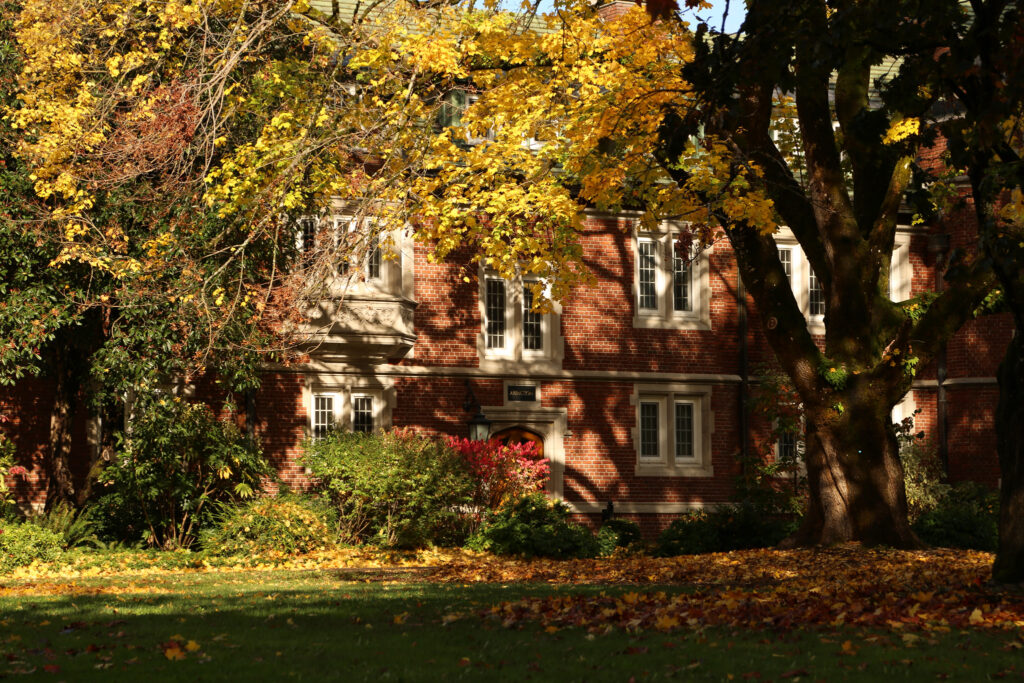
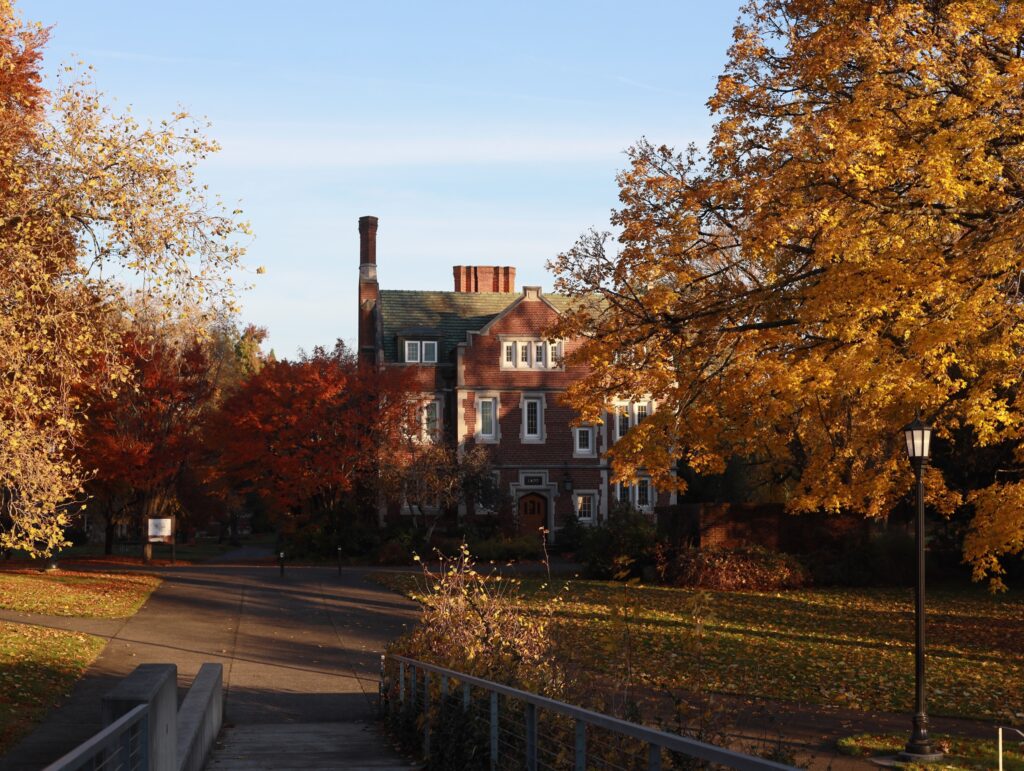
As the weather cools down and students get into the swing of classes, Reed’s campus begins to transform. The bright greens of the lawns and trees in the summer shift into oranges and reds as the falling leaves coat the ground. The canyon comes to life with all the vibrant warm hues of the leaves and the crisp crunching sounds they make as Reedies trample across them on the way to class. Maybe I’m biased, but I think fall is the prettiest season by far (especially at Reed)!

I’ve even heard rumors that fall is the best season for spotting the otters in the canyon–keep your eyes peeled!

Looking forward to jumping in a pile of leaves,

The Prexy Ghost

The Beautiful, the Soul Crushing, and the Leaking: A Brief History of the Buildings on Reed Campus

When walking around Reed College, one can see a lot of buildings in various styles. These different styles represent the changes in Reed’s history and can be defined into four types of architectural styles: collegiate gothic, modernist, post modernist, and contemporary modernist. 

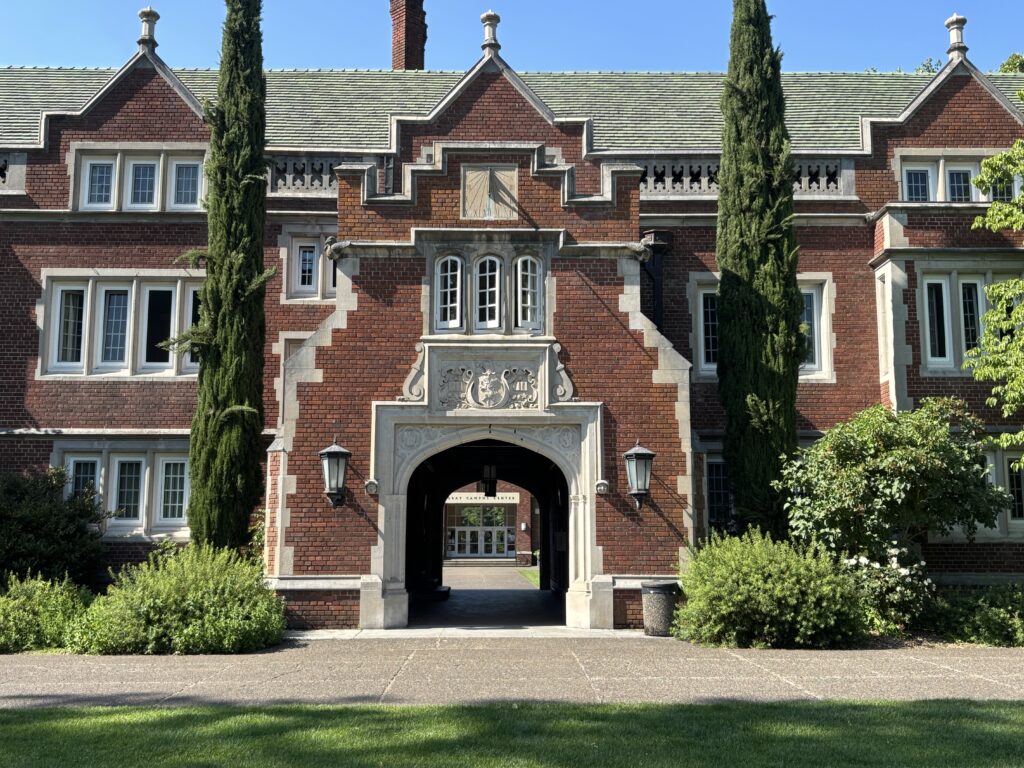
The Sallyport in ODB

In the college’s beginning, most of the important buildings were built in the style of Collegiate Gothic. Buildings such as Eliot Hall and Old Dorm Block (ODB) were built with lots of brick and stone, and these buildings were emulating older buildings like the dorms of Princeton and University of Pennsylvania which in turn emulated gothic style architecture and even older college buildings like St. John’s College in Oxford. The architect Albert E. Doyle was the one who designed both ODB and Eliot using a slightly different style called Tudor style. In fact, the arch facing the Great Lawn on ODB, called ‘Sallyport,’ is a replica taken from a tudor manor called Compton Wynyates which was built in honor of Henry VIII. Eventually, Collegiate Gothic fell out of fashion in the 1920s and there was demand for a new style of buildings. 

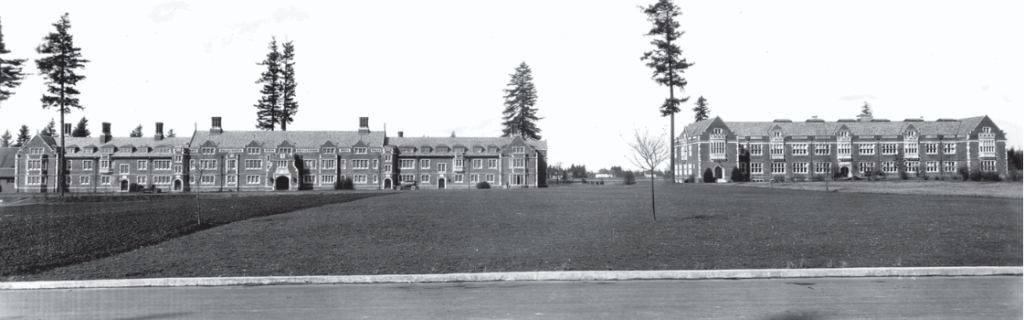
Eliot Hall and the Old Dorm Block in 1913, right after completion of ODB

After Doyle died in 1928, his protege Pietro Beluski took over and designed many of the buildings on campus. A change in architect meant a change in architectural style, and Belewski was a modernist. A couple of Beluski’s buildings on campus are the McNaughton, Foster, and Scholtz dorms that many alumni may not remember so fondly. (I have heard rumors that the paint job inside was a psychology thesis trying to see what colors would make students most likely to drop out.)
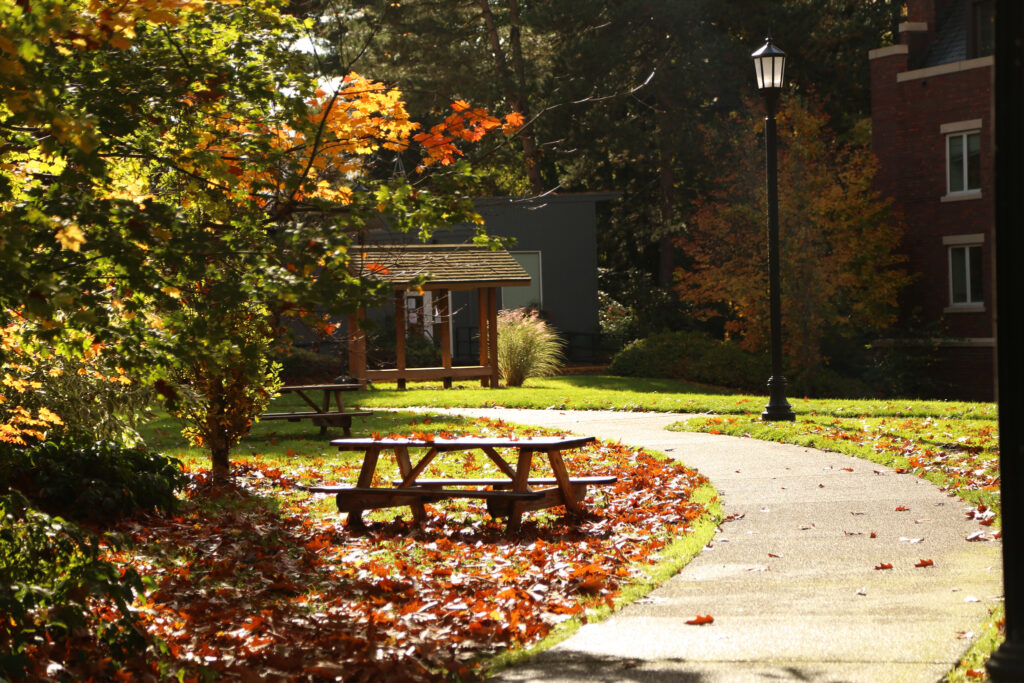
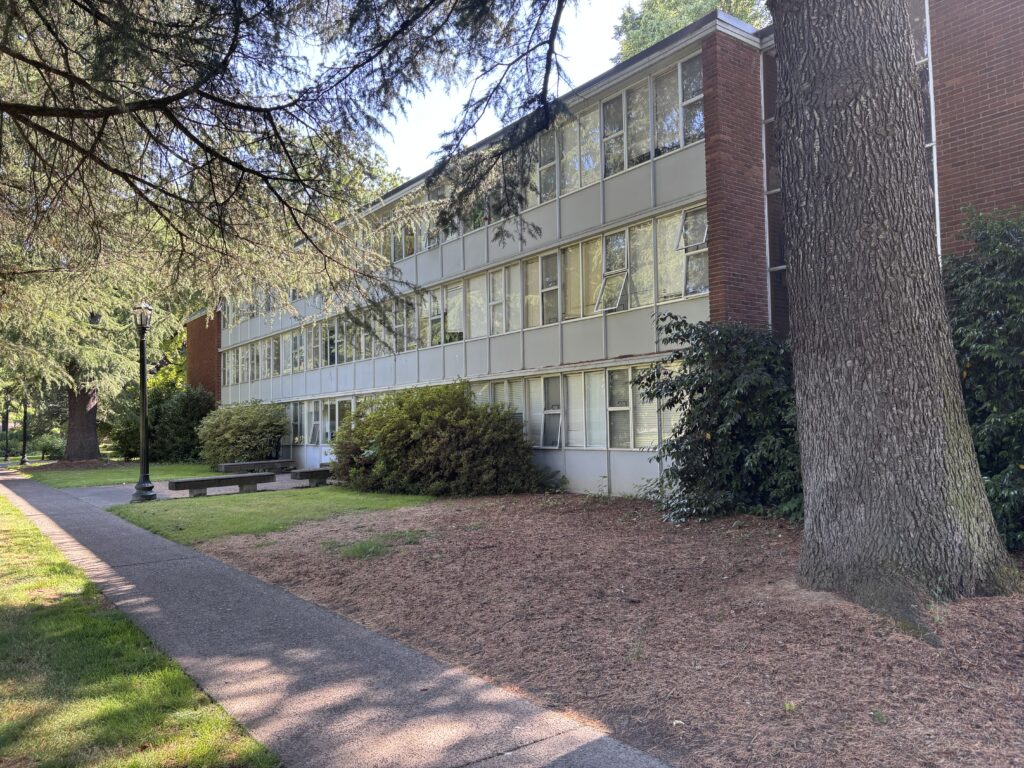
MacNaughton Dorm

Unlike the detailed and beautiful architecture of Eliot and ODB, McNaughton, Foster, Scholtz were built with one word in mind: practicality. The school needed to house students and those buildings did the jobs perfectly. Another modernist building on campus is the psychology building, formerly the chemistry building. While one could say that the introduction of modernism on campus brought many buildings that did not fit with the style of Reed college, another can look at it more like Reed casting off a bourgeois influence. 

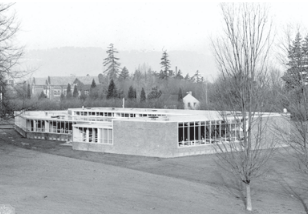
The original modernist chemistry building

After a while, people wanted a break from the soul crushing bleakness of modernism; postmodernism was a way for architects to be playful with the designs of their buildings. Vollum Hall is a building on the Reed College campus that one could say was built in a postmodernist style; others would argue that it just looks really 70s. Another example would be the extension built onto the library. While it blends in with the older section of the library, it is not Tudor by design and contains many postmodern elements.
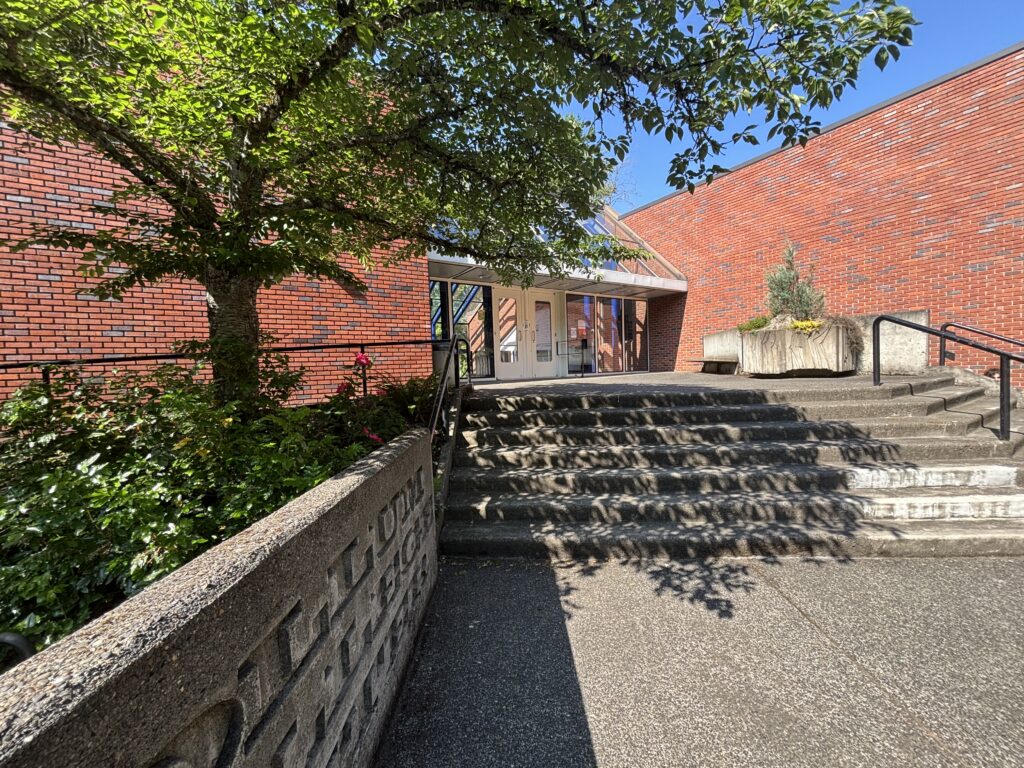
The entry to Vollum Hall

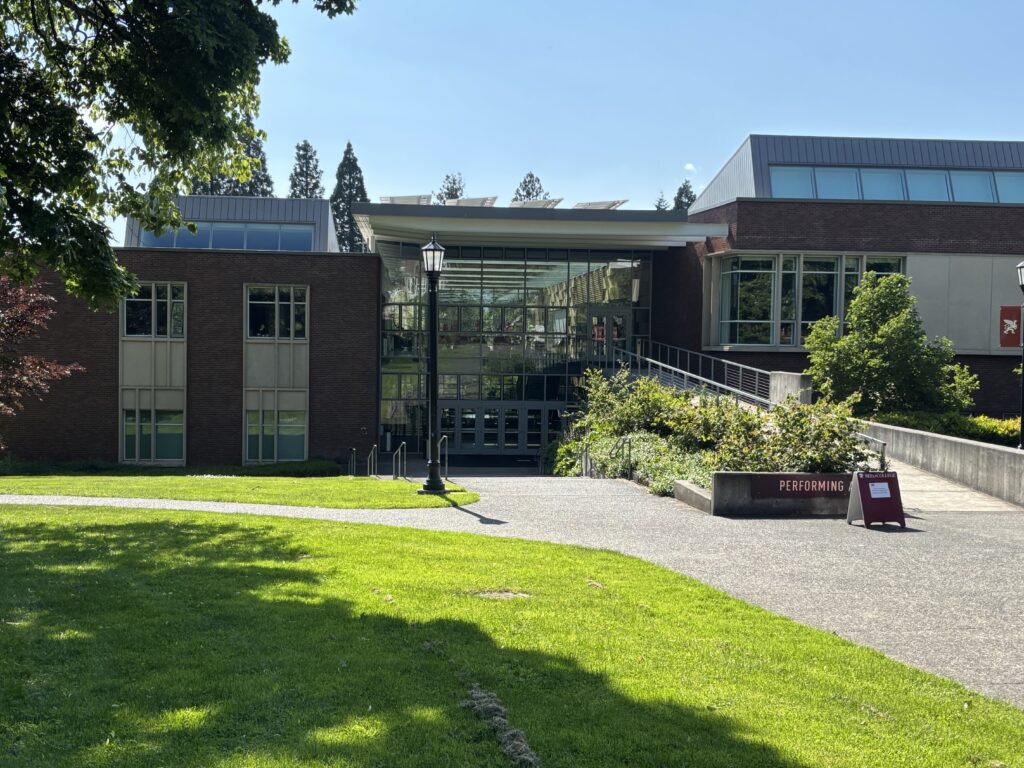
Finally, the most modern buildings on the Reed campus belong to the contemporary modernist architectural style. Two examples of this include the Performing Arts Building, and Reed’s newest dorm, Trillium. While not a full return to the hyper practicality of modernist architecture, there still was a belief that function mattered more than form. The Performing Arts Building was made to center all of the arts in one building, and so it has practice rooms for music, dance studios, etc., but it fits the design of other Reed buildings by its usage of brick. Trillium also uses brick, just not the red ones that we are used to seeing on the various buildings. The usage of bricks shows how architects are trying to make buildings pleasing to the eye or at the very least fit in with the other buildings while trying to make them as functional as possible. 

The different buildings at Reed represent different eras of Reed College along with the hopes and desires of the various architects that built them. Taking a walk around Reed campus is a lot like traveling through different eras of Reed College. You are time traveling through the different periods of Reed and seeing what were the college’s  needs, its hopes, and its dreams.

With An Eye On Campus,

William Clarke ’27

Reunions was so fun; maybe we should like, do this every year or something?

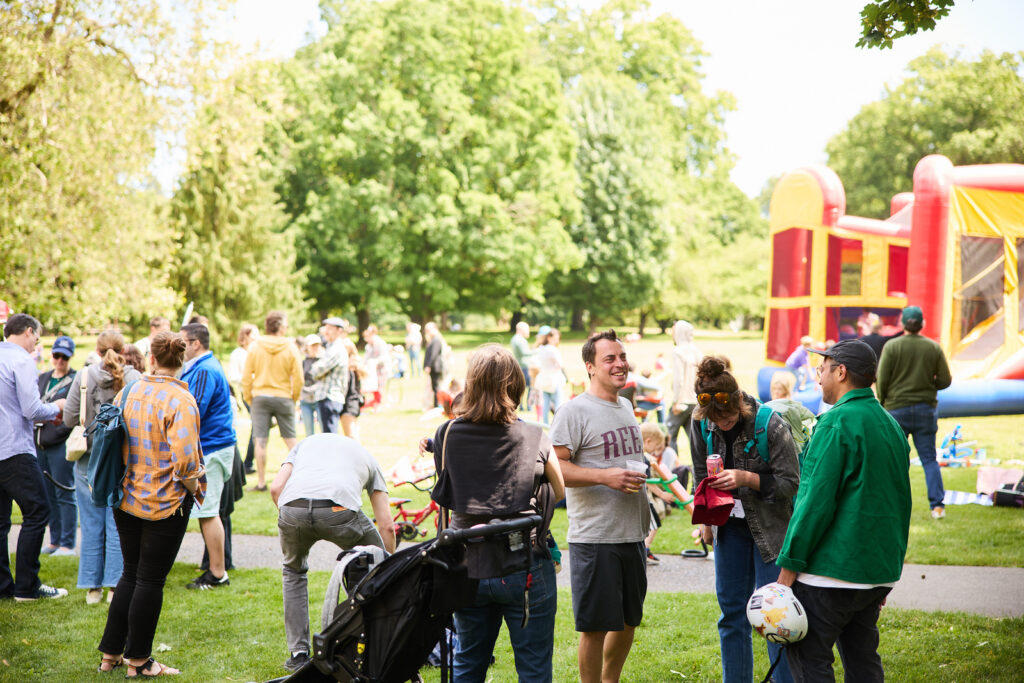
Carnival at Reunions on the Great Lawn

Reunions 2025 is over! Aside from the fact that I now have lost my only excuse for staying up unreasonably late and getting paid to do so, I enjoyed it. How about you? Did you meet new people? Catch up with old people? Do drugs? Actually, don’t answer that last one. 

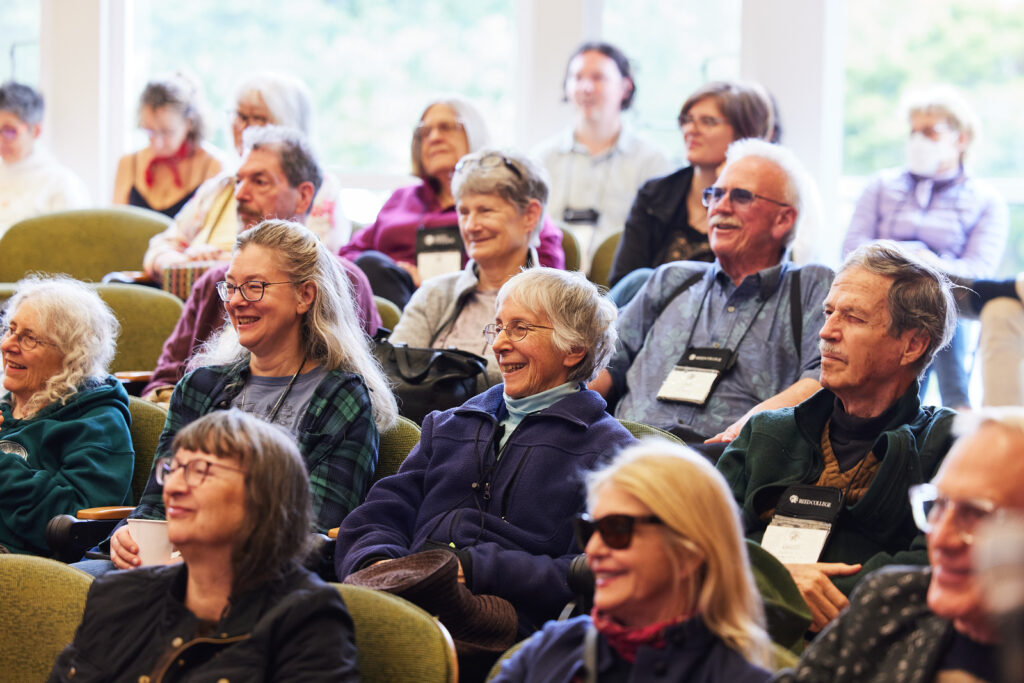
The audience of the All-Purpose Humanities Lecture

There were a lot of events to go to and many people to meet up with: over 1,000 attendees and nearly 100 events to attend! My personal favorite event was Paul Edison-Lahm ’83’s walking tour on the architecture of Reed, followed closely by the rugby game (celebrating 50 years of rugby at Reed!), and driving people around in a golf cart. 

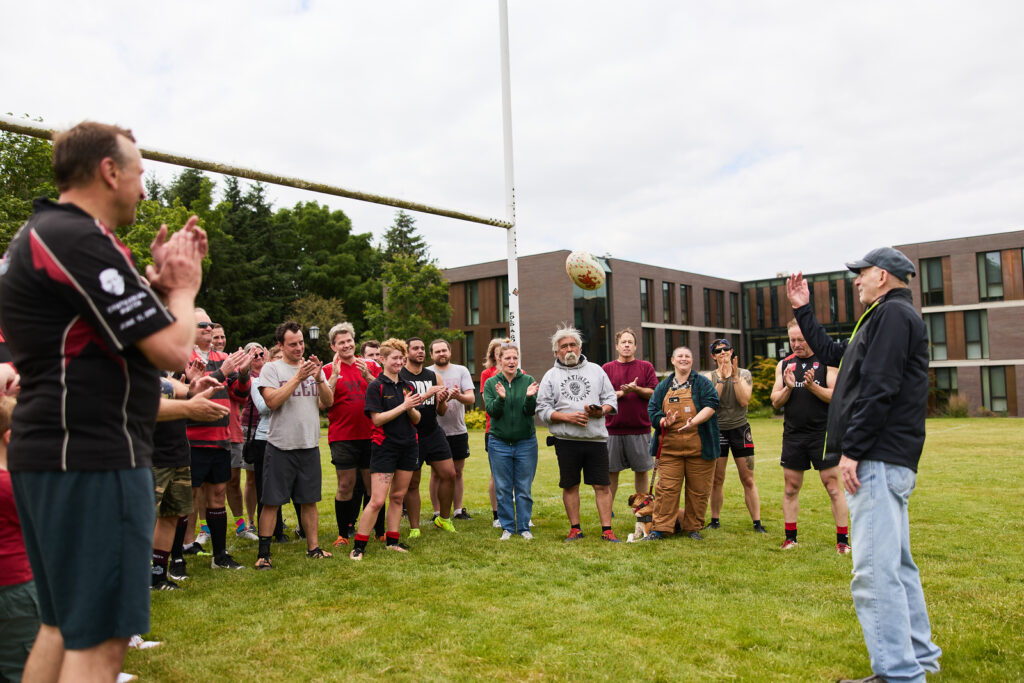
The rugby game kickoff

In case anyone did not know, there was also a scavenger hunt, made by Matt Giraud ’85, that took you all around the Reed campus (that’s what all the cryptic messages taped on various buildings was about). I was one of the lucky few who answered the call to go on the quest and send President Foster home.

The laser show on the Great Lawn

For those who drank too much to remember, Friday was when everyone met up at the International Plaza and ate good food with Meatsmoke (where all the language houses are), and Saturday was on the Great Lawn, where everybody ate grilled meat while the light show was going on. I hope you, dear reader, also had as much fun as I did during Reunions, and I look forward to next year’s reunions. I’ve spotted myself a few times in the photos of the weekend–proof that I didn’t just eat grilled meat. Take a look yourself?

Myself, at the rugby game

Doing a doughnut in a golf cart,

William

Foster’s Quest: Reunions Scavenger Hunt

On an otherwise unremarkable spring day in 1915, William T. Foster, Reed’s first President, strolls toward Sallyport, lost in thought. Life is a course charted between knowledge and ignorance, light and dark, truth and fiction – indeed, between Lux and Nox, the two grotesques guarding the portal as he enters. Where to guide his nascent College, newly troubled by adversity? And it is this question, posed precisely between these two poles, exactly as he enters the portal, that bends the fabric of time toward an answer and propels him out the other side… into 2025!

Reunion-goers have the chance to pick up the quest–your task is to help him return to his time by deciphering 11 clues to 11 locations around Reed Campus, enjoying a rather pleasant tour while collecting one letter at each locale. Then, gathering together those letters, you have only to unscramble them into a four-word phrase and you have saved the day. But more: the first 250 to show their work at Prexy earn a special keepsake reward – and yes, boundless glory!The Scoutbook you’ll pick at Prexy contains valuable information to spark your quest, or pick up the trail at any of the 11 locations if you happen upon one over the weekend.

Scavenger hunt designed by Matt Giraud ’85

Goodbye…and Hello!

With theses completed and celebrations held at Renn Fayre, the seniors (myself included) prepare for their final day as Reed students and the event that will transform them into Reed alumni: Commencement.

Personally, I feel torn between a myriad of emotions. I’m relieved to be getting my degree and excited to move on to new exciting things, but I’m also nostalgic for the time I’ve spent at Reed and sad to be leaving the community I’ve become so ingrained in over the last four years.

I’ve been reminiscing on my underclassman years, and looking through photos from my entire time at Reed. How much I’ve changed and grown, and how Reed has shaped who I’ve become. I wonder how life will be outside of the Reed bubble and how my connections to this community will change as my class disperses into the world.

Working in the alumni office has definitely framed my outlook on the post Reed community positively though. The resources and connections available to us do not just vanish upon graduation (clearly, as I’m writing this blog for alumni). Knowing that the Reed community will still be there for me brings me comfort in spite of the uncertainty that the world outside Reed promises.

See you on the other side,

Soon to be Reed Alumna

Taliah Churchill ’25