Griffin’s Beat: Decay

Hey everyone!

It’s your local Reed they/them, Griffin ’28. Now it’s been a little while since you last heard from me (since Reunions!) I know I know I left for too long–I’m sorry but everyone has to have a little vacation time; it is summer after all…. But I’m back! Since the powers at be for this blog have let me run wild with my own ideas, I figured it would be fun to write a little post about my absolute favorite section of the circle of life: DecaaaaAAAAAaaAyyyy. (that was supposed to be singing). 

Ok, ok, I know what you’re gonna say: ewwww Griffin, decay is gross and nasty and smelly and gross why would I want to pay attention to an article about rotting? But if you just stick with me here for a second I will show you super cool stuff about decay and some of the places on campus YOU can get your hands on alllllll types of decay!

Starting off: the answer that I’m pretty sure everyone was already thinking: the canyon! While the beautiful Reed canyon acts as the students’ metaphoric wall between dorm life and classes, it also has an absolute abundance of species that most students walk over everyday without noticing. We can start with the mushrooms!

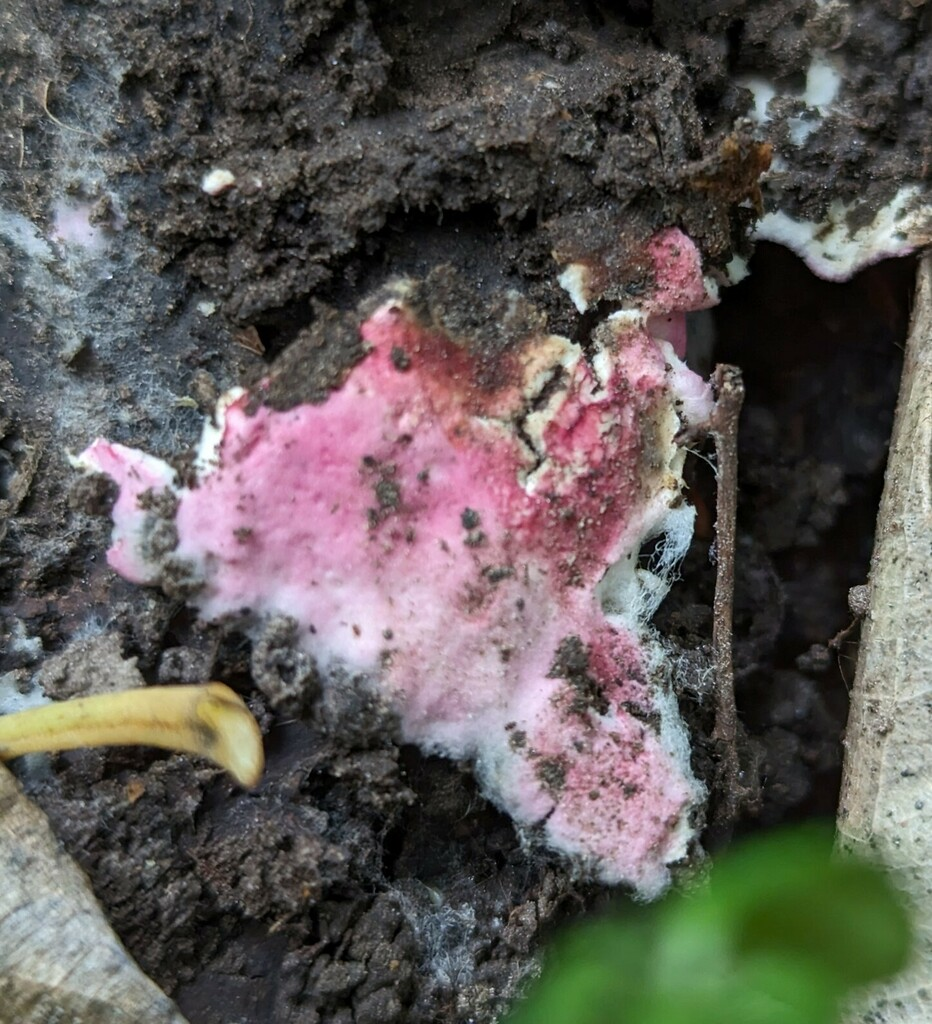
I could spend all day reciting the different species of mushrooms that I have found on campus but I’m gonna let you know a couple highlights of these excellent decomposers that help keep our soil nourished! Under the blue bridge and scattered around the canyon trails, there are fallen trees and logs that are one of the favorite hosts of Scurfy Twiglets (they have socks–look it up), all types of bonnet mushrooms, and the Red edge Brittlestem (the edges are white why would they call them that?).
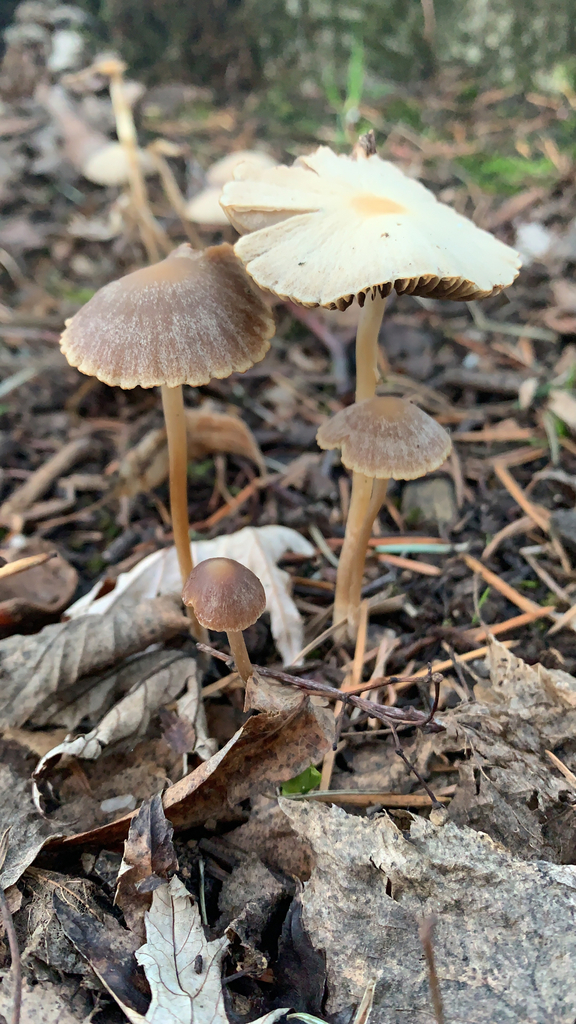
Red edge brittlestem found near campus

 If you keep your eyes planted on the soil (get it?) then you’ll definitely be able to see some California Flat top Agaricus. They are one of the most abundant species on campus and easily recognizable with their beautiful pink gills on the underside of their white cap. If you love pink, good news for you, there are other mushrooms on campus that are full of it, like the artist conch and and Pink Polypore Mould: 
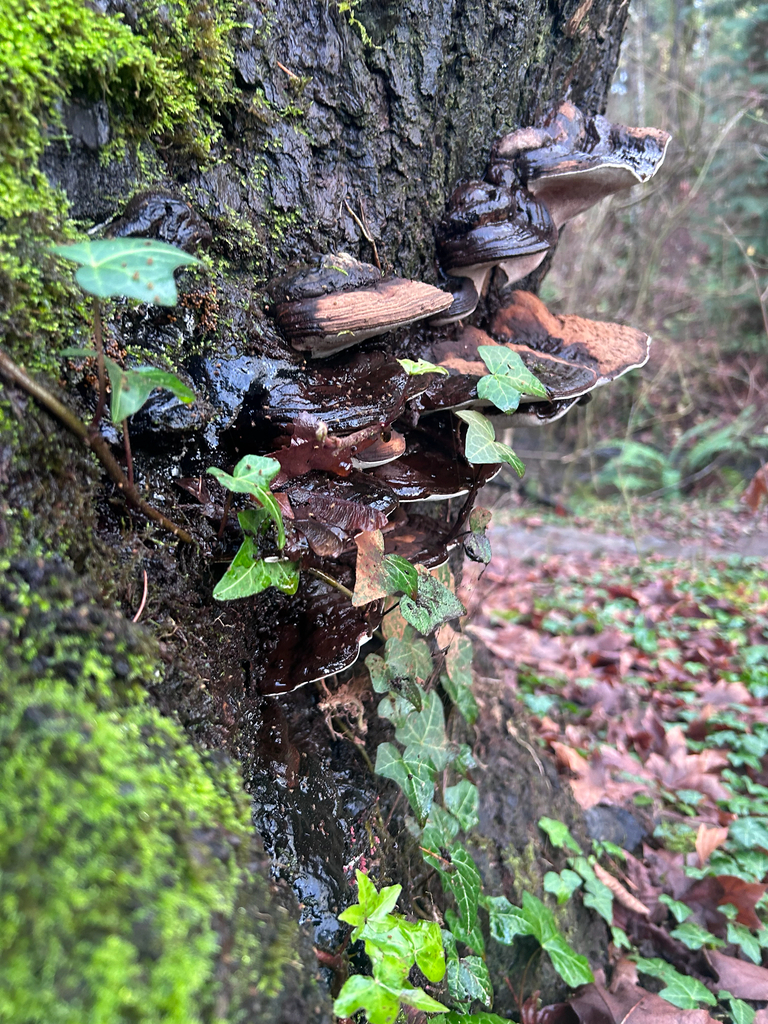
Artist Conk in the canyon, covered in invasive English Ivy
Pink Polypore Mould from elsewhere in Multnomah County

If your tastes are a little more…alien, then keep an eye out for ruffled seeming piles of leaves in the fall. You might be able to see some of the creepier fungi on campus with the Wrinkled Club Fungus or Fairy Fingers. I find them most often on the north side of the canyon for some reason.
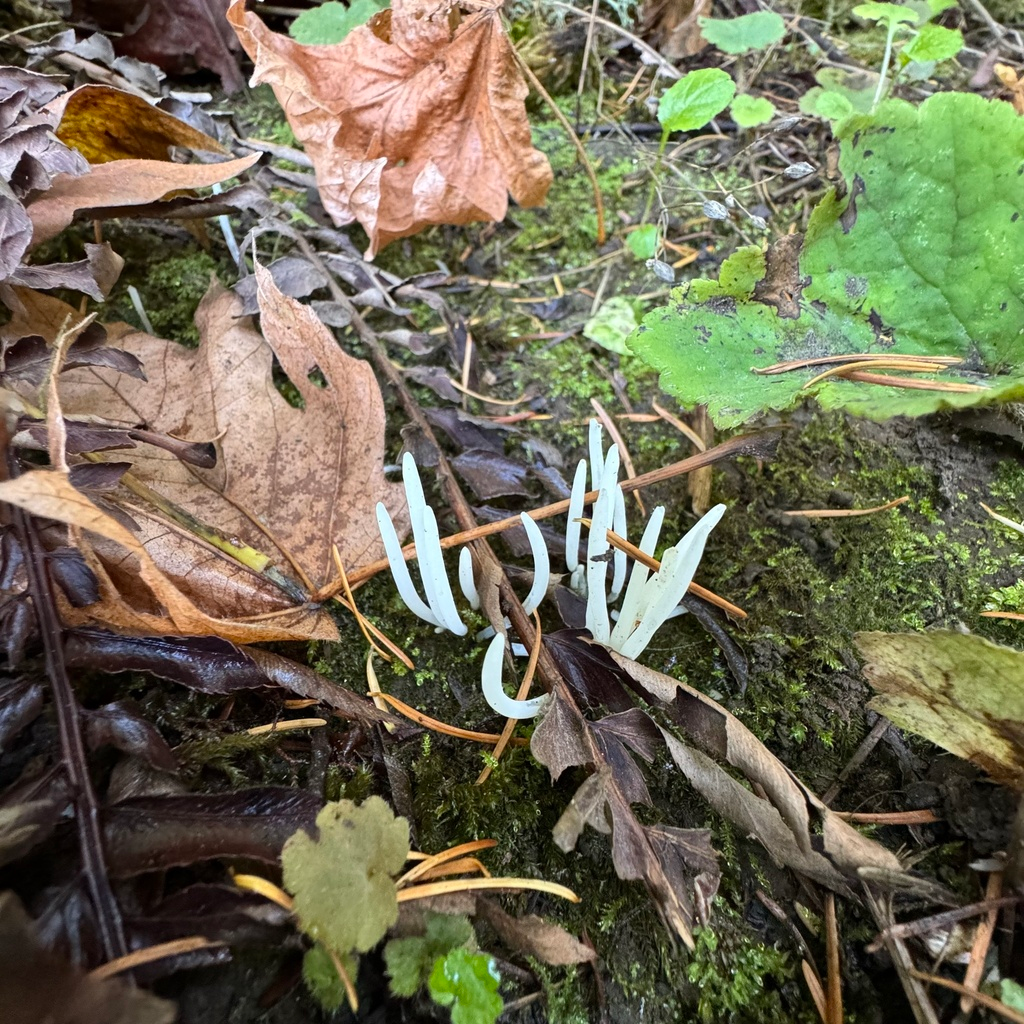
Fairy fingers in the canyon

You can also use one of my absolute favorite Reed resources, The Reed Tree Map, to find the locations of specific species of trees on campus. This will help you pinpoint where you need to be looking for more specialized fungi, like the red spongey oak-loving bolete and the Brown Birch bolete, both of which often grow off the roots of their respective tree. 

Across campus, you can find many of the other visible members of the F.B.I. (fungi, bacteria, invertebrates). My personal favorite are the many slug species that we have on campus. While you can find them often sliming around tree stumps in the canyon, I find that the best place to pack in as much slug-watching as possible is the moss covered retaining wall in front of the Reed Garden House. The most important thing to remember for the hunt is that they are nocturnal!

Some wild species you can see on campus include cellar slugs, meadow slugs, milky slugs, three band garden slugs, Western dusky slug, and the big papa who rules the wall: The Leopard Slug. 
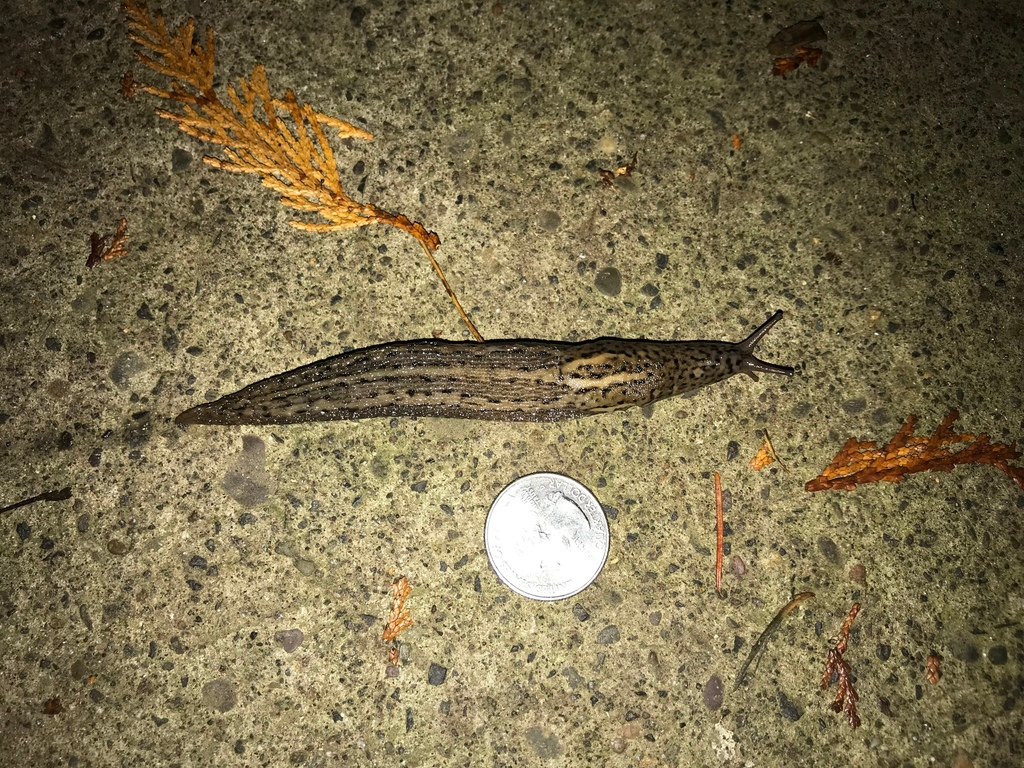
Leopard slug on campus, with a quarter for scale

Leopard slugs are the second largest terrestrial slug species in the world, are incredibly fast (6 inches per minute), and have excellent homing skills, meaning they sleep in the same location every day. I personally have four pet leopard slugs that are each about seven inches long and the width of a quarter. Yeah. When I said they were big I meant it. I love my slimy children. 

Altogether, these detritivore species that are found all across our wonderful campus help to keep our canyon balanced! They are essential for all flora and fauna life on campus, including the wonderful food that is grown in the campus garden for the Reed Community Pantry. While they may be a little bit creepy or weird or slimy, I encourage you to to take a look down at the floor next time you’re walking somewhere lush and see if you can see the little housekeepers that keep our world moving. 

Until next time, 

Griffin 

Photos courtesy of users on iNaturalist, a citizen-science driven website where folks record their nature sightings around the world. Check out other flora and fauna seen on the Reed campus.

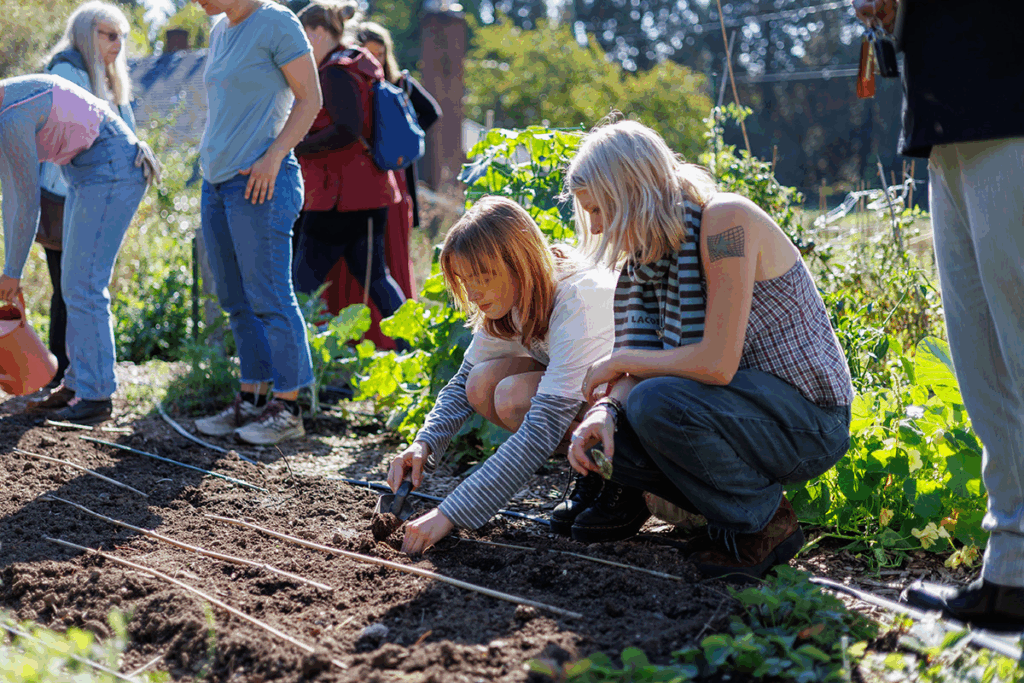
CHEM 102 uses Reed’s Dye Garden

This past year, Chemistry instructor Patrick Poletti utilized the Dye Garden to make indigo dye for the first lab of the semester in CHEM 102 – Introductory Chemistry.

For quite a few years, CHEM 102 has done an indigo lab where they synthesize indigo from 2-nitrobenzaldehyde and acetone.  Once they have synthesized the dye, they use it to dye a test fabric swatch.

Instructor Poletti said, “Typically, the synthesized stuff works really well on spun polyamide (Nylon 6.6) as well as spun diacetate. Conversely, it chews up the worsted wool beyond recognition. A random conversation in the locker room at the sports center (of all places), made me aware that there was a healthy supply of natural indigo on campus.” He contacted Nar Johnson-Harmansah ’27, a Sustainability Intern and Studio Art student worker, who supplied the class with more than enough dried indigo leaves for use, in addition to a nice procedure to extract the dye.  

To introduce the natural dye, they broke each lab section in half, with half of the lab groups making the synthetic indigo dye and the other half of the lab groups extracting the natural dye from the leaves.  Each lab group first dyed a swatch with the dye that they had prepared.  They then added their dye to the synthetic pool or to the naturally obtained pool and finished by dyeing a swatch with the dye that they had not prepared.  The analysis included a comparison of the two methods.  

About their findings, Poletti said, “Generally, we saw that the natural dye didn’t dye the swatches as darkly as the synthetic dye, although that could have been because I was guestimating on the amount of the natural dye to use.”  It also took longer for the indigo color to evolve from the natural dye.  The trend with respect to the relative success of dyeing the six types of fabrics was roughly the same between the natural and synthetic dyes, although the natural dye was markedly better at dyeing the worsted wool (i.e., it didn’t chew it up beyond recognition).

Experiments like these are a wonderful example of endless ways our community garden (located outside of the Garden House) can be utilized!

Read more about the Sustainability and Environmental Justice program at Reed through their website!

They host regular work parties, where students, staff, and alumni can lend a hand for whatever work is needed. In the past, this has been everything from harvesting pumpkins and squash, to adding compost to the garden beds, to installing a drip irrigation system.

Griffin’s Beat: Reunions 2026

What’s up Reunions visitors of 2026?!?! This is one of your loyal Reunions student workers and I am so excited to see all of you this year! My name is fittingly Griffin, and I am a rising junior at Reed! This is my second year working as a Reunions Student worker so I thought I would look through the schedule for the Reunions weekend and point out some of the events I am most looking forward to and that you will hopefully see me at! 

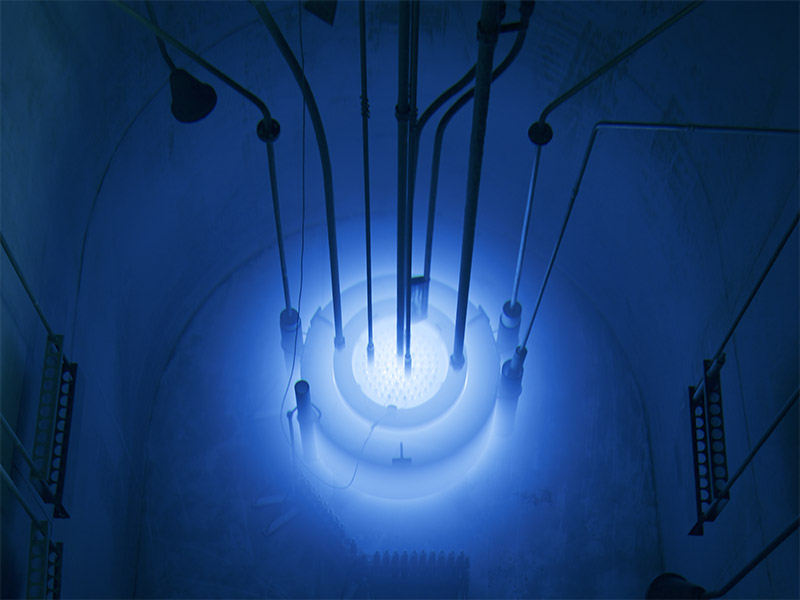
First off, Thursday is the first day of big events, of which, I am most excited to see the 50th class reunion dinner in the evening. I didn’t get the pleasure of being there last year but I am most definitely going to be there this year and am looking forward to hearing all the amazing stories of y’all’s time at Reed! There is also a reactor tour from 3-4 pm that has limited spots so make sure to sign up when you can if you want to see that signature blue glow! If you can’t get a spot on the Thursday tour don’t worry, because there are three other chances for you to sign up for a tour. 

The reactor emitting cherenkov radiation. The “blue glow” is produced by charged particles in the core moving faster than the speed of light in water.
Credit: Nemo Shen ’21

Moving on to Friday, this is the day where things really get going for those of you not from the class of ’76. If you’re an architecture fan, or just like walking around looking closely at buildings (which technically makes you an architecture fan) try your best to catch one of the two architecture tours hosted by Paul Edison-Lahm of the class of ’83.

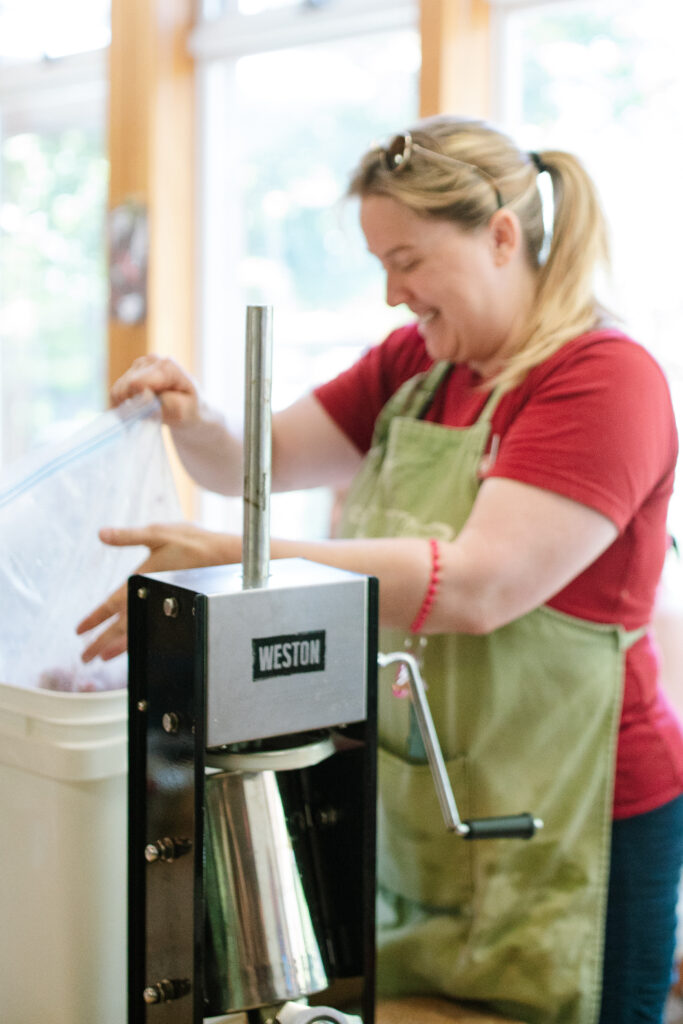
Also on Friday is my FAVORITE event of the whole weekend: How to Make Sausage with Meat Smoke!!! If you have ever wondered what it’s like to feel the power of a full on meat grinder in your hands, or what it feels like to rehydrate some prophylactic-esque looking sausage skins, this is the event for you. Not only do you get to do lots of tasting while you’re making your creations (you know…….for quality control) but you also get to be a part of Reunions set up like me! The sausages y’all make will be served after the fireworks on Saturday! So help feed your fellow Reedies and make some banger sausages (get it? There’s a badum tshhhh in there somewhere).

Learn How a Sausage is Made (Literally)
1:00–3:30 p.m., Spanish House

The masters of meat will demystify the metaphor, and prove that the dirty details are in fact delicious, clean fun! Meat Smoke veterans will lead a sausage-making workshop, demonstrating the entire process from snout to tail. Get hands-on experience in cutting down and grinding whole slabs of pork, seasoning it to perfection, loading and filling pork casings, and pinching and cutting sausage links. There will be plenty of opportunities for grilling and tasting our creations during the workshop. Sausage made during this event will be served to everyone after the Laser Light Show on Saturday. Come meat with us, join in the fun, and make lots of dirty jokes (sometimes they slip out unintentionally)!

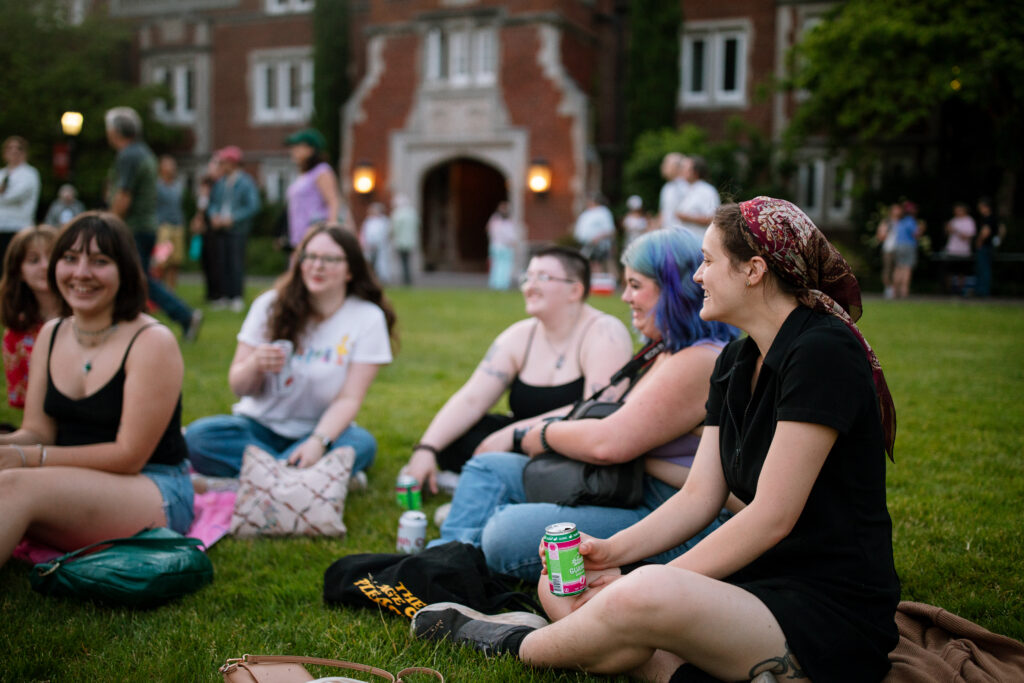
Later Friday night, come support some Reedies on the quad who are playing music! One of my bosses from another of my on campus jobs will be playing so you bet I’m going to be there shouting GO BEN!!!! 

Finally for Friday night there is arguably the biggest party of Reunions every year, the Language plaza party. Now the past couple of years it has been a 90’s party (The Dream of the 90s Is Alive at Reunions), but this year it is under new management. The class of 2016 has taken over, and with the help of some other classes, they are going to throw the biggest 2016 party since…. well, 2016!!

On Saturday, make sure to try to catch the All-in-one HUM 110 lecture! There will be every helpful piece of information from the entire universe ever and I personally think that is pretty cool.

One final event that I want to point y’all towards is the Human Chess! Have you ever wanted to LARP a chess piece??? (who am I kidding you’re Reed Alum, you do that every Saturday) BUT!!! There will be a little bit more action than your average run of the mill human sized chess game. I can’t say anymore because I fear for my lowly pawn life but be there or be square!!! (get it……. Badum tshhhh again!)

There are so many cool events happening this Reunions weekend I couldn’t possibly talk about all of them but these are the ones I personally have my eye on! I hope to see y’all there!! If I don’t see you at a particular event, I’ll definitely see you while I’m whizzing around AT OR BELOW the speed limit in the Reunions taxi so don’t hesitate to wave it down or call the taxi number (503-517-4050).

Signing off, your soon to be favorite Reunions student worker:

                                                     Griffin J ’28

Hot Air Balloons & Monster Trucks

It’s the end of the semester, and programs across campus are wrapping up! That includes a spectacular year for the Gray Fund Outdoors program, which takes students outside of the Reed bubble for adventures of a lifetime.

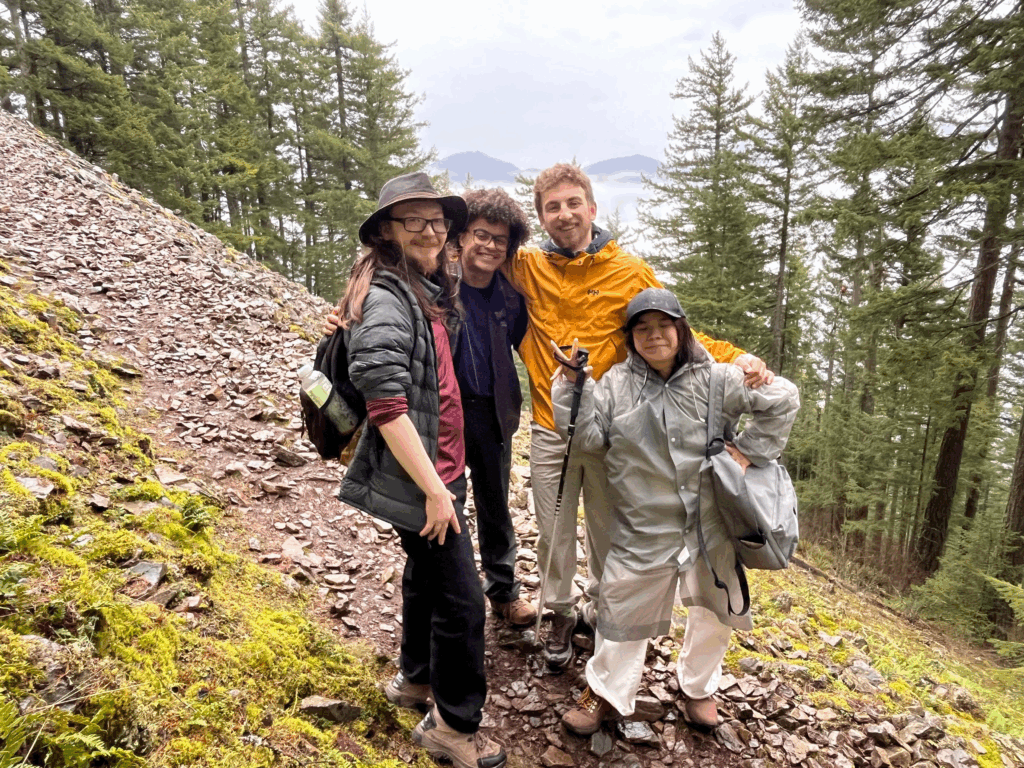
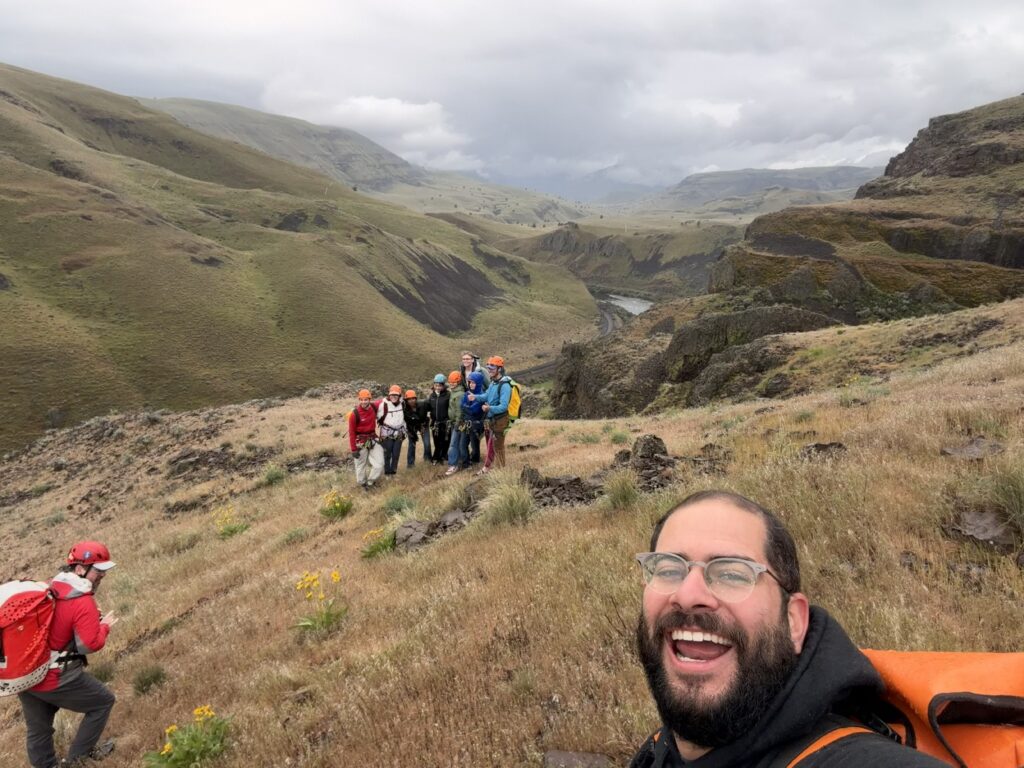
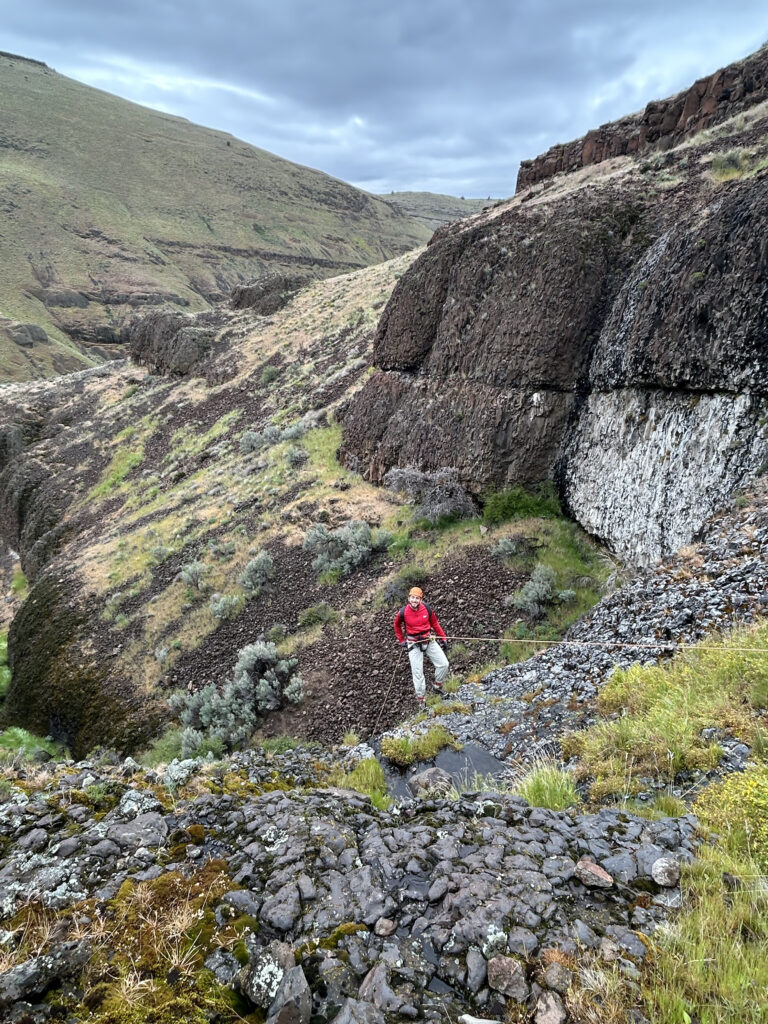
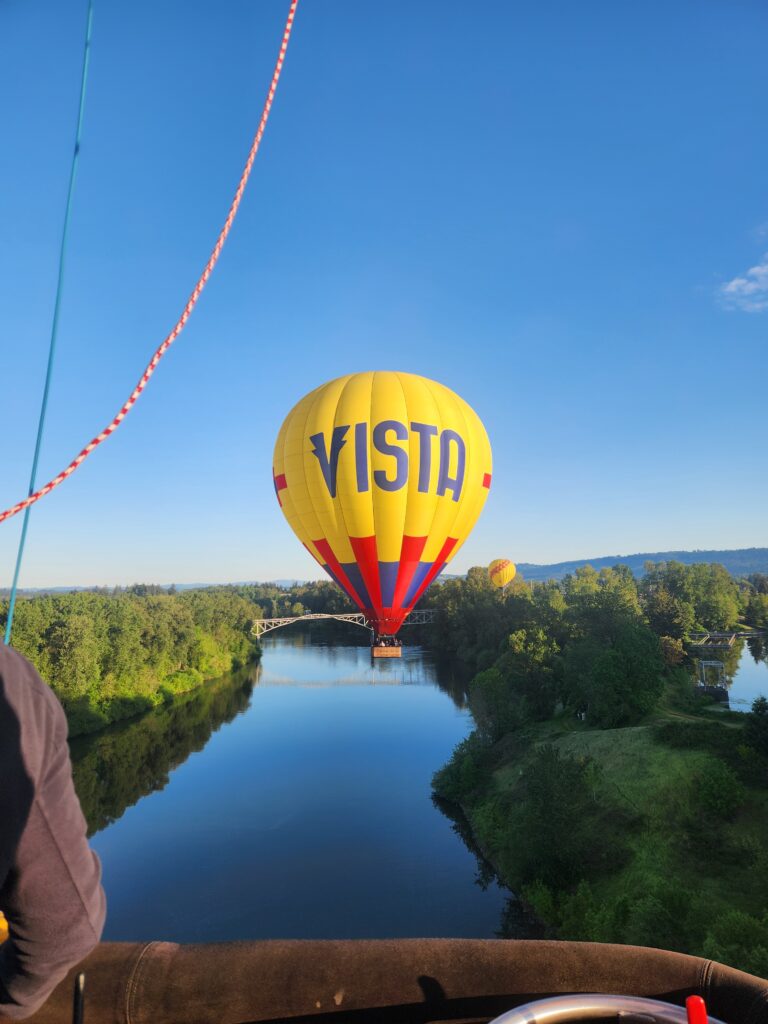
Trips this year included indoor skydiving, ice skating, an overnight trip to Cape Lookout, skiing and tubing at the ski cabin, rock climbing in Bend, a trip to the Gorge to meet Herman the Sturgeon, cross country skiing, a monster truck jam rally, paintball, seaweed foraging, a dawn hot air balloon ride, rappelling along the Deschutes River, and a visit to the famous Oregon tulip festival!

Check out these highlights:

Did you have the great good fortune of winning a Gray Fund lottery during your time at Reed? What did you get to do?

More than a century of Canyon Day

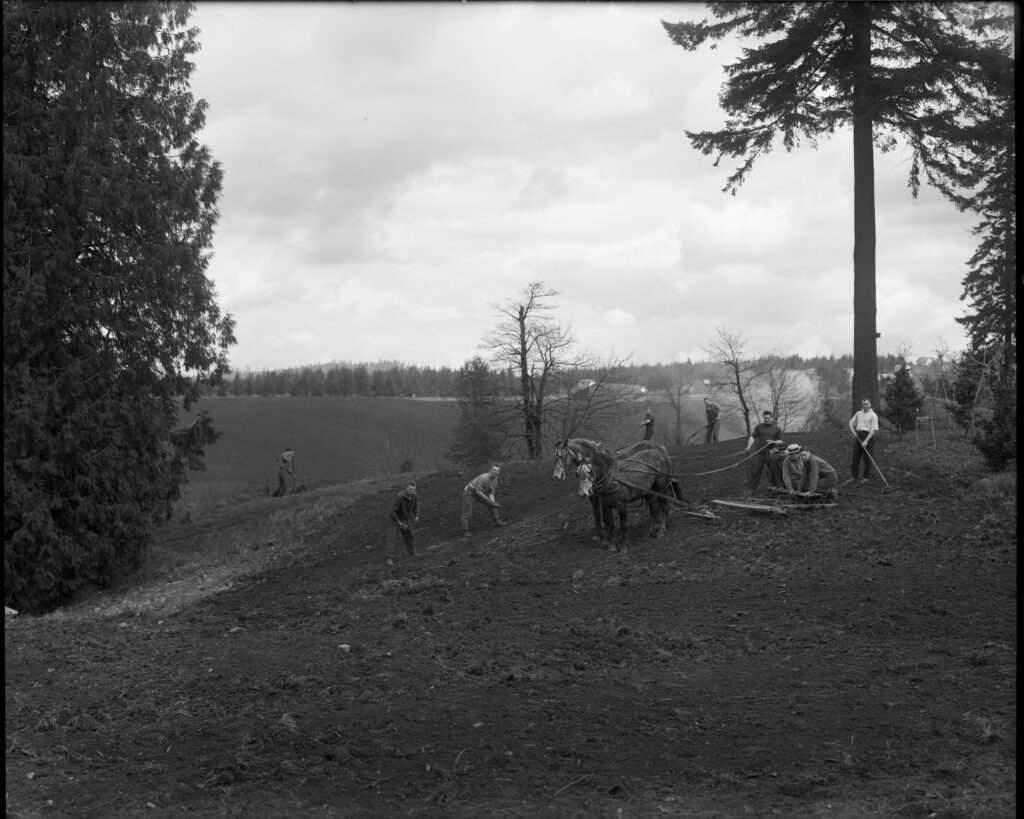
Reed is notorious for our traditions, but few have the staying power of Canyon Day. Canyon Day dates to nearly the school’s inception, with our first records pointing to April 15, 1913. At the time, Albert Doyle submitted plans to transform the canyon into “an artful landscape of Tudor Gothic quadrangles and formal gardens.” When the college’s shoestring budget of the time made that impossible, focus shifted to adapting the canyon from a cow pasture and trickle of a stream to a recreational area.

Campus Day work across the canyon with a pair of horses to help, 1913. Most of the students and faculty are clearing ground with rakes or hoes.

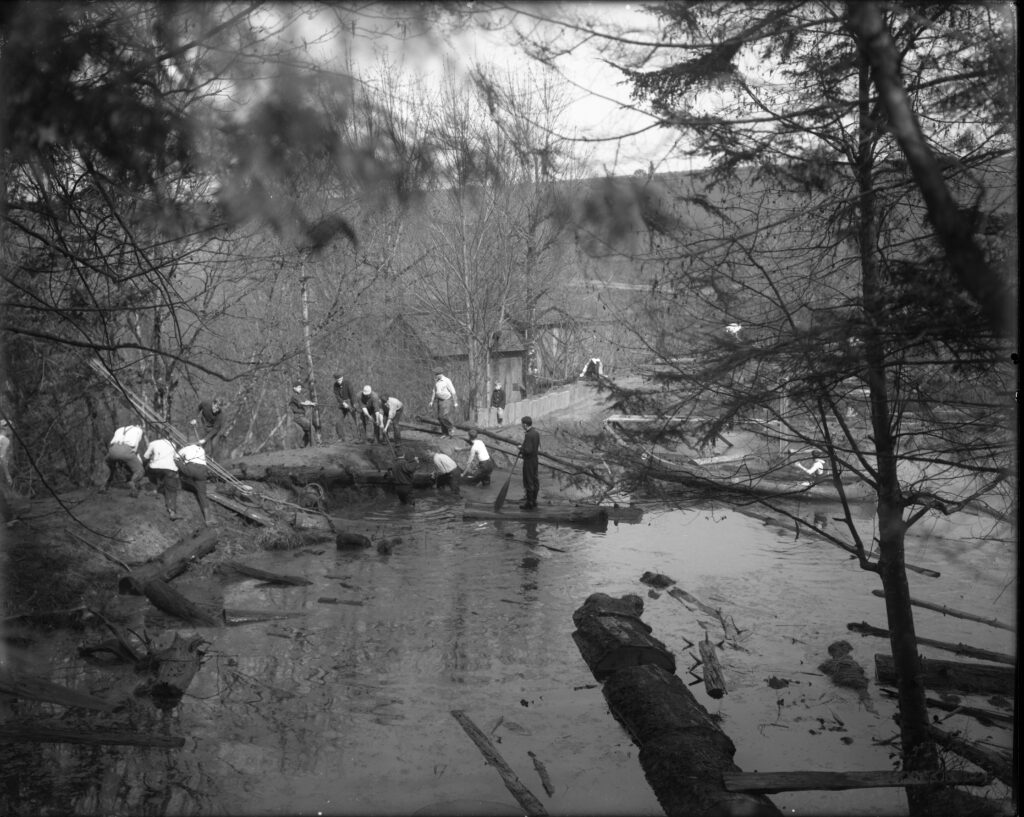
Even the college president, William Trufont Foster, put his back into it:

Campus Day near the Reed Lake dam, circa 1914. Students and faculty are clearing logs out of the Canyon Lake. President William T. Foster is in the water, pushing a log.

In 1915, students excavated a ten foot deep swimming hole on the west side, complete with bathhouses. In the ’20s, a dam was built to make way for a formal swimming pool. In the ’50s, the north bank was excavated for the construction of cross-canyon dorms. A Quest article from `1955 reminds students that they would soon,

“have a chance to uphold a miss-clad tradition when they forsake the cloisters of academic learning to shoulder arms . . . against the common enemy. Weapons will be rakes, shovels, hoes, and related miscellany suitable for an attack on the defiled beauties of nature.”

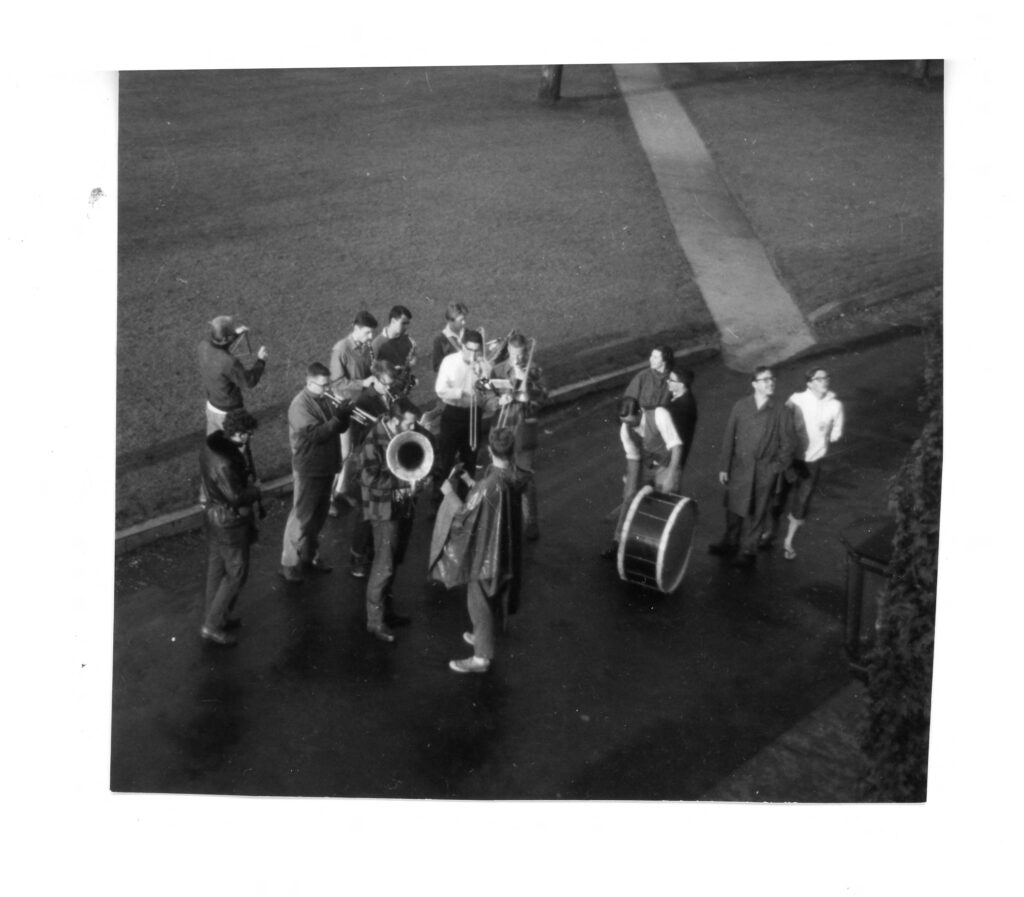
Year by year, the community gathered with snacks, gloves, shears, and every once in a while, with a live band to cheer them on.  

Canyon Day, April 1962. A student German Band is playing in the rain at 6:30 a.m., probably outside of the Old Dorm Block.

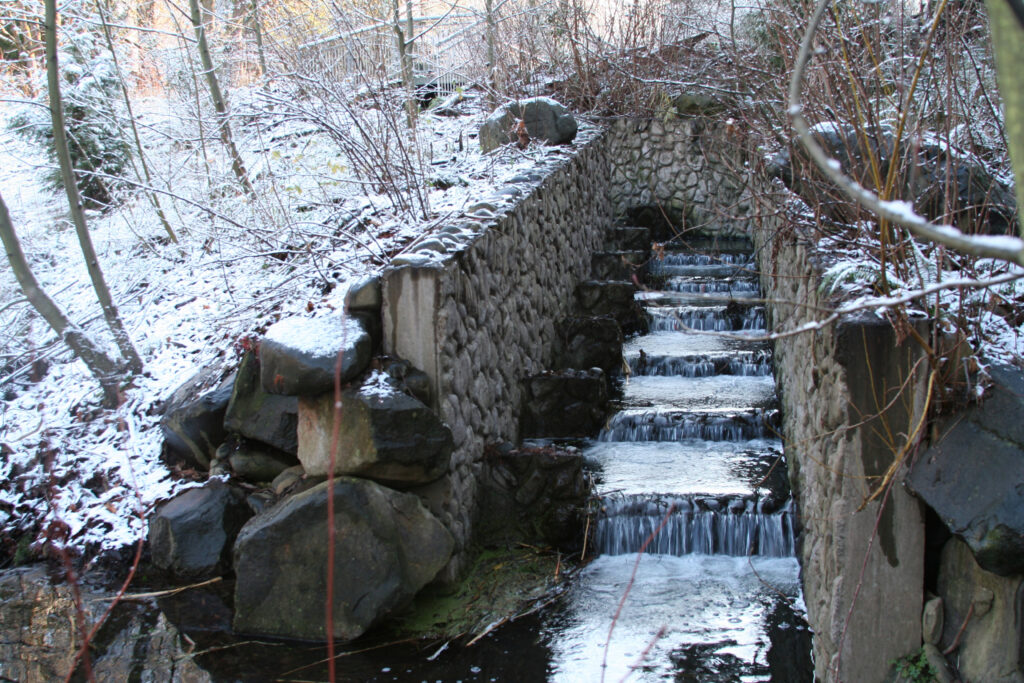
Over time, our approach to the canyon has evolved–it has been named part of the Johnson Creek Watershed in recognition of the headwaters of Crystal Springs Creek on the east end, and the canyon is now protected as 60 acres of habitat for urban wildlife. In ’01, the college constructed a fish ladder to re-establish connectivity between the lake and the lower creek, allowing access to the salmon spawning grounds. Opening day featured champagne and a timely spring downpour.

A snowy day in the Canyon, featuring the Reed College Fish Ladder, circa 2009

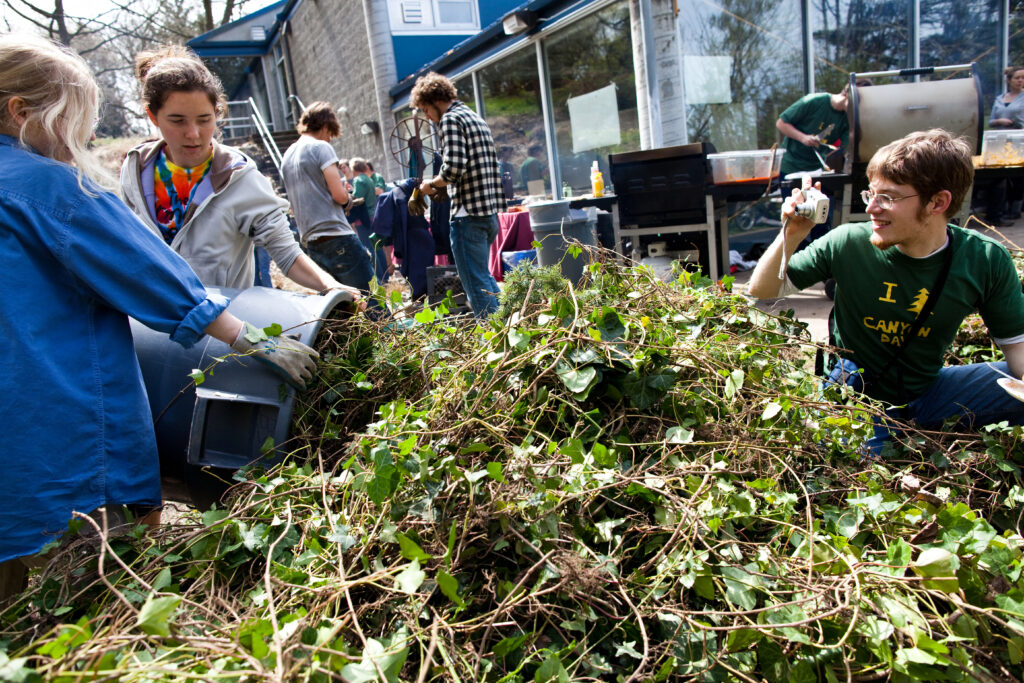
As such, a century into the tradition of Canyon Day, the focus is on planting native trees and shrubs, pulling out invasive plants, maintaining trails, and collecting debris. 

Canyon Day, April 4, 2010. Students are making piles of weed debris behind the Studio Art Building.

In the area? Join the community on April 4, 2026 to get your hands dirty! We can’t promise a live band, but we can guarantee camaraderie and a day’s work to feel proud of. 

The 50th Anniversary of Reed Rugby: 50 Years of Reed-Sanctioned Mud Wrestling

Before American Football, there was rugby and before rugby there was rugby, and our school has been playing rugby officially for 50 years now. Starting in 1974, the proud members of the Rugby club had only a book on rugby as their head coach and a foreign exchange student from Keele as their assistant coach. Somehow, they managed to win their first game, but that was probably mostly due to dumb luck. Paul Lucre ’92 said that they only won two games while he played on the rugby team, but nevertheless he had a lot of fun. Eventually, the rugby team managed to get a coach by the name of Peter Carmini. The Rugby team back then was dirt poor and could not even buy their own Rugby balls, they had to ‘acquire’ them through various means (and from various teams).

Rugby players in 1974

One time the rugby team was going to play against a Catholic School, and some students decided that it would be funny to dress as monks, and bring out a cross and burn it in front of the Catholic players. Understandably, the Catholic players were not pleased and promptly left without playing a game. 

Typically, when people talk about Rugby, they are talking about two different styles of Rugby: fifteens and sevens. Fifteens is fifteen players versus fifteen players, and sevens is seven players versus seven players. The beauty of Rugby lies in the fact that you need all kinds of body sizes to make an effective team—you need your big guys to play forward positions because they can tackle and hit more effectively, meanwhile the smaller and faster people play as backs. These are your scorers, they run around with the ball and score tries (Rugby touchdowns). Personally, I enjoy the rush of tackling someone to the ground (Yes officer, I assure you I am indeed a sane person), but in rugby there is a position for everyone’s body size and for everyone’s interests. Rugby is not a gentlemanly game played by thugs, it’s a thuggish game played by gentlemen.

50 years of anything is bound to create traditions, and Reed Rugby is no exception. At the end of the year all the members, regardless of gender, put on prom dresses and play rugby. The Rugby team is also famous for winning the owl fight on multiple occasions, sometimes in collaboration with other entities like the Russian House, or sometimes just by themselves. (Bulky Reedies who exercise regularly and have built-in teamwork are bound to do well in a brawl for a concrete owl.) Some traditions have changed, for example, there used to be a tradition where after a person scored their first try they would have to strip naked and dance. This has (thankfully) been replaced with just drinking a beer out of a boot.Rugby players in prom dresses during a skirmish

The Reed Rugby Team is not just a team of Reed students; it merged with Lewis and Clarke to form the Reed Lewis and Clarke rugby club or simply RLC, which has two teams under it, the W+ team and the M+ team or the Porcupines and River Rats, respectively. This merger is most beneficial for everyone since we get to borrow LC’s football players while they get more bodies on their rugby team. At the end of the day, we get more wins, which is great for all parties involved. To celebrate the 50th Anniversary of Reed Rugby, there was a game held on the Rugby Field during Reunions. Many people showed up and despite some of the alumni’s ages, a lot of them were just as fast and just as slippery as they were when they started playing rugby.

Mildly Concussed,

William 

A visit from…Boarus?

More rapid than owls, his coursers they came.

And he whistled and shouted, and called them by name;

Now Diver! Now Doyle! Now Chittick and Ladd!

On Foster! On Scholz! On Quincy in plaid!

So up to the holiday party they flew 

for eating with friends and dancing too.

As the holiday season approaches, so does Reed’s annual alumni holiday party. Have you heard the Reed myth about a group of people dressed in black druidic robes, marching in a hallowed procession that includes a cappella singing, torches, and a boar’s head on a pallet? This curious scene isn’t just lore; it’s the annual alumni holiday party. This yuletide celebration dates to the college’s early years, with the boar’s head procession appearing in the 1920s and becoming quite the beloved tradition. 

For many years in England, a roasted boar’s head has been associated with holiday feasting. The custom may be associated with the Norse practice of sacrificing a boar to the god Freyr during the winter solstice, in order to gain his favor in the new year. It seems that the tradition moved from Scandinavia to England with St. Stephen, whose feast day is December 26. The “Boar’s Head Carol” dates to the 15th century, and the words and tune used in Reed’s performance are the same as those sung every Christmas at Queen’s College, Oxford.

We hope that whether you’re able to join us for this festive occasion on campus on December 13 or not, you’ll have a great holiday season. Stay tuned for updates on our friend dressed all in fur, from his head to his foot.

Sending holiday cheer,

The Alumni Relations Team

Fall on Campus

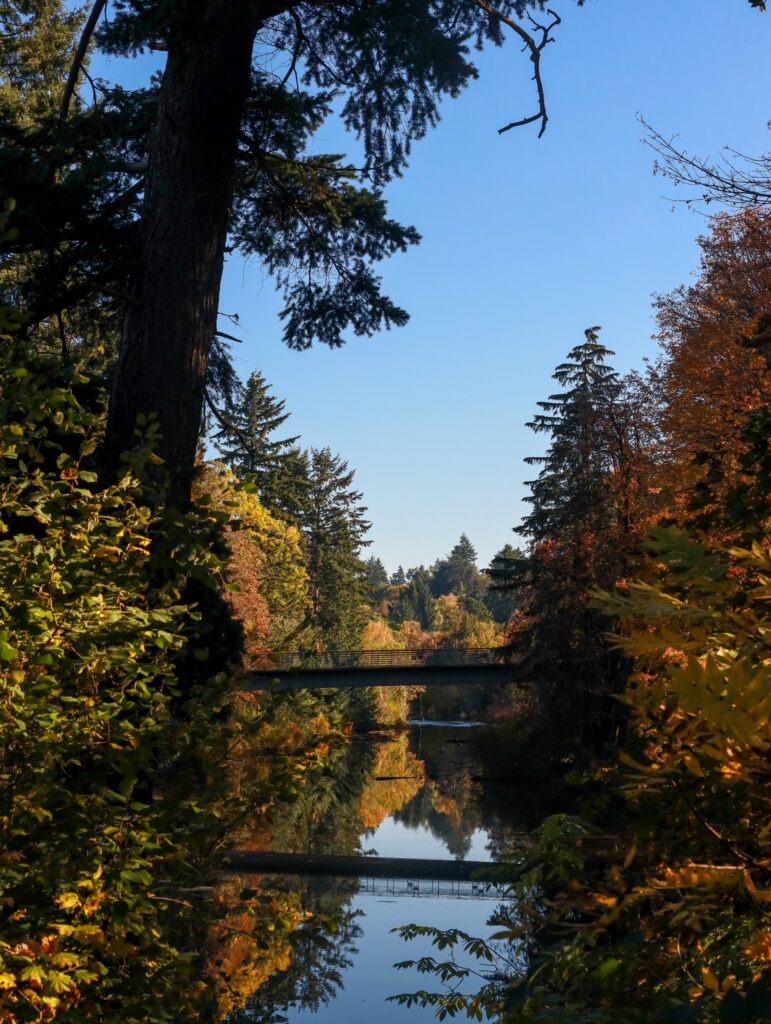
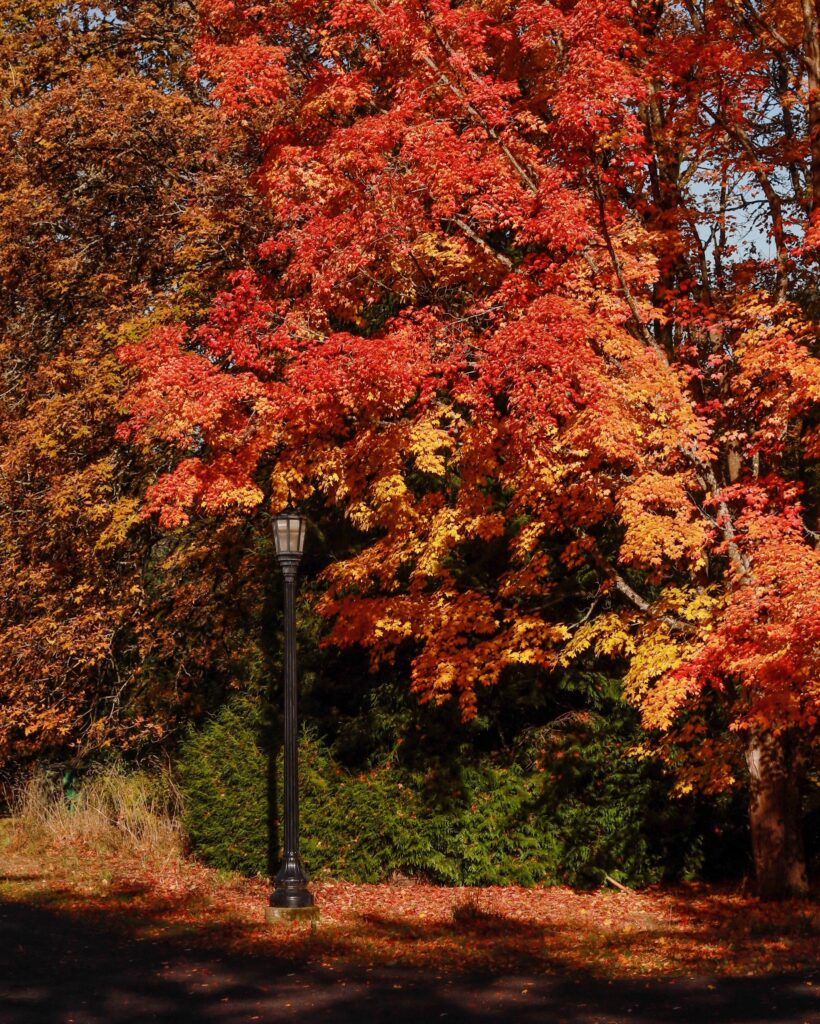
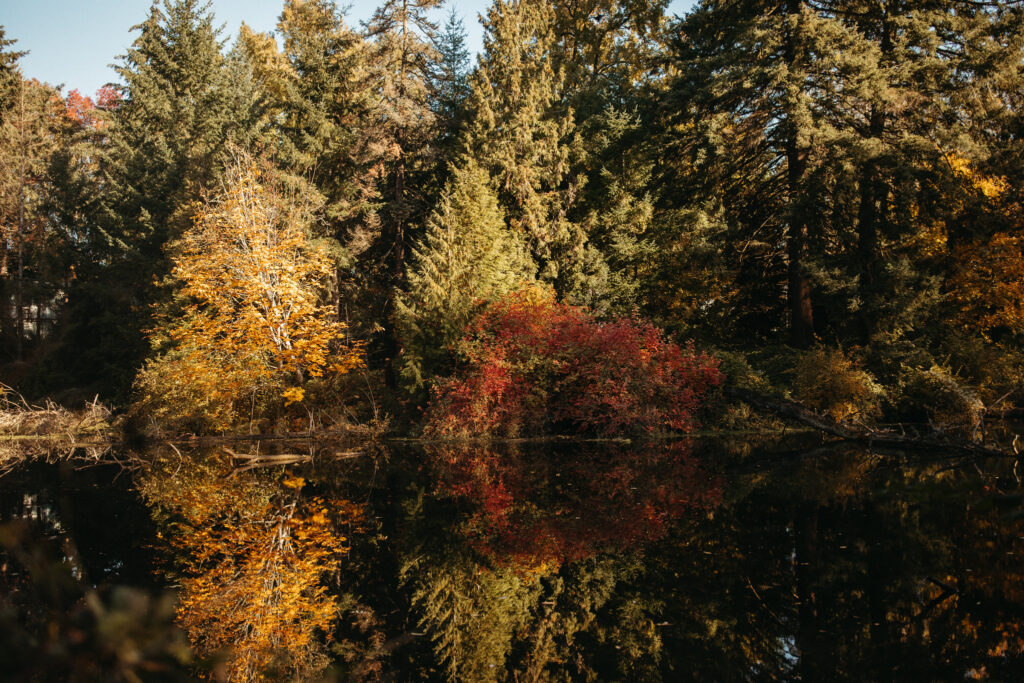
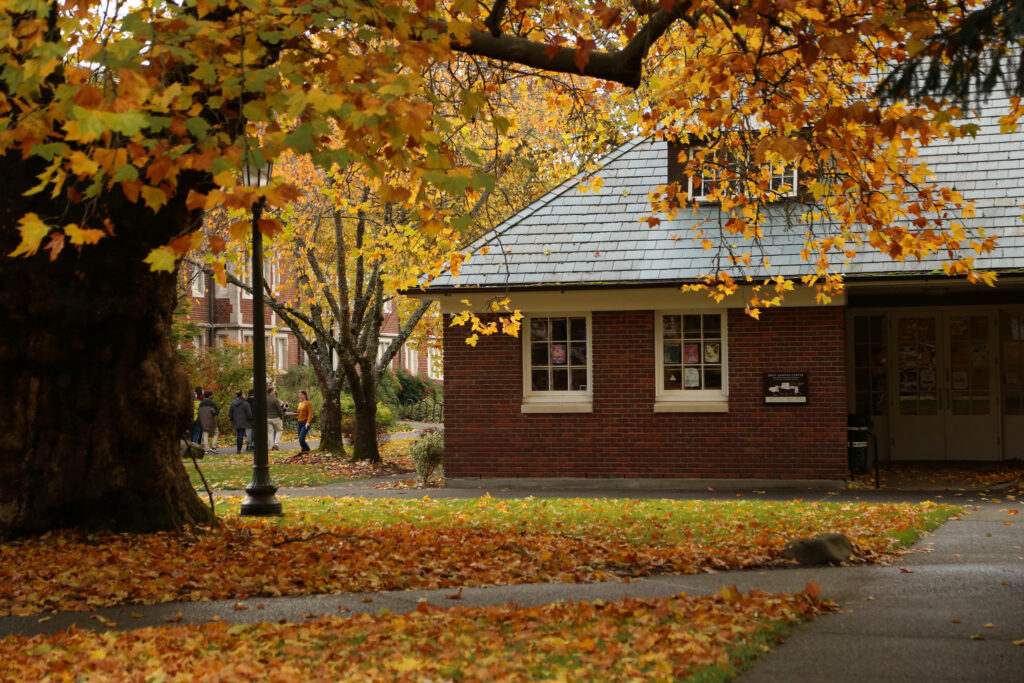
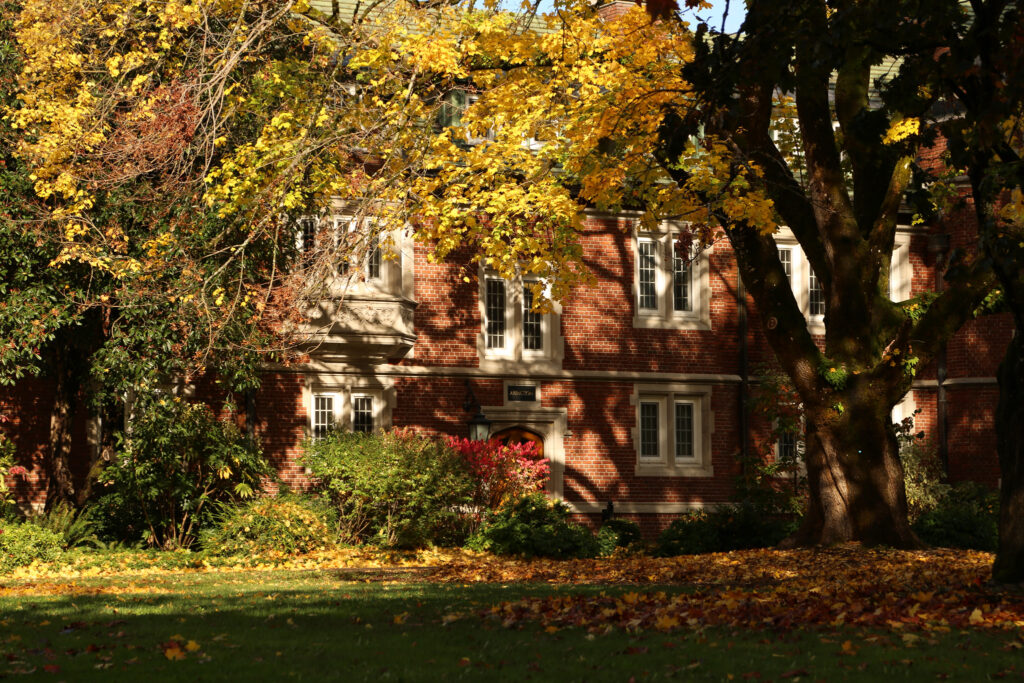
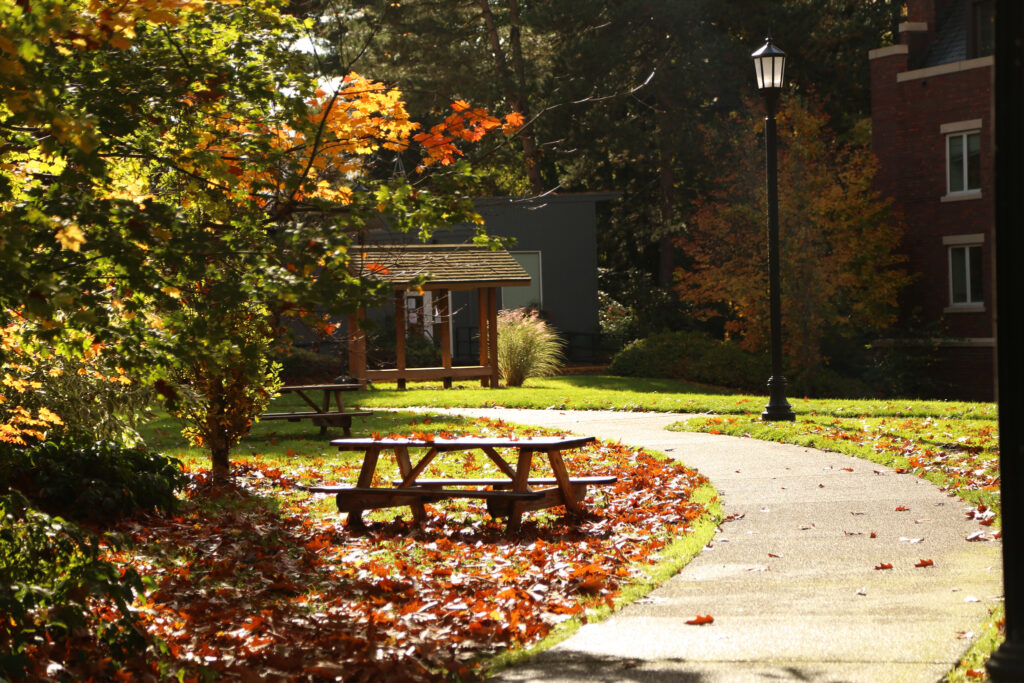
As the weather cools down and students get into the swing of classes, Reed’s campus begins to transform. The bright greens of the lawns and trees in the summer shift into oranges and reds as the falling leaves coat the ground. The canyon comes to life with all the vibrant warm hues of the leaves and the crisp crunching sounds they make as Reedies trample across them on the way to class. Maybe I’m biased, but I think fall is the prettiest season by far (especially at Reed)!

I’ve even heard rumors that fall is the best season for spotting the otters in the canyon–keep your eyes peeled!

Looking forward to jumping in a pile of leaves,

The Prexy Ghost

Oodles of Owlettes

At the beginning of the year, when Reed college gets a new group of students, these wide-eyed kids get to hang out for a week before the rest of us arrive. Orientation is the time for these upcoming freshmen to get acquainted with the campus, and each other. I have fond memories of greeting at least half the freshmen class during my first day of orientation week, and then spending the next two days in my room, slowly recharging my social battery. Other people who are extroverts actually spent those other days going about and making friends.

Another thing I remember during my orientation how there were long stretches of nothing followed by everyone getting crammed into the Kaul Auditorium to learn about the joys of drug abuse or Reed’s sexual harassment policy. All of which every new student totally remembers. One thing that the older alums might not remember ever seeing are the Orientation Week Leaders (OWLs)–these are students who are tasked with talking about the ins and out of Reed and answering any questions these freshmen might have. I remember how my OWL talked about which professors were amazing and which classes were hard to get. Freshmen then get the moniker “Owlettes” during these first few weeks. 

Some lucky Reedies even got to go on Odysseys, which are trips either around Portland or the Pacific Northwest, either to go white water rafting or walk around Portland and sample all the wonderful food carts. In years past, they’ve included bike tours, backpacking, and rock climbing trips too! Some freshmen this year went surfing on the Oregon Coast, or on a Deschutes river rafting trip, or out to explore the iconic waterfalls of the Columbia River Gorge. They have a chance to borrow outdoor gear they might need from the Backpack Co-Op. If you went on an Odyssey, I would love to hear about your experience and where you went.

Keeping an eye on the Owlettes,

William Clarke ’27

X Marks the Midget: The Story of the Car Under the Library

Every school has one or two crazy incidents that get cemented in its history. Reed has many such cases, but the one that I would like to focus on is the car buried under the library. Some alumni still do not believe that this actually happened, but the photographic evidence suggests otherwise. According to the legends, a (at the time) certain student called Mark Verna ’87 had bought a car called an MG Midget. After graduation, the MG stayed in the east parking lot while Mark went off to find work. Eventually, the MG got moved off campus to the red house, which was an apartment that was frequently rented out to students during the 80s. Because the car had been neglected for so long, the neighbors soon called for the city to get rid of the MG. 

This is when our band of merry heroes enter the scene: May 1988. A gaggle of students took it upon themselves to bury the car. Up the hill to the red house they trekked, and down the hill they dragged the MG Midget.  Their final destination? The Hauser Library. At the time, an extension was being built, and there was a giant hole that was going to be filled with concrete for the foundation. That hole was going to be the MG’s final resting place.

 An nighttime image of several people standing around a pit that contains a half-buried car

But, you see, simply dumping a car into the official hole would have gotten it removed with lots of angry people involved and tons of burned up cash, so instead the group decided to instead dig a hole under the hole. This way, the construction crew would not know until it was too late. Thus, the students began digging, for several hours. When they rolled the car into the new hole, they realized that the car still peeked out a little and that the hole was not deep enough, so the students decided to do some percussive modifications to the car, like popping the tires, and beating down the windshield so the car fit in the hole. They then filled in the hole with dirt and promptly left as if nothing ever happened. The story of the buried car later got lost in the wind tunnels of time and became more and more like a fairy tale.

There still is some speculation from various experts, who still do not quite believe that a car is indeed under the library. Their reasons range from digging such a perfect square hole takes a lot longer than a night, to the concrete structures in the photos don’t match up with the library exactly. Yet, the alums who participated in the burial of the car insist that there is indeed a car under the library and that the night’s events did in fact transpire. William Abernathy ’88 said, “I have to apologize to the experts, But there is a car down there.” Abernathy was the one who popped the tires. Still, this ranks as one of the top pranks to ever happen in Reed history.

A nighttime image of several people using tools to dig in dirt

In 2011, the Reed Magazine published a feature on this mystery. If you’re an armchair skeptic, I encourage you to read through the article, and top it off with the notes to the editor published in the following issue! More alumni chime in with their own evidence.

An alum named Dave Conlin ’88 wrote this limerick about the MG:

There once was a Reedie named Mark,
His MG the butt of a lark,
In a story from fairies,
Under the library now buried,
As the Pharaohs  once did with their ark.  

Tunneling my way to the Library,

William Clarke ’27