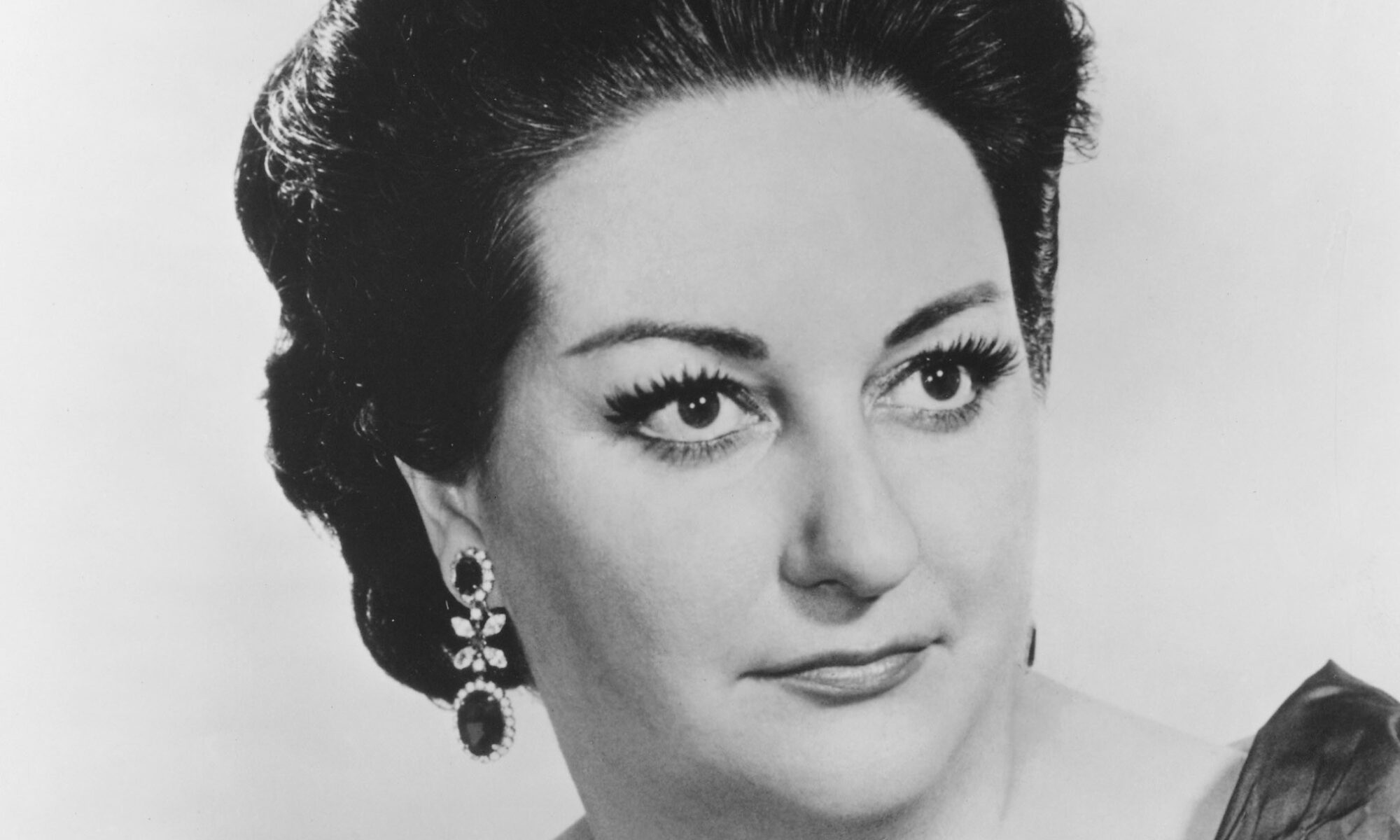
Cada generación tiene sus mitos, y en el mundo de la ópera … hablar de Montserrat Caballé … es hablar de una auténtica leyenda.
Every generation has its myths, and in the world of opera … to speak of Montserrat Caballé … is to speak of a true legend. [1, translated from Spanish by me]
With a rafter-shaking voice, Caballé was one of a small handful of opera singers whose fame extended out beyond the world of opera into the public sphere. Born in Barcelona in 1933, she broke out in 1965 at Carnegie Hall to wide-ranging operatic acclaim. [1]
Her tremendous vocal prowess, “stirring for its quality, warmth, and expressivity,” worked alongside a curiosity for those works that laid forgotten in dusty libraries, and enabled her to adapt those works to her style. This begot an unusually wide repertoire. This repertoire was not strictly operatic, either: Freddie Mercury’s “favorite singer,” the pair went on to perform their duet “Barcelona” at the 1992 Olympic Games, in a moment that cemented her to many as an icon of Catalonia more broadly. [1]
She also had an energetic personality on stage:
Transcription and translation of German introduction by fellow LangLabbie Annie:
Ja, das ist ein ganz kleine Liedchen von Puccini. Man nennt das Liedchen, aber das ist wirklich von Gianni Schicchi. Und das ist halt [das Publikum stöht] – Moment! [Lachen] – das ist ja ganz kurz… weil das muss so sein jetzt. [weiteres Lachen]
This is a short little song by Puccini. People call it a little song, but it’s actually from Gianni Schicchi [a hugely popular opera based on Dante’s Inferno]. And this is basically [sigh from audience] – hold on! [laughter] – it’s because it just has to be short right now. [more laughter from audience]
It was fairly unique, this ability to elicit quite a few laughs from a Munich crowd (with a significantly different taste in humor than that of her native Barcelona) and then transition smoothly into an emotionally charged aria. This combination of broad confidence and vocal mastery is, I suspect, much of why she ended up being as well-known and loved as she was.
While opera remains a secluded (and often highfalutin) art form, it retains unique technical and artistic merits, and Caballé’s repertoire will continue to be an exemplar of these merits, for those whose ears are so inclined.
Work Cited/Further Reading
[1] Pérez Sanz, Javier. “Caballé, la ‘Superba’.” El País, 6 Oct. 2018, elpais.com/cultura/2018/10/06/actualidad/1538818098_527924.html.