Truthfully, the idea for this blog post came from my own experiences from learning French as a second language. I noticed that I could speak and write fine in my academic work, but when it came time to engage with small talk or casual conversation, I felt like a mess! There seemed to be some kind of gap between my proficiency in formal situations versus that in informal situations. On the flip side, I noticed that my peers who were heritage learners—students who learned French at home as a child, not academically as an adult—seemed to flourish in small talk, but appeared to struggle more with formal academic contexts. These questions made me curious about how L2 learners versus heritage learners approached their target language, depending on linguistic register—language used in a particular setting or context. This post is a bit more technical than the usual television recommendation, but hopefully, you’ll learn something new about how our environments affect the way we speak!
Continue reading “Writing entire papers in French… yet struggling with small talk?”The short and bright life of Shokan Valikhanov

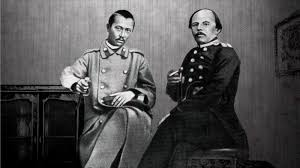
Shokan Valikhanov the father of modern Kazakh history and ethnography and simultaneously the most-known Kazakh scholar, ethnographer, historian. As a Russian Imperial officer, he explored Central Asia, mapping regions like Kashgar and recording significant cultural, geographic, and historical data while advocating for his people which didn’t save him from being a target of post-colonial criticism. Lang Labbies are starting our weekly rubric of “not-so-Russian-Russian literature” focusing on literature written in Russian by not necessarily Russian personas.
Shokan Valikhanov was born in Kostanay, Eastern Kazakhstan and spent his youth in his father’s traditional nomadic yurt. Shokan’s family was very respected by the government of the Russian Empire, and Walikhanov’s father was awarded, during his life, six appointments as senior Sultan of Kushmurun region. Born into privelege, Shokan raveled extensively in Central Asia in the late 1850s after having graduated from the military academy in Omsk.
Walikhanov collected materials on Kazakh judicial practices in 1863. This was part of a government-backed project given by Duhamel, and led to the 1864 Memorandum on Judicial Reform. In 1864, Shoqan was assigned to help with Colonel Cherniaev’s continued conquest of Central Asia. Cherniaev’s forces marched west from the fortress of Vernoe (modern-day Almaty). Chernaiev advanced towards the Khanate of Kokand, planning to attack the fort at Aulie-Ata (modern-day Taraz). Shoqan unsuccessfully pushed for a negotiated result without violence.
Young Valikhanov was a big proponent of Westernization although was critiqued by his fellow ethnographers for “playing the double game” due to his primarily russian education and deep friendship with writers such as Fyedor Dostoevsky.
In spite of it, Shokan remained the face of Kazakh intelligentsia — his early death at just 29 years old left a large hole in the history of Kazakh ethnography written in Russian. One of Shokan works (in both Russian and English) I would recommend to our readers is “Chinese Turkestan and Dzungaria: Walikhanov and other Russian travellers”, The Russians in Central Asia, London, Edward Stanford, 1865.
Don’t give up on Arabic!
أهلا يا أصدقاء
As an Arabic student at Reed, I’m here to commiserate. While we’re blessed with fantastic language scholars like Asma, there are very few of us and we don’t have a department like other languages. And considering that the vast majority of contemporary Arabic-language media is not in Fusha (Modern Standard Arabic), it can be hard even to just interact with the language in a natural way. Also, coming from an English-speaking background, Arabic is HARD! All this to say: I get it. You love learning Arabic, but you feel overwhelmed by endless conjugations and roots and forms and regional specificities? Allow me to present a few online resources I’ve found.
Arguably the most reputable Arabic/English dictionary but in online form! You can even type in Roman letters and it will transliterate for you. You can type a root and it will give you all of the forms and nouns that derive from it.
2. ACON Online
ACON is a really useful conjugation tool. You select the three letters that form the root of the word, its form, and the perfect and imperfect vowel sounds, and it will list all of the possible conjugations laid out in the Western (starting with أنا) or Arabic order (starting with هو) according to your preference.
Struggling still?
Maybe you feel like you still don’t quite have enough of a grasp on things to use these tools – you might be wondering what all of these forms mean and what they’re for, or why I’m calling the present tense “imperfect”. If that’s the case, that’s totally okay too! Go visit Asma during her office hours or book a tutoring session with me on IRIS and we’ll try to make things a little clearer.
Embrace embarrassment!
Do you find learning a language to be embarrassing? It’s a very normal human emotion, but embarrassment seems to be worse than death for some. Just thinking about embarrassment makes me feel embarrassed! So why do we feel embarrassed when we learn languages, and what can be done about it?
I read a paper titled “Embarrassment in English language classrooms” by Khajavy et al. (2025) to learn more about what embarrassment is and why it stops me in my tracks during my language classes. Embarrassment is defined as “a social, self-conscious emotion in which a person feels some level of discomfort and awkwardness” (Khajavy et al. 2025:182). I hate to say it, but embarrassment is just all in our heads. It can feel difficult to even explain why we feel embarrassed since it’s entirely based on how we imagine what others are thinking. Overall, it’s an emotion that depends on how we assess situations that we’re experiencing in the moment, so it might vary from person to person. For me, I get super embarrassed when I’m unprepared for class, but others might not feel the same way. This isn’t to say that feeling embarrassment isn’t valid—we all experience it, whether it’s visible or not.
Continue reading “Embrace embarrassment!”Learning French to read Duras with Qiuyi!
Today we’re speaking with Qiuyi, our drop-in French tutor! We chatted about the experience of learning French from the beginning level, adjusting to intermediate classes, and Marguerite Duras. Meet Qiuyi in the Language Lab during her drop-in tutoring hours!
Leilani: Hi Qiuyi! To begin the interview, could you tell me a little bit about yourself and how long you’ve been speaking French?
Qiuyi: Yeah! My name is Qiuyi, and I’m a sophomore majoring in Comparative Literature. This is my second year learning French, so I’m a new learner.
Continue reading “Learning French to read Duras with Qiuyi!”Connect with the Language Houses this spring!

Have you been wanting to attend the Language Houses’ many fun language events, but don’t know where to start? Check out the new (!) Language Scholars Events page on the International Programs Office website! Here, you’ll find information about big campus-wide events (including ours at the LangLab) as well as regular weekly conversation hours in the Language Houses. I know the Language Scholars put in a lot of work in compiling all events into a single place, so I highly recommend you check it out!
P.S. for all my loyal Google Calendar users out there, you can also add their Calendar to yours!
Book recommendation: In Other Words by Jhumpa Lahiri

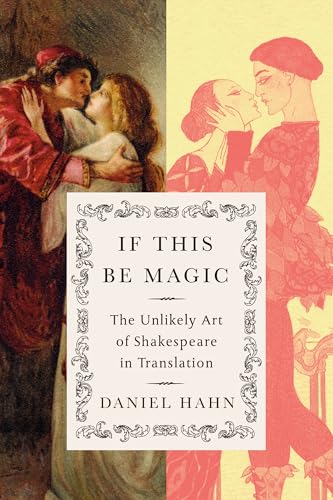
As we approach the end of the semester, I thought I’d recommend a for-funsies book to read over winter break: In Other Words by Jhumpa Lahiri (2015). Last semester, I wrote a blog post on journaling as an effective language-learning strategy. Jhumpa Lahiri’s memoir expands on this idea of writing in a second language (Italian), and also talks more on her experience living in Rome, Italy, to immerse herself in the language. Lahiri is the author of The Namesake (2003) and Interpreter of Maladies (1999), and this is her first nonfiction book.
Continue reading “Book recommendation: In Other Words by Jhumpa Lahiri”International pop, inspired by K-pop!

It’s official, the K-pop (Korean pop) craze has arrived at the Language Lab. I’ve become enamored with K-pop’s fan-cams, shiny photocards, and the trendy choreography. Fortunately at the Language Lab, the K-pop culture has spread worldwide, and I made a list of international pop groups to keep an eye on. These groups have taken the popular model of K-pop but with a local flair that makes the music appealing to its country of origin. Give them a listen!
Argentina: K4OS
Chile: Q_ARE
Recap: LangLab Karaoke Night!

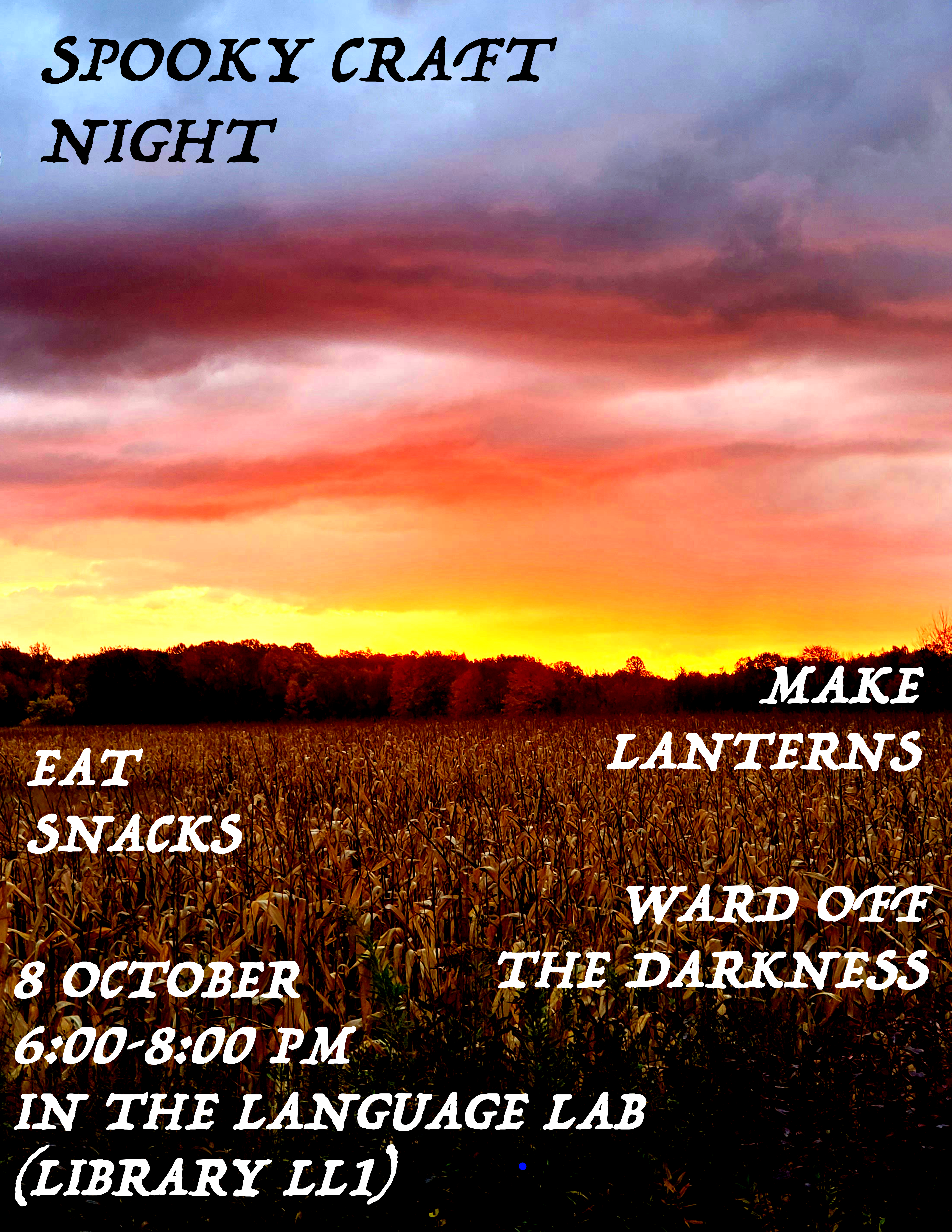
Thank you everyone for attending our highly-anticipated Karaoke Night event! We had so much fun sharing songs and experiencing songs from around the world (I still have 小蘋果 stuck in my head…). Special shoutout to our Language Scholars, who got the party started! We hope to see you at future karaoke events… stay tuned!

If there was a song that you heard and wanted to add it to your own international playlist, here’s everything that was sung at Karaoke Night: https://youtube.com/playlist?list=PLMUR5lJ3P0glCteY-6fTG2iZ-NAcLb4ZK&si=M7tgTaJz0KjTUhkC
German Tutor Interview!
When did you start learning your language?
I started learning German my freshman year at Reed.
What has been the most helpful tool in learning?
One tool that I have found helpful in language learning is reading familiar texts in new languages. Reading a familiar text in a new language is much easier than reading a wholly new text in a new language, so you can enjoy reading more and stress less about the difficulty of reading in a new language.
What do you enjoy most about speaking this language or knowing it?
The thing I love most about knowing German is that I can enjoy so much more literature, film, and philosophy as originally written.
What do you recommend to people learning this language?
German can be intimidating and difficult; remember to take some time to appreciate the progress you have already made.
How often do you practice?
I try to practice multiple days a week, although sometimes life gets in the way.
If you could speak one other language what would it be and why?
I would love to be able to read Aristotle in the original Greek, so I wish I could read Ancient Greek.
Why are you a tutor?
I am a tutor because I love to learn, teach, and speak German!
How difficult was it for you to learn this language?
I found German difficult to learn, and I still have so much more to learn!
What media do you enjoy most in this language? Lit/movies/music etc
I enjoy literature most in German. Particularly poetry, which I have never liked much in English. I find many German films to be a bit cheesy.
Can you give me an example?
Kafka is my favorite German author I have read. Of course, I love all of his classic stories like Metamorphosis and In the “Penal Colony,” but one less popular Kafka story I like is “The Burrow.”
Have you ever lived in a country that speak this language?
No, but I have lived in 2 Spanish-speaking countries!